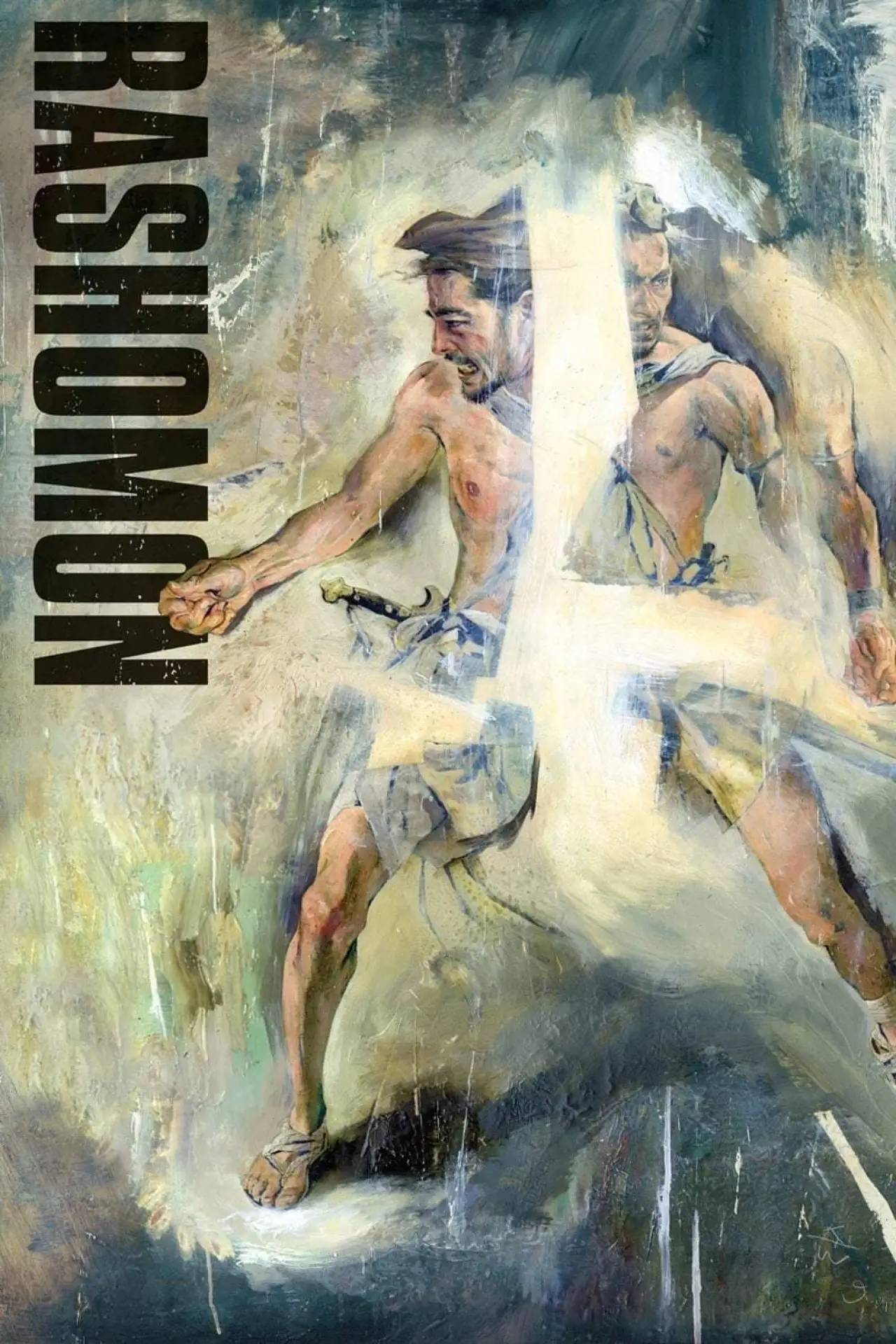
Rashomon
The husband, the wife… or the bandit?




Country
Production
Budget
$250 000
Box office
$35 584
Director
Actors
Scenario
Producer
Jingo Minoura, Masaichi Nagata
Camera operator
Composer
Artist
Takashi Matsuyama
Audition
Editing
Short description
Four people recount different versions of the story of a man's murder and the rape of his wife.
What's left behind the scenes
- In the scene at the Rashomon Gate, Kurosawa couldn't achieve a rain effect that was visible not only in the foreground but also in the depth, where it blended with the gray sets. So, ink was added to the water of the rain machines, making the rain more contrastive. The ink can be seen in the final shot: it got on the face of the departing lumberjack.
- The film is based on Ryunosuke Akutagawa's works "Rashomon" and "In a Grove." From the former, it borrowed the setting, the title, and the general atmosphere, while the plot is taken from the second story.
- It is believed that this film was the first to point the camera directly at the sun, showing it moving through the leaves. Kurosawa himself claimed for some time that the cinematographer Kazuo Miyagawa had invented this technique, although he later retracted this statement.
- During filming, crew members asked Akira Kurosawa what a certain part of the script meant. He replied that this film is a reflection of life, and life does not always have a simple and clear meaning.
- Kurosawa told Toshiro Mifune to derive his character's physicality from wildlife—for example, from a lion. Since then, Mifune played practically the same "lion-like" role several more times, immortalizing himself with this specific physicality.
- During filming, the crew asked Akira Kurosawa what was meant by what was written in the script. He replied that this film was a reflection of life, and life does not always have a simple and clear meaning.
- In the scene at the Rashomon gate, Kurosawa struggled to make the rain visible not only in the foreground but also in the background, where it blended with the gray sets. Therefore, ink was mixed into the water of the rain machines, making the rain more contrasting. The ink can be seen in the final shot: it landed on the face of the departing woodcutter.
- The film is based on Ryunosuke Akutagawa's works "Rashomon" and "In a Grove." It borrows the setting, title, and overall atmosphere from the former, while the plot is taken from the latter story.
- Even at noon in the forest where filming took place, it was dark. Therefore, Kurosawa and cinematographer Kazuo Miyagawa used a large makeup mirror to reflect sunlight, directing it onto the subject being filmed.
- Kurosawa told Toshiro Mifune to borrow the physicality of his character from the wild, say, a lion. Since then, Mifune played practically the same "lion-like" role several more times, cementing his image with this very physicality.
- Kurosawa told Toshiro Mifune to borrow the physicality of his character from the wild, say, from a lion. Since then, Mifune played practically the same «lion-like» role several more times, immortalizing himself with this very physicality.
- Even at noon, a haze lingered in the forest where filming took place. Consequently, Kurosawa and cinematographer Kazuo Miyagawa used a large makeup mirror to reflect sunlight, directing it onto the subject being filmed.
- During filming, a delegation of the crew approached Akira Kurosawa, opened the script before him, and asked, "what does all this even mean?" Kurosawa's answer went down in history: he said that this film was a reflection of life, and life does not always have a simple and clear meaning.
- It is believed that this film was the first to point the camera directly at the sun, showing it moving through the leaves. For some time, Kurosawa himself claimed that the cinematographer Kazuo Miyagawa had invented this technique, although he later retracted that statement.
Similar movies
8.1/10
8.1/10
8.1/10
8/10
7.9/10
7.9/10
7.8/10
7.8/10
7.8/10
7.8/10


 Auditions in India
 Casting calls in USA
 Castingi w Polsce
 Кастинги в Україні
