Ed Wood
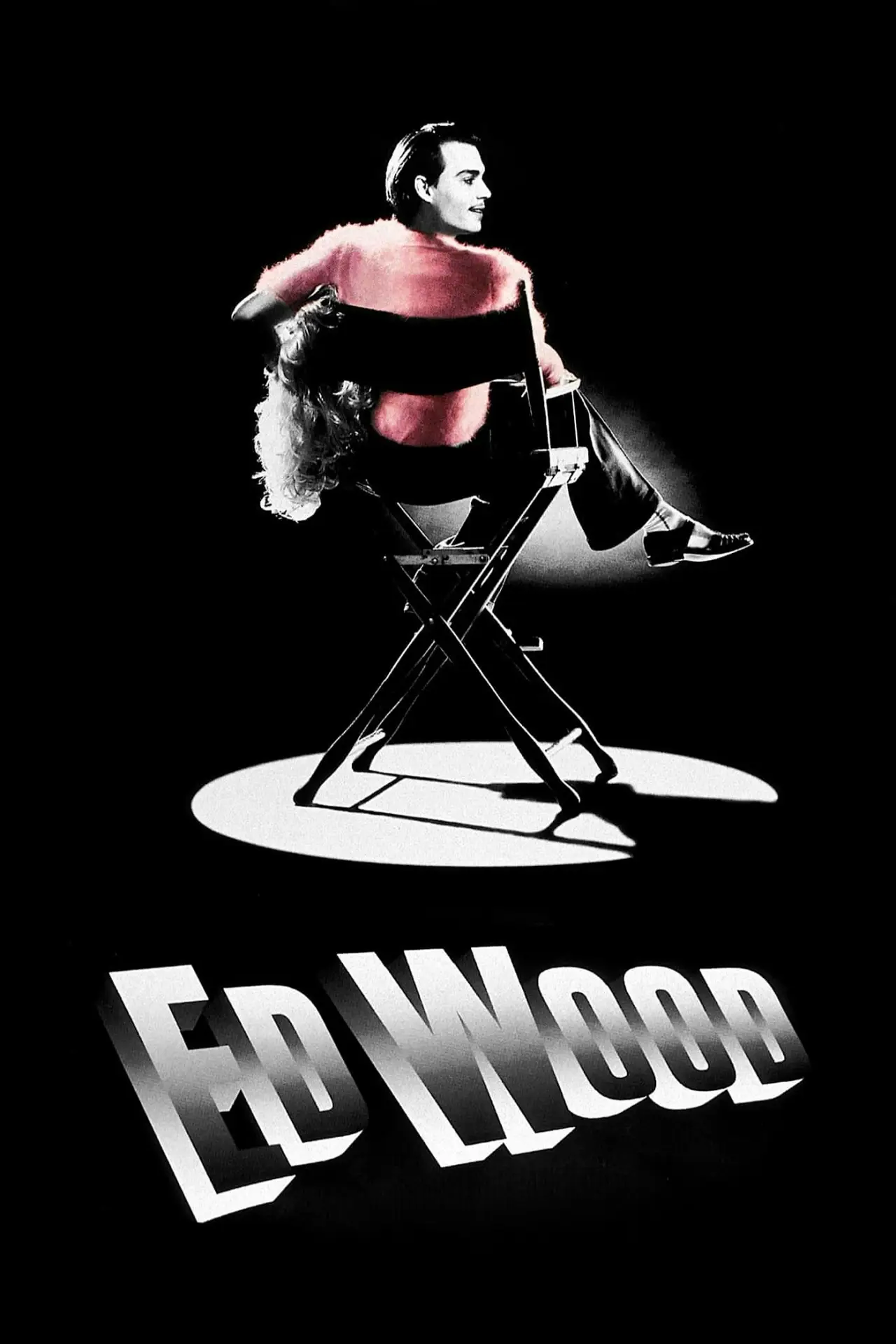
Movies were his passion. Women were his inspiration. Angora sweaters were his weakness.



![Video for the film Ed Wood — Ed Wood (1994) Theatrical Trailer 1 [4K] [FTD-1037]](https://www.acmodasi.com/amdb/images/posters/a/u/ed-wood-1994-djAuG.webp)
Country
Production
Budget
$18 000 000
Box office
$5 887 457
Director
Actors
Scenario
Producer
Tim Burton, Denise Di Novi, Michael Flynn, Michael Lehmann
Camera operator
Composer
Artist
Tom Duffield, Kent Burton, Mark Villalobos
Audition
Editing
Short description
The mostly true story of the legendary "worst director of all time", who, with the help of his strange friends, filmed countless B-movies without ever becoming famous or successful.
What's left behind the scenes
- At that time, Burton was preparing to direct "Mary Reilly" for Columbia Pictures with Winona Ryder in the lead role. However, due to the company's decision to give the role to Julia Roberts instead of Ryder, Burton left the project. This prompted him to take on the direction of "Ed Wood" himself and shoot the film quickly. As a result, he took the director's chair and gave Lehman the position of executive producer. Alexander and Karatzewski wrote a 147-page screenplay in six weeks. Burton read it and immediately approved it as is, without any changes or edits. Burton liked the fact that Wood was little known to the general public, which meant that working on the film could not be constrained by anecdotes about the "worst director." But he considered the most important thing to be the fact that Wood and his team did their job with passion.
- Patricia Arquette met Kathy O’Hara during filming. The actress found her “sweet and very pleasant.”
- The film is based on Rudolph Grey's book "Nightmare of Ecstasy." (Rudolph Grey, Nightmare of Ecstasy).
- At the time, Burton was preparing to direct "Mary Reilly" for Columbia Pictures, starring Winona Ryder. However, when the company decided to cast Julia Roberts in the role instead of Ryder, Burton left the project. This prompted him to take the direction of "Ed Wood" into his own hands and film it quickly. As a result, he took the director's chair himself and gave Lehmann the role of executive producer. Alexander and Karaszewski wrote a 147-page screenplay in six weeks. Burton read it and immediately approved it as is, without any changes or editing. Burton liked the fact that Wood was little known to the general public, which meant the work on the film would not be constrained by the clichés of the "worst director." But most importantly, he believed that Wood and his team did their work with passion.
- The film is based on the book "Nightmare of Ecstasy" by Rudolph Grey.
- In reality, "Plan 9 from Outer Space" was shown only 3 years after filming ended, in a small, obscure cinema.
- Actor Gregory Walcott, who starred in “Plan 9 from Outer Space,” appeared in the film as a cameo. He played the man who introduces Wood to Maila ‘Vampira’ Nurmi.
- According to Depp, less than ten minutes had passed after Tim Burton's offer to star in the film before he agreed. At the time, the actor was somewhat disillusioned with the art of cinema, and this role gave Depp the opportunity to "stretch his legs and have fun." Working with Martin Landau "restored" his "love for acting." By then, Depp was already familiar with some of Edward D. Wood's work through John Waters, who had shown him "Glen or Glenda" and "Plan 9 from Outer Space." To better embody Wood's image, the actor studied Jack Haley's performance in "The Wizard of Oz" (1939), where Haley played the Tin Man. Depp watched several of Ronald Reagan's speeches, as he viewed them as a form of blind optimism and believed this was a perfect fit for Wood. The actor also tried to mimic Casey Kasem's deep voice and "that very confident and lively salesman quality in his voice." On Burton's advice, Depp studied Mickey Rooney's performances in the later Andy Hardy adventure films.
- Wood's 1959 film "Plan 9 from Outer Space" is considered the worst movie in the history of cinema.
- Burton began reading “Nightmare of Ecstasy” and some of Wood’s letters. He was struck by the fact that in the letters, the director “wrote about his films as if he were filming ‘Citizen Kane,’ despite the fact that people considered his films to be the worst ever made.’” Burton admitted that he had always been a fan of Ed Wood, so the film was an homage, not a mockery, of Wood’s work. The relationship between him and Lugosi in the film echoes Burton’s close relationship with his own idol, Vincent Price. Burton said in an interview: “Meeting Vincent had an incredible impact on me; Ed must have felt the same impact when he met his idol.”
- Howard Shore used some of the musical themes from Wood's original films to create the soundtrack for Burton's movie.
- In 1980, two years after his death, Ed Wood was recognized as the "worst director" in the history of Hollywood.
- To achieve a resemblance to Bela Lugosi, makeup artist Rick Baker applied special prosthetic makeup to Martin Landau. Baker applied it in such a way that Landau would not experience discomfort in portraying emotions and grimaces. For his role, the actor watched 25 films with Lugosi and seven of his interviews conducted between 1931 and 1956.
- Howard Shore used some musical themes from Wood's original films to create the soundtrack for Burton's film.
- Initially, the contract to produce the film was signed with Columbia Pictures. But in April 1993, company chairman Mark Canton rejected the project a month before filming was set to begin due to disagreements with Burton, who insisted on filming in black and white and demanded full creative freedom. Consequently, companies such as Paramount Pictures, Warner Bros., and 20th Century Fox became seriously interested in the option for the screen rights, but Burton accepted an offer from The Walt Disney Company, with whom he had already worked on "The Nightmare Before Christmas." Like that film, "Ed Wood" was also released through Touchstone Pictures. Disney took on the project hoping that Burton would continue to work with them, but he returned to Warner Bros. for his next film. The company allocated a budget of $18 million and granted Burton full creative independence, as they did not view the film as a high risk. The director also waived his fee for working on the project.
- According to the film, Ed Wood met Lugosi, but in reality, the idea of using Lugosi in Wood's films belonged to writer Alex Gordon, who introduced the director to the actor.
- Actor Gregory Walcott, who appeared in "Plan 9 from Outer Space," made a cameo appearance in the film. He played the man who introduces Wood to Maila "Vampira" Nurmi.
- According to Depp, less than 10 minutes passed after Tim Burton offered him a role in the film before he agreed. At the time, the actor was somewhat disillusioned with cinema, and this role gave Depp the opportunity to “stretch out and have fun.” And working with Martin Landau “restored” his “love of acting.” Depp was already familiar with some of Edward Wood's work through John Waters, who showed him “Glen or Glenda” and “Plan 9 from Outer Space.” To better embody the image of Wood, the actor studied Jack Haley’s acting in “The Wizard of Oz” (1939), where Haley played the Tin Man. Depp watched several performances by Ronald Reagan, as he considered them a form of blind optimism, and believed this was perfect for Wood. The actor also tried to imitate Casey Kasem’s low voice and “that very confident and lively traveling salesman quality in his voice.” At Burton’s suggestion, Depp studied Mickey Rooney’s acting in later Andy Hardy adventure films.
- According to the film, Ed Wood met Lugosi on his own, but in reality, the idea of using Lugosi in Wood's films belonged to writer Alex Gordon, who introduced the director to the actor.
- The film features quotes from Wood's films "Glen or Glenda" (1953), "Bride of the Monster" (1955), and "Plan 9 from Outer Space" (1958). There is also a clip from an early film starring Bela Lugosi – "White Zombie" (1932).
- Initially, a contract for the creation of the film was concluded with Columbia Pictures studio. But in April 1993, company chairman Mark Canton rejected the project a month before filming began due to disagreements with Burton, who insisted on shooting the picture in black and white and demanded complete creative freedom. Then, companies such as Paramount Pictures, Warner Bros., 20th Century Fox became seriously interested in the adaptation rights, but Burton accepted the offer from The Walt Disney Company, with whom he had already worked on "The Nightmare Before Christmas." Like that film, "Ed Wood" was also released under the distribution of Touchstone Pictures. Disney took on the project with the expectation that Burton would continue to work with them, but he returned to Warner Bros. with his next film. The company allocated a budget of $18 million and gave Burton complete creative independence, as it did not see the picture as a big risk. The director also waived his fee for working on the project.
- In fact, Bela Lugosi did not die before filming "Plan 9," but after 10 minutes of footage had been shot.
- The director decided to film in black and white as an homage to Wood's films. The lighting for the shooting was also set up and selected in accordance with the monochrome image, which gave a realistic effect of filming from that period.
- Wood's 1959 film, "Plan 9 from Outer Space," is considered the worst movie in the history of cinema.
- Patricia Arquette dated Kathy O'Hara during filming. The actress found her "sweet and very pleasant."
- Principal photography began in August 1993 and lasted 72 days.
- To achieve a resemblance to Bela Lugosi, makeup artist Rick Baker created special prosthetic makeup for Martin Landau. Baker applied it in such a way that Landau would not experience discomfort when portraying emotions and facial expressions. For his role, the actor watched 25 of Lugosi's films and seven of his interviews conducted between 1931 and 1956.
- In reality, Bela Lugosi did not die before the filming of "Plan 9," but after ten minutes of the film had already been shot.
- The idea for the film came to screenwriters Scott Alexander and Larry Karaszewski while they were studying at the University of Southern California School of Cinematic Arts. During his sophomore year, Alexander even intended to make a documentary about Wood titled "The Man in the Angora Sweater." However, Karaszewski was skeptical of the idea at the time. Later, Alexander and Karaszewski co-wrote the screenplays for "Problem Child" and "Problem Child 2," but both grew tired of writing exclusively for family films. They then wrote a 10-page script outline for a movie about Wood and presented the idea to director Michael Lehmann, whom they had met back at film school. Lehmann pitched the project to producer Denise Di Novi, with whom he had worked on the film "Poison." Di Novi had previously collaborated with Tim Burton on "Edward Scissorhands," "Batman Returns," and "The Nightmare Before Christmas." Ultimately, per the contract, Lehmann was to direct the Wood biopic, while Burton and Di Novi were to serve as producers.
- The idea for the film came to screenwriters Scott Alexander and Larry Karaszewski while they were studying at the School of Cinematic Arts at the University of Southern California. Alexander even planned to make a documentary about Wood – “The Man in the Angora Sweater” – during his sophomore year. However, Karaszewski was skeptical of the idea at the time. Later, Alexander and Karaszewski co-wrote the screenplays for “Problem Child” and “Problem Child 2,” but they both grew tired of working solely on family films. They then wrote a 10-page screenplay outline about Wood and presented the idea to director Michael Lehmann, whom they had met while at the School of Cinematic Arts. Lehmann introduced the project to producer Denise Di Novi, with whom he had worked on “Fatal Attraction.” Di Novi had previously collaborated with Tim Burton on “Edward Scissorhands,” “Batman Returns,” and “The Nightmare Before Christmas.” Ultimately, Lehmann was contractually obligated to direct the Wood biopic, while Burton and Di Novi would be the producers.
- The movie contains clips from Wood's films "Glen or Glenda" (1953), "Bride of the Monster" (1955), and "Plan 9 from Outer Space" (1958). There is also a fragment from an early film starring Bela Lugosi, "White Zombie" (1932).
- In real life, "Plan 9 from Outer Space" was only shown three years after filming ended, in a small, obscure cinema.
- In 1980, two years after his death, Ed Wood was named the "worst director" in the history of Hollywood.
- Burton began reading "The Plan That Would Rock the World" and some of Wood's letters. He was struck by the fact that in his letters, the director "wrote about his films as if he were filming 'Citizen Kane,' despite the fact that people considered his movies the worst in history." Burton admitted that he had always been a fan of Ed Wood, which is why the film resulted in an expression of admiration rather than a mockery of Wood's work. The relationship between Wood and Lugosi in the film mirrors the close relationship between Burton and his own idol, Vincent Price. Burton said in an interview: "Meeting Vincent had an incredible influence on me; Ed must have felt the same influence upon meeting his idol."
Similar movies
9/10
8.8/10
8.6/10
8.6/10
8.5/10
8.4/10
8.3/10
8.2/10
8.2/10
8.1/10


 Auditions in India
 Casting calls in USA
 Castingi w Polsce
 Кастинги в Україні
