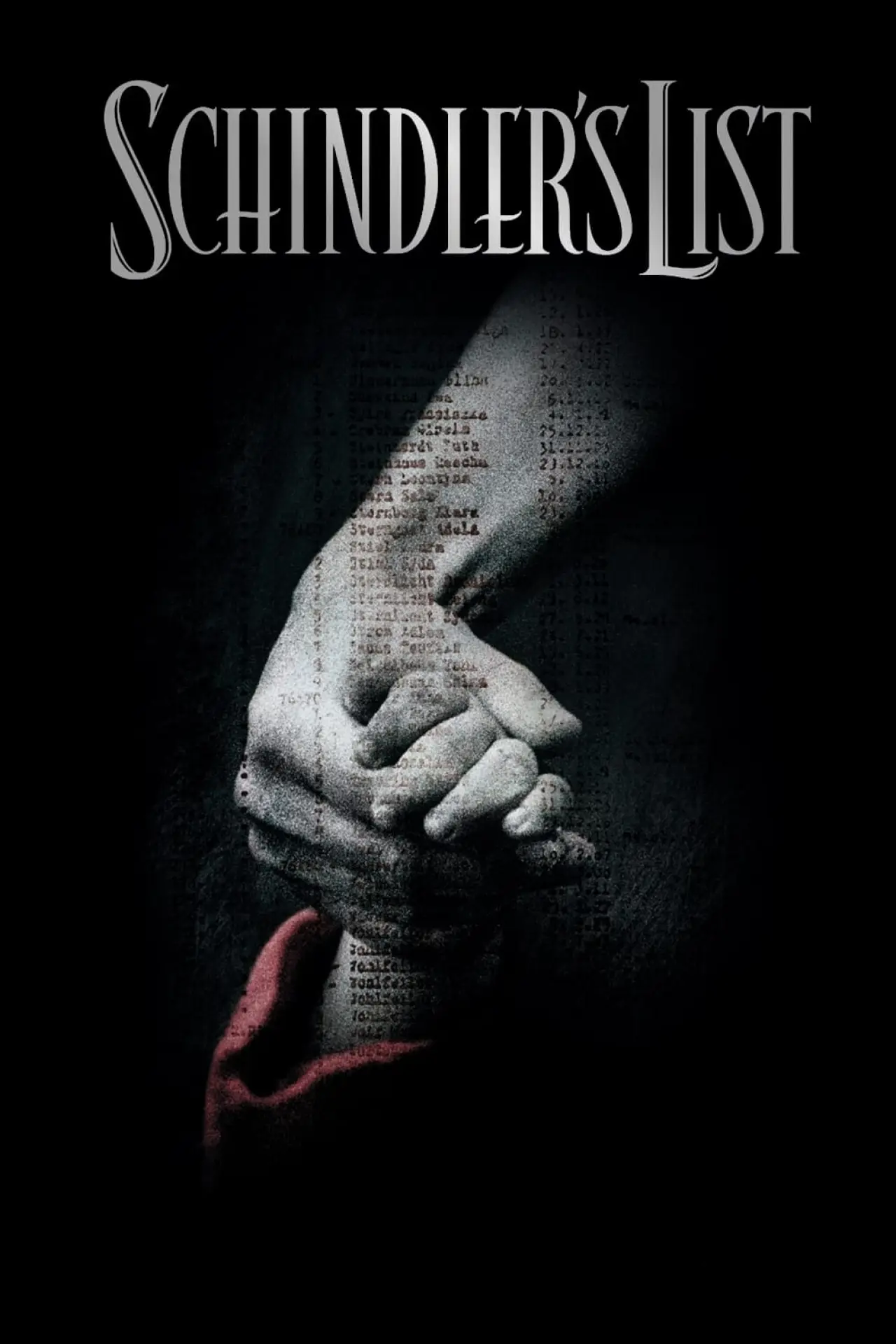
Schindler's List
Whoever saves one life, saves the world entire.



Country
Production
Budget
$22 000 000
Box office
$321 306 305
Website
Director
Actors
Liam Neeson, Ben Kingsley, Ralph Fiennes, Caroline Goodall, Jonathan Sagall, Embeth Davidtz, Malgorzata Gebel, Shmuel Levy, Mark Ivanir, Béatrice Macola
All actors and roles (10)
All actors and roles (10)
Scenario
Producer
Camera operator
Composer
Artist
Allan Starski
Audition
Juliet Taylor, Tova Cypin, Lucky Englander
Editing
Short description
The true story of how businessman Oskar Schindler saved over a thousand Jewish lives from the Nazis while they worked as slaves in his factory during World War II.
What's left behind the scenes
- In the 1980s, Martin Scorsese declined to direct, believing that only a Jewish director could properly make this film. Ultimately, he swapped projects with Spielberg, taking on 'Cape Fear' (1991) instead.
- Filming wrapped four days ahead of schedule. It lasted a total of 72 days.
- Spielberg intended to cast Claire Danes in the film, but she declined, otherwise she would have had to put her studies on hold for a time.
- At the beginning of the epilogue, the song “Jerusalem of Gold” is performed, which was written only in 1967 and is not thematically related to the Holocaust, and was therefore replaced with another song (“Eli, Eli”) in the Israeli release of the film.
- Schindler's List became the most expensive black-and-white film in history. The previous record belonged to another war drama – The Longest Day (1962).
- Tim Roth was considered for the role of Amon Göth.
- Juliette Binoche declined to participate in the film.
- Spielberg intended to cast Claire Danes in the film, but she declined, as it would have required her to temporarily put her studies on hold.
- In the final scene of the film, a man whose face is not visible lays flowers on Schindler's grave. It is not Spielberg, as some assume, but Liam Neeson.
- When Mila Pfefferberg, a former Auschwitz prisoner, was introduced to Ralph Fiennes, she could not hide her trembling with emotion—he bore such a striking resemblance to the real Amon Göth.
- Initially, Steven Spielberg intended to make the film in Polish and German, with English subtitles.
- Steven Spielberg refused his fee for the film, stating that it would have been "blood money." Instead, he used the money earned from the film to establish the Shoah Foundation ("Shoah" means "Catastrophe" in Hebrew). The Shoah Foundation's mission is to preserve written testimonies, documents, and interviews with victims of genocide, including the Holocaust.
- Steven Spielberg refused his fee for the film. According to him, it would be “blood money.” Instead, he founded the “Shoah Foundation” with the money earned from the film (Shoah means “Catastrophe” in Hebrew). The Shoah Foundation’s activities consist of preserving written testimonies, documents, and interviews with victims of genocide, including the Holocaust.
- Almost 40% of the film was shot using a handheld camera.
- In the final scene of the film, a person whose face is not shown places flowers on Schindler's grave. This is not Spielberg, as some suggest, but Liam Neeson.
- Spielberg offered the direction to Roman Polanski, but he declined for personal reasons. At the age of 8, he had lived in the Krakow Ghetto and escaped on the day of its liquidation. Polanski's mother later died in Auschwitz.
- In the 1980s, Martin Scorsese refused to direct, believing that only a Jewish director could properly make this film. He eventually swapped projects with Spielberg, taking on 'Cape Fear' (1991).
- To clothe 20,000 extras, the costume designer placed advertisements everywhere stating that the studio wanted to purchase clothing from wartime. And since the economic situation in Poland in the early 90s was quite difficult, local residents readily sold clothes from the 30s and 40s that they had preserved.
- Eamon Sherry, the lawyer for British singer Pete Doherty, committed suicide after watching this film. According to Eamon Sherry's wife, her husband fell into a depression after viewing the movie's detailed depiction of concentration camps.
- Steven Spielberg originally intended to make the film in Polish and German, with English subtitles.
- Unlike the film's plot, Amon Göth was hanged only on the third attempt.
- The famous director and screenwriter Billy Wilder was involved in creating the first draft of the script, and in the earliest stages of development, he was even brought on as the director. It was Wilder who later persuaded Spielberg to direct the film.
- When former Auschwitz prisoner Mila Pfefferberg was introduced to Ralph Fiennes, she couldn't hide her trembling with excitement – he was so similar to the real Amon Göth.
- The renowned director and screenwriter Billy Wilder participated in creating the first draft of the screenplay, and was even considered as director at the very earliest stage of the project's development. It was Wilder who later persuaded Spielberg to become the director of this film.
- Specifically for his role, Ralph Fiennes gained 13 kg. He did this by drinking a lot of 'Guinness' beer. According to the director, he invited this actor because of his 'devilish sexuality'.
- Spielberg offered the direction to Roman Polanski, but he refused for personal reasons. The fact is that when he was 8 years old, he lived in the Krakow ghetto and escaped from it on the day of its liquidation. Later, Polanski's mother died in Auschwitz.
- This film marked the beginning of the collaboration between Spielberg and cinematographer Janusz Kamiński. He has filmed all of Spielberg's subsequent movies.
- The role of Oskar Schindler was offered to Harrison Ford and Bruno Ganz.
- Since Spielberg was unable to obtain permission to film in Auschwitz, he had to build a set nearby, meticulously replicating the concentration camp.
- The actual list of Oskar Schindler was found in his Frankfurt apartment only in 2000. Schindler lived in this apartment during the final months of his life. He passed away in 1974.
- The lawyer of British singer Pete Doherty, Eamon Sherry, committed suicide after watching this film. According to Eamon Sherry's wife, her husband fell into depression after viewing this film, which features a detailed depiction of concentration camps.
- "Schindler's List" became the most expensive black-and-white film in history. The previous record was held by another war drama, 1962's "The Longest Day."
- Mieczysław Pemper, the compiler of Schindler's List, passed away on June 7, 2011. He worked as a consultant on the filming and is part of the image of Itzhak Stern, Schindler's manager, in the film itself.
- The scene depicting the liquidation of the Krakow ghetto occupied only one page in the script. Spielberg expanded it to 20 pages and 20 minutes of screen time. He created it based on testimonies of eyewitnesses to those events.
- Nothing green could be used during filming, as this color looks poor on black-and-white film.
- Since Spielberg was unable to obtain permission to film at Auschwitz, he had to build a set nearby that meticulously imitated the concentration camp.
- Ralph Fiennes gained 13 kg specifically for his role, which he achieved by drinking a lot of Guinness beer. According to the director, he cast the actor because of his "devilish sexuality."
- The scene of the Krakow Ghetto liquidation occupied only one page of the script. Spielberg expanded it to 20 pages and 20 minutes of screen time, basing it on eyewitness accounts of the events.
- This film marks the beginning of Spielberg's collaboration with cinematographer Janusz Kamiński. He shot all of Spielberg's subsequent films.
- The actual Schindler's List was found in his Frankfurt apartment only in 2000. Schindler lived the last months of his life in this apartment. He passed away in 1974.
Similar movies
8.6/10
8.3/10
8.3/10
8.2/10
8.2/10
8.1/10
8/10
8/10
7.8/10
7.8/10


 Auditions in India
 Casting calls in USA
 Castingi w Polsce
 Кастинги в Україні
