John Carter
Lost in our world, found in another.




Country
Production
Genre
Budget
$250 000 000
Box office
$284 139 100
Director
Actors
Scenario
Producer
Colin Wilson, Jim Morris, Lindsey Collins
Camera operator
Composer
Artist
Nathan Crowley, Josh Lusby, Peter Dorme
Audition
Gail Stevens, Marcia Ross
Editing
Eric Zumbrunnen, Jennifer Teves
Whole Team (181)
Whole Team (181)
Short description
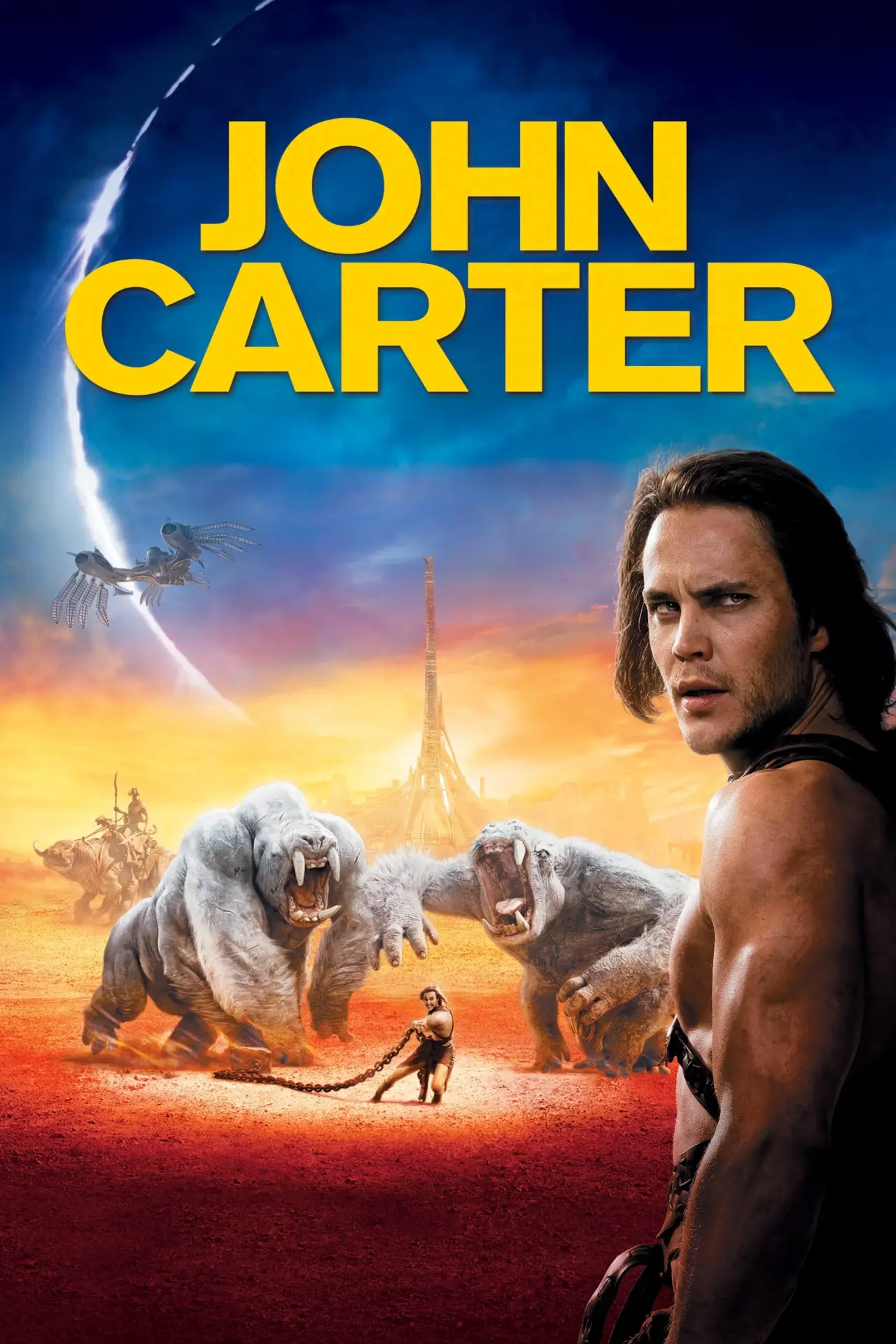
John Carter is a war-weary, former military captain who's inexplicably transported to the mysterious and exotic planet of Barsoom (Mars) and reluctantly becomes embroiled in an epic conflict. It's a world on the brink of collapse, and Carter rediscovers his humanity when he realizes the survival of Barsoom and its people rests in his hands.
What's left behind the scenes
- In early 1931, Robert Clampett – the creator of Porky Pig and many Looney Tunes cartoons – proposed to Edgar Burroughs to adapt "John Carter of Mars" into the first full-length animated feature film in history. Burroughs accepted the offer.
- Clampett and Burroughs enthusiastically immersed themselves in pre-production of the film, creating sketches, miniature sculptures of the characters, drafting the screenplay, and even making black-and-white test footage intended to demonstrate their vision for the book's adaptation. Burroughs and Clampett envisioned the future film as serious science fiction. However, MGM Studios saw the film in a completely different light – as a light comedy with a mischievous hero. This clash of visions led to the project being shelved after a year.
- In the late 1950s, Ray Harryhausen expressed interest in directing the film.
- In the 1970s, before 'Star Wars,' George Lucas was interested in directing the film.
- The project was seriously revisited only in the 1980s, when Disney decided to make a live-action film riding the wave of success of 'Star Wars' and 'Conan.' Ted Elliott and Terry Rossio were tasked with writing the screenplay. Mario Kassar and Andrew J. Vajna were to produce the film through their Carolco studio. John McTiernan was offered the directing job, and Tom Cruise was planned for the lead role. However, the project’s significant production scale and the limitations of special effects at the time prevented it from moving forward.
- In the 1990s, Jeffrey Katzenberg expressed interest in the project, but it didn't progress beyond discussion.
- "John Carter of Mars" resurfaced on the cinematic horizon in the 2000s, when the colossal success of "The Lord of the Rings" and "Harry Potter" prompted many studios to revive old projects in the fantasy genre.
- Having convinced Paramount Pictures to buy back the rights to the adaptation, James Jacks and Sean Daniel hired Mark Protosevich to write the screenplay.
- In 2003, Robert Rodriguez joined their team, agreeing to direct the film and, along with his wife Elizabeth Avellan, to serve as one of the producers. According to Rodriguez, he planned to begin filming in early 2005 with a possible title of "Princess of Mars" or "John Carter of Mars." Robert wanted to film using the same technology as "Sin City" (2005) – digital cameras against a blue screen.
- In 2004, a scandal erupted during the filming of "Sin City" (2005) when Robert Rodriguez decided to withdraw from membership in the "Directors Guild of America." After Robert left the guild, Paramount had no choice but to remove him from directorial duties, which they did in May 2004.
- After Rodriguez's departure, the studio hired Kerry Conran as director, who had recently filmed "Sky Captain and the World of Tomorrow" (2004) using similar technology to "Sin City" (2005).
- Kerry Conran brought in Ehren Kruger to work on a new version of the script. Kerry and Ehren planned to modernize the story, making the plot more contemporary.
- Throughout 2005, pre-production of the film was actively underway: concept art was created, and locations were scouted, with most of the filming planned to take place in Australia.
- However, in September 2005, Kerry Conran left the project, and on October 5, 2005, it was announced that Jon Favreau would direct the film.
- Jon Favreau stated: 1) To remain faithful to the spirit of the book. 2) Despite the abundance of planned CGI effects, to use optical effects, shoot on location and on sets, thereby moving away from the idea of filming the entire movie against a blue screen. 3) To build the film's plot in a completely different vein, focusing first on the character and only then on the adventures. Favreau cited “Planet of the Apes” (1968) as an example, telling the story of a character’s personal journey in an unusual world, learning about the culture and society of another civilization, ultimately understanding them and beginning to interact with them. He planned to apply the same approach to the adaptation of “John Carter of Mars.” 4) To use mechanical effects alongside CGI effects extensively. 5) To move the action from the twenty-first century back to the time of the Civil War. 6) To adhere to the book regarding the creation of the image of the three/four-meter-tall Martians (previously it was assumed that the Martians would be the same height as Earthlings).
- To bring his vision for the film to a full script, Favreau brought in Mark Fergus.
- In April 2006, Mark Fergus completed the script, and Jon Favreau created a blog on MySpace specifically dedicated to the future film. It was under Favreau's leadership that the project came closest to finally being realized on the big screen.
- However, at the same time, Paramount was actively developing another high-budget science fiction project – a reboot of “Star Trek.” Ultimately, the studio favored J.J. Abrams’ film, once again shelving “John Carter of Mars.” Despite the project's cancellation, Jon Favreau and Paramount remained on good terms: Favreau was entrusted with directing “Iron Man” (2008), for which Mark Fergus was one of the screenwriters.
- In 2006, Paramount decided not to renew its rights to adapt the book, which were reacquired by Disney in 2007.
- In 2006, rumors circulated that Robert Zemeckis might direct the film, using the technology he employed in “Beowulf” (2007) and “The Polar Express” (2004).
- After Disney announced that Pixar would produce the film, rumors immediately spread that the adaptation of the book would be realized as computer animation.
- In August 2007, Disney registered several domains: johncarterofmarsthemovie.
- In October 2007, it was officially announced that Andrew Stanton would direct the film, and if it was commercially successful, the studio intended to make a trilogy.
- In March 2008, Andrew Stanton completed the first draft of the screenplay.
- The film's premiere was scheduled for 2012, exactly one hundred years after the first story from Edgar Rice Burroughs' Martian cycle, “Under Martian Moons,” was first published in the magazine “All-Story” (February 1912); and eighty years after plans to adapt the book were announced.
- The film crew had to work in challenging climatic conditions – in Hanksville, the temperature rose to almost +50°C. During filming in the desert, the cast and crew consumed over 1360 liters of water daily.
- The film is dedicated to the memory of Steve Jobs.
- During the battle scene in the arena, the protagonist John Carter could have easily freed himself from his shackles, as the ring embedded in the stone to which John was chained was not closed.
- The film is based on Edgar Rice Burroughs' novel "A Princess of Mars" (1911).
- Serious discussion of the project resumed only in the 1980s, when Disney decided to make a live-action film on the wave of success of "Star Wars" and "Conan." Ted Elliott and Terry Rossio were tasked with writing the screenplay. Mario Kassar and Andrew J. Vajna were to produce the film at their Carolco studio. John McTiernan was offered to direct, and Tom Cruise was planned for the lead role. However, the significant production scale and the imperfection of special effects at the time prevented the project from moving forward.
- The film is based on the novel 'A Princess of Mars' (1911) by Edgar Rice Burroughs.
- In early 1931, Robert Clampett—the creator of Porky Pig and numerous Looney Tunes cartoons—proposed to Edgar Burroughs that 'John Carter of Mars' be adapted as the first full-length animated feature film in history. Burroughs accepted the offer.
- Clampett and Burroughs enthusiastically dove into the film's pre-production, creating sketches and miniature sculptures of the characters, drafting the script, and producing black-and-white test footage to demonstrate their vision for the adaptation. Burroughs and Clampett viewed the future film as serious science fiction. However, MGM studio saw the film in a completely different light—as a light comedy with a mischievous protagonist. This clash of visions led to the project being shelved a year later.
- In the late 1950s, Ray Harryhausen expressed interest in producing the film.
- In the 1970s, even before 'Star Wars,' George Lucas was interested in directing the movie.
- Serious discussions about the project only resurfaced in the 1980s, when Disney decided to create a live-action film riding the wave of success from "Star Wars" and "Conan." Ted Elliott and Terry Rossio were tasked with writing the screenplay. Mario Kassar and Andrew G. Vajna were set to produce the film at their studio, Carolco. John McTiernan was offered to direct, and Tom Cruise was planned for the lead role. However, the substantial scale of production and the limitations of special effects at the time prevented the project from getting off the ground.
- In the 1990s, Jeffrey Katzenberg expressed interest in the project, but the matter never progressed beyond discussions.
- "John Carter of Mars" reappeared on the cinematic horizon in the 2000s, when the colossal success of "The Lord of the Rings" and "Harry Potter" prompted many studios to revive old fantasy projects.
- After convincing Paramount Pictures to buy the adaptation rights, James Jacks and Sean Daniel hired Marc Protosevich to write the screenplay.
- In 2003, Robert Rodriguez joined their team, agreeing to direct the film and serve as one of the producers alongside his wife, Elizabeth Avellan. According to Rodriguez, he planned to begin filming in early 2005, with the movie potentially titled "Princess of Mars" or "John Carter of Mars." Robert wanted to shoot the film using the same technology as "Sin City" (2005)—using digital cameras against a blue screen.
- In 2004, during the filming of 'Sin City' (2005), a scandal erupted when Robert Rodriguez decided to resign from the Directors Guild of America. After Robert left the guild, Paramount had no choice but to strip him of his directing authority, which occurred in May 2004.
- Following Rodriguez's departure, the studio hired Kerry Conran as director, who had shortly before filmed 'Sky Captain and the World of Tomorrow' (2004) using a technology similar to that of 'Sin City' (2005).
- Kerry Conran brought in Ehren Kruger for a new version of the screenplay. Kerry and Ehren planned to modernize the story, making the plot more contemporary.
- However, in September 2005, Kerry Conran left the project, and on October 5, 2005, it was announced that Jon Favreau would take over the direction of the film.
- Jon Favreau stated his goals: 1) To remain true to the spirit of the book. 2) Despite the abundance of planned CGI effects, to use optical effects and shoot on location and in sets, thereby moving away from the idea of filming the entire movie against a blue screen. 3) To steer the film's plot in a completely different direction, focusing first and foremost on the character and only then on the adventures. Favreau cited 'Planet of the Apes' (1968) as an example, which tells of a character's personal journey in an unusual world, learning about the culture and society of another civilization, and eventually understanding and interacting with them. He planned to apply the same approach to the adaptation of 'John Carter of Mars'. 4) To make extensive use of mechanical effects alongside CGI. 5) To move the action from the twenty-first century back to the time of the Civil War. 6) To adhere to the book regarding the depiction of the three-to-four-meter-tall Martians (previously, it was assumed that Martians would be the same height as humans).
- To turn his vision for the film into a full-fledged screenplay, Favreau invited Mark Fergus.
- In April 2006, Mark Fergus completed the script, and Jon Favreau created a MySpace blog specifically dedicated to the upcoming film. It was under Favreau's leadership that the project came closest to finally making it to the big screen.
- However, at the same time, Paramount was actively developing another high-budget sci-fi project: a reboot of 'Star Trek.' Ultimately, the studio prioritized J.J. Abrams' film, once again shelving 'John Carter of Mars.' Despite the project's cancellation, Jon Favreau and Paramount remained on good terms; it was Favreau who was entrusted with the adaptation of 'Iron Man' (2008), for which Mark Fergus served as one of the screenwriters.
- In 2006, rumors suggested that Robert Zemeckis might direct the film, utilizing the same technology used in 'Beowulf' (2007) and 'The Polar Express' (2004).
- In October 2007, it was officially announced that Andrew Stanton would direct the film, and if it proved to be a commercial success, the studio intended to create a trilogy.
- In March 2008, Andrew Stanton completed the first draft of the script.
- The film is scheduled to premiere in 2012, exactly one hundred years after Edgar Rice Burroughs' first story from the Martian cycle, 'Under the Martian Moons,' was first published in All-Story magazine (February 1912), and eighty years after the intention to adapt the book to film was first announced.
Similar movies
8.8/10

8.7/10

8.1/10

8.1/10
8/10

8/10
7.9/10

7.9/10
7.9/10
7.9/10


 Auditions in India
 Casting calls in USA
 Castingi w Polsce
 Кастинги в Україні
