Come and See
The cruelest side of war.



Country
Production
Budget
$5 000 000
Box office
$96 908
Director
Actors
Aleksei Kravchenko, Olga Mironova, Liubomiras Laucevicius, Vladas Bagdonas, Jüri Lumiste, Viktors Lorencs, Kazimir Rabetsky, Yevgeni Tilicheyev, Aleksandr Berda, G. Velts
All actors and roles (10)
All actors and roles (10)
Scenario
Ales Adamovich, Elem Klimov
Producer
Stepan Tereschenko
Camera operator
Alexey Rodionov
Composer
Oleg Yanchenko
Artist
Viktor Petrov
Audition
Editing
Short description
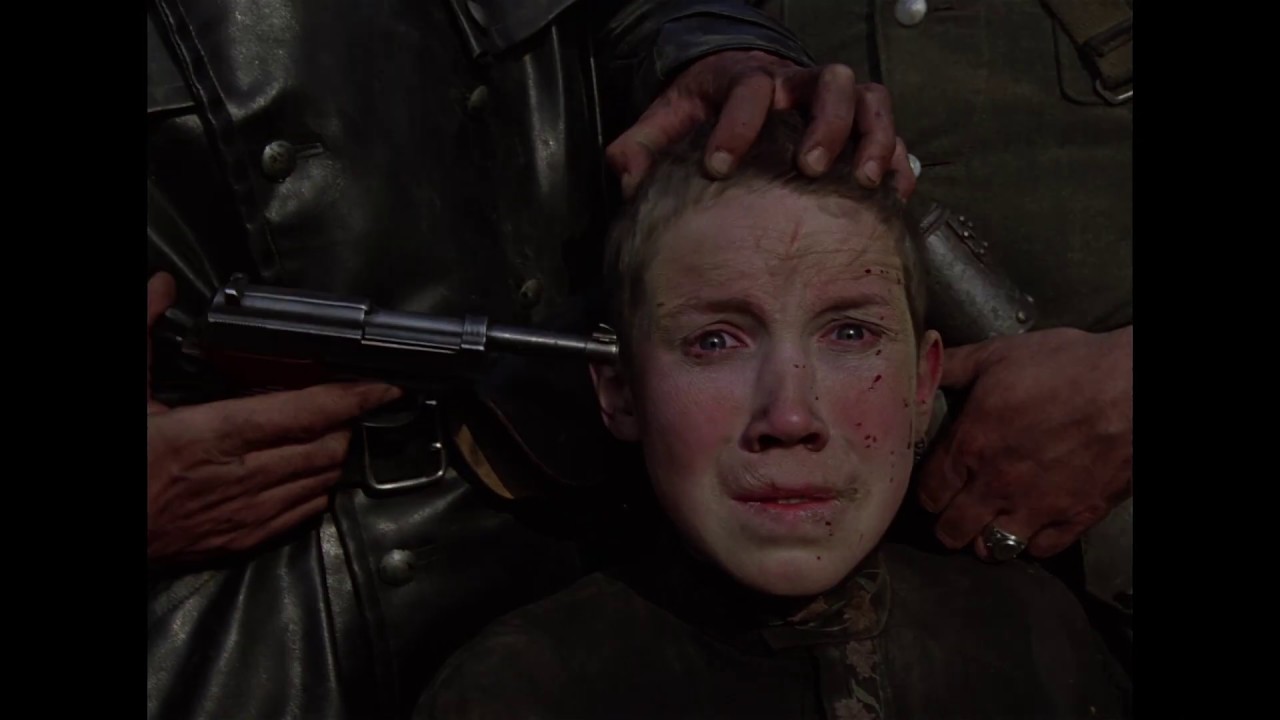
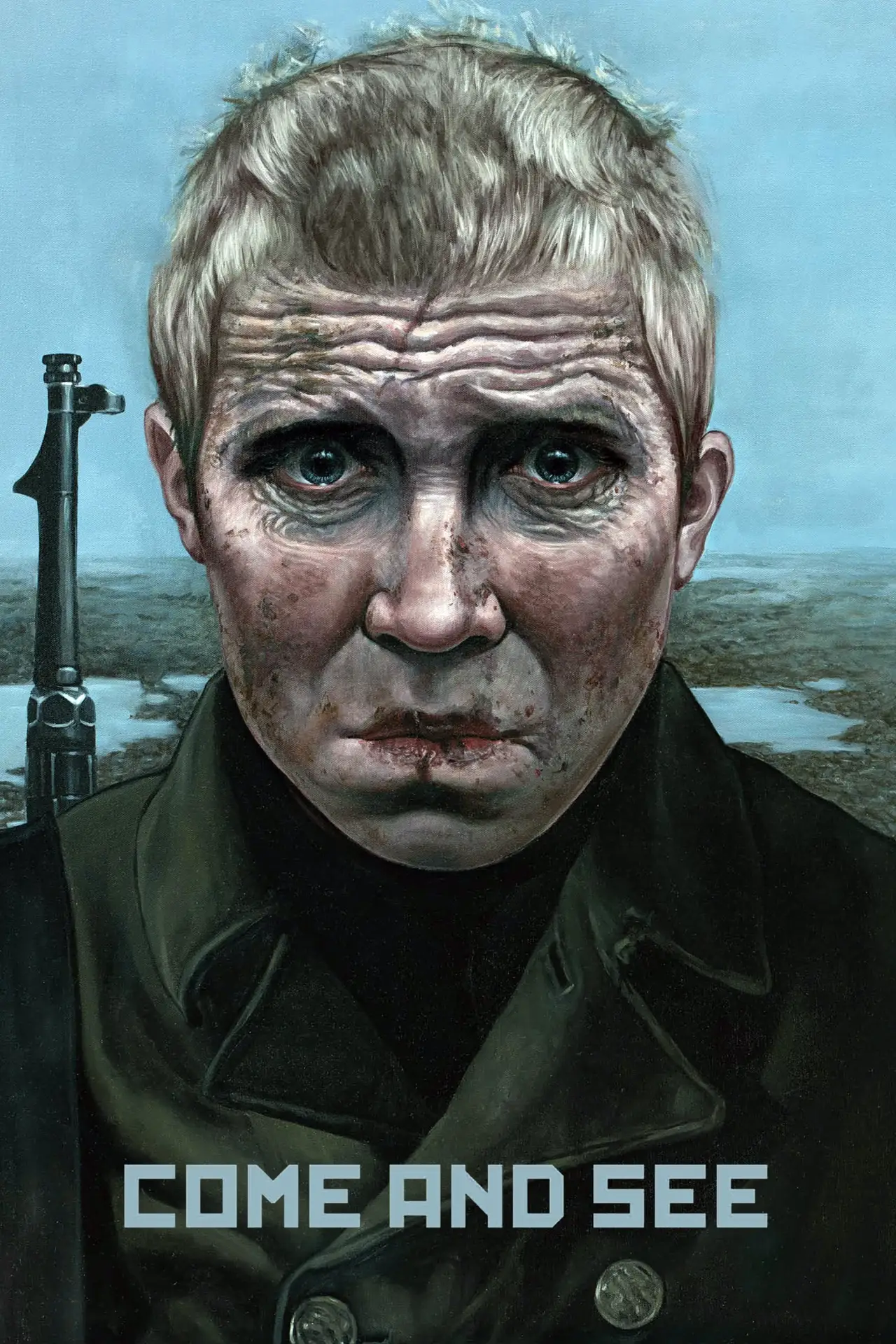
The invasion of a village in Belarus by German forces sends young Florya into the forest to join the weary Resistance fighters, against his family's wishes. There he meets a girl, Glasha, who accompanies him back to his village. On returning home, Florya finds his family and fellow peasants massacred. His continued survival amidst the brutal debris of war becomes increasingly nightmarish, a battle between despair and hope.
What's left behind the scenes
- In 1987, the screenplay was published as a separate book in the series «Library of Screenplays».
- In addition to live ammunition, real shells were used in the film. This was due to Klimov's pursuit of authenticity. Initially, the use of pyrotechnics and explosive charges was planned, but after several takes, the director and cinematographer concluded that such explosions looked unnatural. Subsequently, real shells were used, significantly increasing the risk to the actors' lives.
- The effect of 'deafness' and ringing in the ears experienced by Flora after a shell exploded nearby was used by Steven Spielberg in the war drama 'Saving Private Ryan.'
- It is Danny Boyle's favorite Soviet film.
- The scene with the cow left a strong impression on Kravchenko: live ammunition was used during filming, and when the first bullets hit, the animal reared up, nearly crushing the actor.
- The lead actor, Alexei Kravchenko, admitted that he had no intention of participating in the auditions and went there at the request of a friend who desperately wanted to be in a movie and asked him to support him. At the auditions, Kravchenko was asked to perform an etude 'the death of a mother'. As the actor later confessed, he involuntarily cried so convincingly that even some members of the commission shed tears. Klimov, however, was not finally convinced and further 'tested' the candidate for the role. For example, one of these tests was watching newsreel footage from the war years, including footage from concentration camps. After several hours of viewing, Kravchenko was offered tea with cake, which the teenager firmly refused. This refusal met the director's expectations, who was testing the actor's ability to sincerely experience the grief and suffering of others.
- The film is based on the works of Ales Adamovich: The Khatyn Story, Partisans, and Executioners.
- Olga Mironova, a student at an art college, was approved for the role of Glasha. For her, 'Come and See' was her first and last participation in cinema. After graduating from the college, Mironova became a school teacher.
- The film is based on the works of Ales Adamovich, 'Khatyn Tale', 'Partisans', and 'Punishers'.
- At the expense of authenticity, it was necessary to abandon the Belarusian language. According to Alexei Kravchenko, the decision was made during dubbing to 'create a kind of mutant of Russian and Belarusian, because if I had spoken in pure Belarusian, no one would have understood anything.'
- Kazimir Rabetsky, a local villager who was on the same island where the filming took place during the war, played the village elder burned alive. His death monologue was filmed without hesitation and the need for dubbing, and Klimov later spoke of this case as an 'acting feat.'
- Initially, the leadership of Goskino did not approve the film's script: the scene where the main characters struggle through a swampy bog was perceived as 'propaganda for the aesthetics of filth'; the anthill crushed by the village elder as 'a degrading comparison of our people to ants'; and the shooting of a cow in a night field as 'naturalism' and 'gratuitousness.' The scene of the village being burned also drew objections because it 'lacked the scale of the partisan movement,' as did Flora's refusal to shoot the infant Hitler, which censors characterized as 'all-forgivingness, abstract humanism, and a non-class-based approach.' Klimov refused to comply with Goskino's demands, believing they would 'kill the film completely,' after which the project was shut down. The director continued to fight for the film, but was only able to begin shooting in 1984. The only change made during that time was the title—'Come and See' instead of the originally intended 'Kill Hitler.'
- To some detriment to authenticity, the Belarusian language had to be abandoned. According to Alexei Kravchenko, the decision was made during dubbing 'to create a mutant of Russian and Belarusian, because if I spoke in pure Belarusian, no one would understand anything.'
- Aleksey Kravchenko had to lose a significant amount of weight for the role. The young actor was put on a strict diet, but he decided that wasn't enough and began running long distances to better embody the image of an emaciated child.
- In a 2010 review, film critic Roger Ebert (Chicago Sun-Times) called Klimov's final work 'one of the most devastating war films,' suggesting that in it, 'the living must envy the dead.' Noting that in Soviet cinema, the theme of Hitler was a safe and convenient political allegory, Ebert admitted that the film was much more than a simple allegory, and that he had rarely seen a movie that depicted human evil more ruthlessly.
- While filming the scene where the village is burned, the extras—local residents—were herded into a barn, but the crew simply couldn't achieve the necessary emotional intensity. Someone from the crew spread a rumor that the "filmmakers might actually burn it down," and one of the actors playing a German fired a burst from a machine gun into the air. As a result, according to Klimov, "a human howl erupted from the barn that no actor could have possibly simulated."
- Film critic Roger Ebert ('Chicago Sun-Times') in a 2010 review called Klimov's last work 'one of the most devastating films about war,' where, in his opinion, 'the living must envy the dead.' Noting that the theme of Hitler was quite safe and convenient as a political allegory in Soviet cinema, Ebert admitted that the film was much more than a simple allegory, and he had hardly seen a film that depicted human evil more relentlessly.
- The lead actor, Alexei Kravchenko, admitted that he had no intention of auditioning and only went at the request of a friend who desperately wanted to act in movies and asked for his support. During the auditions, Kravchenko was asked to perform a scene depicting the 'death of a mother.' As the actor later confessed, he involuntarily wept so convincingly that even some members of the commission were moved to tears. Klimov, however, was not yet fully convinced and further 'tested' the candidate for the role. For instance, one such test involved watching wartime newsreels, including footage from concentration camps. After several hours of viewing, Kravchenko was offered tea and cake, which the teenager firmly refused. This refusal met the expectations of the director, who was testing the actor's ability to sincerely internalize the grief and suffering of others.
- The effect of "deafness" and ringing in the ears experienced by Flora after a shell explodes nearby was later used by Steven Spielberg in the war drama "Saving Private Ryan."
- According to Klimov, the film seemed so shocking abroad that ambulances were stationed outside cinemas during screenings to take away overly sensitive viewers. During one discussion of the film, an elderly German stood up and said: 'I am a Wehrmacht soldier. Moreover, a Wehrmacht officer. I went through all of Poland, Belarus, and reached Ukraine. I testify: everything told in this film is true. And the most terrible and shameful thing for me is that my children and grandchildren will see this film.'
- In 1985, the film was submitted by the USSR as a contender for the Academy Award for Best Foreign Language Film, but it was ultimately not nominated.
- Best Film according to a poll by the magazine “Soviet Screen” in 1987.
- According to Klimov, the film was so shocking abroad that ambulances were stationed outside cinemas during screenings to take away overly sensitive viewers. During one of the discussions about the film, an elderly German man stood up and said: 'I am a soldier of the Wehrmacht. More than that—an officer of the Wehrmacht. I marched through all of Poland and Belarus, and reached Ukraine. I testify: everything told in this film is the truth. And the most terrible and shameful thing for me is that my children and grandchildren will see this film.'
- Initially, the Goskino leadership did not approve the film's script: the scene where the main characters struggle through a swamp was perceived as 'propaganda of the aesthetics of dirt'; the crushed anthill – 'a humiliating comparison of our people to ants,' and the shooting of a cow in a nighttime field – 'naturalism' and 'savoring.' Objections were also raised to the scene of the village burning, as it 'lacked the scale of the partisan movement,' and Flora's refusal to shoot the infant Hitler, characterized by censors as 'all-forgiveness, abstract humanism, and a non-class approach.' Klimov refused to fulfill the demands of Goskino, as he considered them 'killing the film outright,' after which the film was shut down. The director continued to fight for the film, but only in 1984 was he able to begin filming. The only change made during this time was the film's title – 'Come and See' instead of the originally intended 'Kill Hitler.'
- The film's script was called 'Kill Hitler': the title was intended in a global sense, as a call to kill the devilish beginning, first and foremost, within oneself. The director understood that it would be a very brutal film and believed that few people would be able to watch it. After telling Adamovich this, Klimov heard in response: 'Let them not watch. We must leave this behind. As a testament to the war, as a plea for peace.'
- To ensure the safety of the actors and the filming crew during the shooting of the scene with tracer bullets, they were positioned behind a concrete slab 1.5 meters high and 5 meters wide.
- In addition to blank cartridges, the film also used real ammunition. This was due to Klimov's desire for authenticity. Initially, pyrotechnics and explosive charges were planned, but after several takes, the director and cinematographer came to the conclusion that such explosions looked unnatural. After that, real shells were used, significantly increasing the risk to the actors' lives.
- Filming, which lasted 9 months, took place in the Berezina Reserve, near the village of Kamenka.
- Olga Mironova, a student at an art college, was cast in the role of Glasha. 'Come and See' became her first and last appearance in cinema. After graduating from college, Mironova became a school teacher.
- This is Danny Boyle's favorite Soviet film.
- During the filming of the village burning scene, extras – local residents – were herded into a barn, but it proved impossible to achieve the desired level of emotion. Someone on the crew spread a rumor that 'the filmmakers might actually burn it down,' and one of the actors playing Germans fired a burst from a machine gun into the air. As a result, according to Klimov, 'such a human wail erupted from the barn that no actor could ever simulate.' A different problem arose with the younger extras: many of the young men and women invited to play partisans initially joked around and didn't take the work seriously. On the advice of Ales Adamovich, Klimov played songs from wartime over the loudspeakers, which effectively put the actors in a working mood.
- The film's screenplay was titled 'Kill Hitler'; the title was conceived in a global sense, as a call to kill the devilish nature, first and foremost, within oneself. The director understood that it would be a very brutal film and believed that hardly anyone would be able to watch it. When he mentioned this to Adamovich, Klimov heard in response: 'Let them not watch. We must leave this behind. As a testament to the war, as a plea for peace.'
- To play the role, Alexei Kravchenko had to lose a significant amount of weight. The young actor was put on a strict diet, but he decided this was not enough and began running long distances to better embody the image of an exhausted child.
- Kravchenko was deeply impressed by the scene with the cow: live ammunition was used during filming, and when the first bullets hit, the animal reared up, nearly trampling the actor.
- The film's scenes were shot in chronological order.
- The village elder who was burned alive was played by a local resident, Kazimierz Rabetski, who had been on the same island during the war where the filming took place. His death monologue was filmed without a single stumble and without the need for re-dubbing, an occurrence Klimov later described as an 'acting feat.'
Similar movies
8.7/10
8.4/10

8.2/10
8.2/10
8.1/10

8.1/10

8.1/10
8/10

7.9/10
7.8/10


 Auditions in India
 Casting calls in USA
 Castingi w Polsce
 Кастинги в Україні
