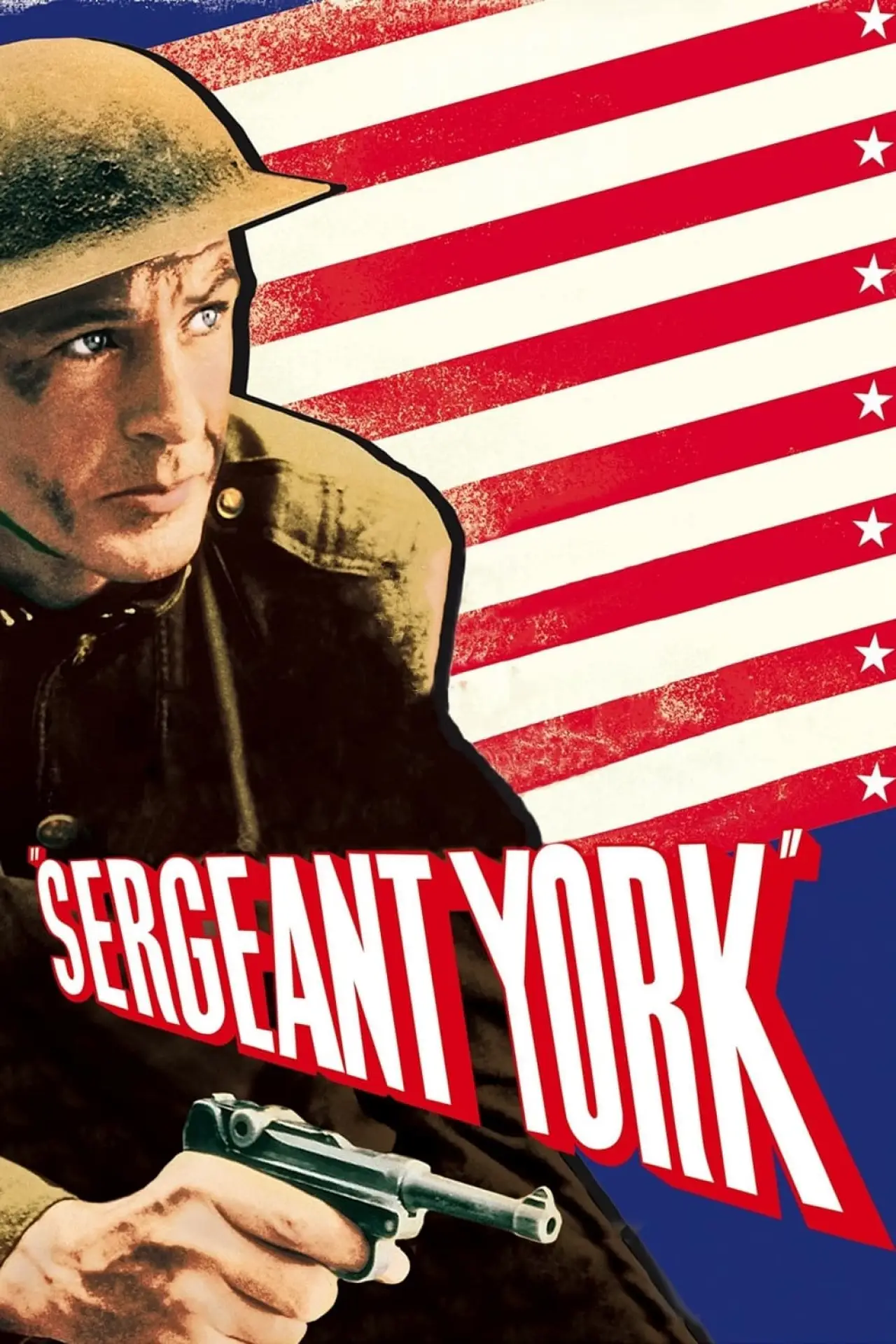
Sergeant York
Missiles! Jets! Tanks! ... It's still the guy with guts and a gun who wins the war!




Country
Production
Budget
$1 400 000
Box office
$16 361 885
Director
Actors
Scenario
Alvin C. York
Producer
Camera operator
Composer
Artist
Audition
Editing
William Holmes
Whole Team (38)
Whole Team (38)
Short description
Alvin York a hillbilly sharpshooter transforms himself from ruffian to religious pacifist. He is then called to serve his country and despite deep religious and moral objections to fighting becomes one of the most celebrated American heroes of WWI.
What's left behind the scenes
- During the filming of this movie, public opinion in the United States was strongly isolationist, and Warner Bros. initially feared that the audience would react coldly to the film's military message. Producer Jesse L. Lasky went to great lengths to avoid presenting the film as a war movie. By the time the film was released, Adolf Hitler had already captured almost all of Europe, and public attitudes toward the war had changed significantly, so all fears proved unfounded.
- The film portrays York as the eldest of three children. In real life, he was the third of eleven children.
- During the filming of this movie, public opinion in the US was strictly isolationist, and Warner Bros. initially feared that the audience would react coldly to the film's military message. Producer Jesse L. Lasky did his utmost to avoid presenting the movie as a war film. By the time the film was released, Adolf Hitler had already seized almost all of Europe, and public attitude toward the war had undergone significant changes, rendering all fears unfounded.
- The scene of the protagonist's spiritual transformation after being struck by lightning was invented by the screenwriters. In reality, York owed his transformation from a reckless man fond of a drink into a Sunday school teacher to his wife. This process was much longer, less dramatic, and not at all suitable for the cinema.
- In 2008, the film was selected for inclusion in the National Film Registry.
- Alvin S. York himself was present on the set for several days. When someone on the crew tactlessly asked York how many Germans he had killed, he burst into tears and suddenly vomited. A scandal erupted, and the person who asked the question faced dismissal, but the next day York demanded that this crew member be left alone and not fired.
- The film proved to be very accurate from a historical standpoint, primarily due to the studio's fear of facing lawsuits. Historical accuracy was categorically insisted upon by York himself, some residents of Tennessee, and the pastor.
- Gary Cooper did not participate in World War II due to his age and an old injury. The actor considered his performance in this film to be his contribution to the victory.
- The screenplay drew on 'Sgt. York's Military Diary,' Sam K. Cowan’s 'Sgt. York and His Family,' and Tom Skeyhill’s 'Sgt. York—Last of the Long Hunters.'
- In the film, York became a Christian after being struck by lightning while riding a mule. However, some say he did so to please his mother. Others say he did so to impress his future wife, Gracie Williams.
- Producer Jesse Lasky, who saw York in the Armistice Day parade in 1919, spent years persuading the modest Tennessean to allow a film about his life to be made. He finally secured York’s consent on the condition that his share of the money would go to charity and that Gary Cooper would play him. The actor initially refused, but changed his mind after visiting York. Warner Brothers hoped Michael Curtiz would direct, but Cooper refused to work with him, and when several other directors declined the project, it was offered to Howard Hawks.
- The scene of the protagonist's spiritual transformation after being struck by lightning was invented by the screenwriters. In reality, York owed his transformation from a reckless, drinking man into a Sunday school teacher to his wife. This process was much longer, less dramatic, and not at all suitable for the cinema.
- Producer Jesse L. Lasky, who had seen York in the Armistice Day parade in 1919, spent years trying to persuade the modest Tennessean to allow a film to be made about his life. He finally succeeded in gaining York's consent on the condition that his share of the money go to charity and that Gary Cooper play him. The actor initially refused but changed his mind after visiting York. Warner Brothers hoped that Michael Curtiz would direct, but Cooper did not want to work with him, and when several other directors passed on the project, it was offered to Howard Hawks.
- Producer Jesse L. Lasky, who saw York in the Armistice Day parade in 1919, spent years persuading the modest Tennessean to allow a film about his life to be made. He finally obtained York’s consent on the condition that his share of the money go to charity and that Gary Cooper play him. The actor initially refused, but changed his mind after visiting York. "Warner Brothers" hoped that Michael Curtiz would direct, but Cooper didn’t want to work with him, and when several other directors didn’t take on the project, it was offered to Howard Hawks.
- The film shows that when York returned to his homeland, to a new home and land, it was gifted to him by the people of the state of Tennessee. In reality, York had a home and wife several years before the state gave him new farms.
- Gary Cooper did not participate in World War II due to his age and a previous injury. The actor considered filming this movie to be his contribution to the victory.
- The film proved to be very accurate from a historical point of view, largely due to the studio's fear of being sued. Historical accuracy was strongly insisted upon by York himself, some townspeople from Tennessee, and the pastor.
- Alvin C. York himself was present on set for several days. When a member of the crew tactlessly asked York exactly how many Germans he had killed, he burst into tears and suddenly became physically ill. A scandal ensued, and the person who asked the question faced dismissal, but the very next day, York demanded that the crew member be left alone and not fired.
- The film depicts York as the eldest of three children. In reality, he was the third of eleven children.
Similar movies
8.4/10
8/10

7.9/10
7.9/10

7.8/10
7.6/10
7.6/10

7.5/10
7.5/10
7.4/10


 Auditions in India
 Casting calls in USA
 Castingi w Polsce
 Кастинги в Україні
