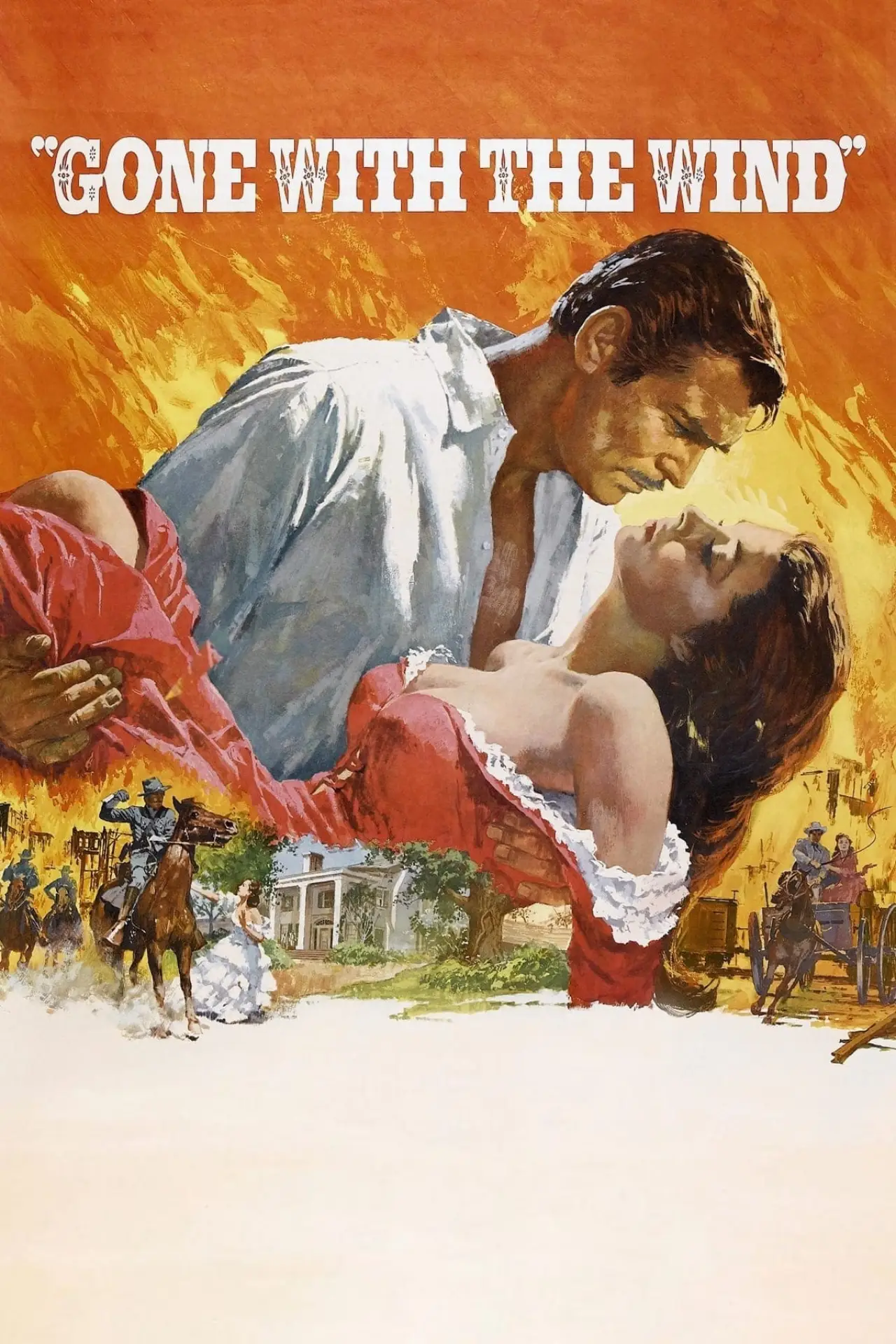
Gone with the Wind
The greatest romance of all time!



Country
Production
Budget
$3 977 000
Box office
$391 023 031
Director
Actors
Scenario
Producer
Camera operator
Composer
Artist
Audition
Editing
Short description
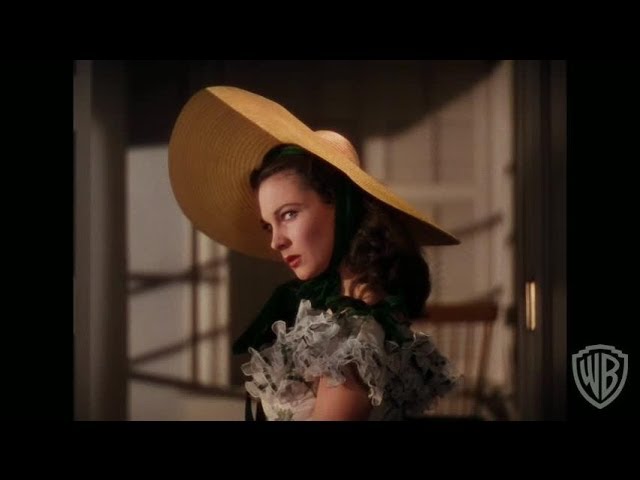
The spoiled daughter of a Georgia plantation owner conducts a tumultuous romance with a cynical profiteer during the American Civil War and Reconstruction Era.
What's left behind the scenes
- Yielding to strong pressure from the Legion of Followers of the Catholic Church, censors allowed 'Gone with the Wind' to be shown only in a limited number of cinemas and for a limited time due to the 'low moral principles of the main characters, a decaying example of societal degradation, scenes of violence and excessive lust'.
- Mitchell wrote the final chapter first. Then, she began stringing the chapters one after another onto the plot's core, much like pieces of meat on a shish kebab skewer. Among the author's quirks was the fact that she would hide many of the chapters under furniture in her house for a week or two, only to retrieve them later, reread them, and make corrections.
- Mitchell first wrote the final chapter. Then she began to string chapters together onto the plot’s core, like pieces of shashlik onto a skewer. Among the writer’s peculiarities was the fact that she would hide many chapters under furniture in the house for a week or two before retrieving them, rereading them and making corrections.
- Macmillan Publishers intended to print the novel under the title 'Tomorrow Is Another Day,' but Mitchell suggested several alternative titles, one of which was 'Gone with the Wind.' She discovered this phrase in Ernest Dowson's poem 'Cynara'.
- Screenings were held at Loew's Grand Theatre on Pear Street, and the cinema building was decorated like an old mansion of the O'Hara dynasty, with a photograph of Clark Gable embracing Vivien Leigh hanging above the entrance. Tickets for the premiere cost $10, but scalpers sold them for $200 (in today's money – $2000)...
- The film's screenwriter, Sidney Howard, died in an accident on a farm a month before the premiere. He was awarded the Oscar for Best Adapted Screenplay posthumously.
- Almost a million viewers watched the film in Atlanta. On the night of the premiere, up to 300,000 people stood near the cinema, wanting to personally greet the creators of the film.
- The search for an actress to play Scarlett O'Hara was even more intense. A total of 1400 candidates were considered.
- Leslie Howard, who played the war hero Ashley Wilkes in “Gone with the Wind,” was a reserve military officer. When World War II began, he volunteered for the front and died: his plane was shot down.
- The author drew the idea for the novel from her own life. While studying at Smith College, she fell in love with a classmate, but their happiness was not meant to be: the man died on the front lines during World War I.
- Leslie Howard, who played the war hero Ashley Wilkes in Gone with the Wind, was a reserve military officer. When World War II broke out, he volunteered for the front and was killed when his plane was shot down.
- One month after the book’s publication, David O. Selznick acquired the film rights from Margaret Mitchell for an unprecedented $50,000. At the time, this was the highest amount ever paid for a debut novel.
- Selznick began filming the movie before he even had an actress for the lead role! For the estate scenes, the mansion of Selznick's brother, Myron, the head of a Hollywood casting agency, was used. It was Myron who recommended the young actress Vivien Leigh. For the role of the Black nanny-maid, US President Franklin Roosevelt's cook, Lizzie McDuffy, was a candidate, but the part ultimately went to Hattie McDaniel.
- A well-known writer, Scott Fitzgerald, participated in writing certain scenes of the film, but his name did not appear in the credits.
- Vivien Leigh was cast in the role completely by chance, after numerous auditions by other famous Hollywood actresses; it is also incredible that the "American girl" was ultimately played by an Englishwoman. Around 1,400 actresses auditioned for the role, of whom 400 were invited for a second callback.
- When director George Cukor left the set due to disagreements with the producer, Selznick quickly found a replacement in Victor Fleming.
- Despite the fact that color became established in cinema much later (approximately in the 1960s), "Gone with the Wind" is a fully color film. It was shot using the "Technicolor" system, in which black and white shots were dyed red and green and bonded into a single reel, allowing for the desired color palette; this method was expensive, as it not only consumed a large amount of film but also required a specially modified camera.
- Vivien Leigh was approved for the role quite by chance, after numerous auditions of other famous Hollywood actresses; it is also remarkable that the "American girl" was ultimately played by an Englishwoman. Around 1400 actresses auditioned for the role, of which 400 were invited to a second audition.
- In the scene of the escape from Atlanta through the fire on the 86th minute of the film, the horse refuses to go further, as the ground is burning in front of it. When Rhett Butler covers the horse's head with a shawl, and they continue on their way, the flames in their path are already gone.
- Actress Barbara O'Neil, who played Scarlett's mother, Ellen, was actually only three years older than actress Vivien Leigh.
- Published in 1936, the novel sold over 50,000 copies on its first day. In its first year, it received the Pulitzer Prize and was reprinted 31 times.
- In 1976, when 'Gone with the Wind' was first shown on American television, sociologists estimated the audience to be around 130 million viewers.
- The first scene filmed for the movie was the scene of Scarlett and Rhett fleeing the burning Atlanta. The scene was filmed under natural conditions – the studio management set fire to an entire 'block' of sets remaining from the filming of another movie; at that time, the actress playing Scarlett had not yet been approved and was played by an actress whose name remains unknown.
- The film is based on Margaret Mitchell's novel 'Gone with the Wind' (1936).
- The famous writer F. Scott Fitzgerald participated in writing certain scenes of the film, though his name never appeared in the credits.
- Vivien Leigh worked for 125 days and received $25,000, while Clark Gable worked for 71 days and received $120,000.
- Paulette Goddard was approved for the role of Scarlett, but her contract was later terminated.
- Originally, the scene where Scarlett walks across the battlefield among the bodies of dead and wounded Confederates was planned to use 2,000 extras. However, the Actors' Guild demanded that all of them be paid at the average rate, which Selznick refused. Ultimately, the scene featured 800 paid extras and 400 volunteers who filmed for free.
- The film's screenwriter, Sidney Howard, died in a farming accident a month before the premiere. He was posthumously awarded the Oscar for Best Screenplay.
- The complete restored version of the film has a runtime of 238 minutes.
- Selznick was fined 5,000 dollars for some of the characters' slightly uncensored language, but he always felt that the money was well spent.
- The film featured 59 actors and 2,400 extras, 1,100 horses, 375 other animals, and 450 carriages and wagons. The final cost of the film was 3.7 million dollars (41 million in today's dollars), plus 550 thousand dollars for advertising, posters, and special booklets.
- Social customs in America in the 1930s were such that none of the Black actors and actresses who appeared in the film were allowed to attend the premiere.
- Other candidates considered for the role of Butler included 1930s stars such as Ronald Colman, Gary Cooper, Frederic March, Basil Rathbone, and Errol Flynn.
- 5,500 original costumes were sewn for the film, including 1,200 uniforms of the Confederate army. Their total cost was only $10,000. All uniforms underwent an aging process: they were rubbed with sand, brushed with metal brushes, and dirtied.
- In July 1998, the legendary film 'Gone with the Wind' was re-released in theaters across America.
- Selznick began filming the movie without yet having an actress for the lead role! For filming the plantation house, the estate of Selznick's brother, Myron, head of a Hollywood casting agency, was used. It was Myron who recommended the young actress Vivien Leigh. The role of the black nanny-maid was sought after by... the cook of President Franklin Roosevelt, Lizzie McDuffie, but Hattie McDaniel was ultimately chosen.
- Paulette Goddard was cast as Scarlett, but her contract was later terminated.
- The film featured 59 actors and 2,400 extras, 1,100 horses, 375 other animals, and 450 carriages and wagons. The final cost of the film was $3.7 million (equivalent to $41 million today) plus $550,000 for advertising, posters, and special brochures.
- Margaret Mitchell received an advance of 500 dollars for the future book and earned 3 million dollars in royalties in the first year (which corresponds to 33 million modern dollars).
- Clark Gable's wife, actress Carole Lombard, auditioned for the role of Scarlett.
- As an advance for her future book, Margaret Mitchell received $500, and earned $3 million in royalties in the first year (equivalent to $33 million today).
- Two people from the cast of 'Gone with the Wind' lived during the years in which the film's plot unfolds: Harry Davenport (Dr. Meade) and Margaret Mann (a bit part as a nurse in the hospital, writing a letter dictated by a dying soldier).
- Bette Davis was considered the leading contender for the role, but the star was tied to a long-term contract with Warner Bros. Jack Warner agreed to release Davis on the condition that Errol Flynn play the male lead. Bette Davis refused because, in her opinion, Flynn looked too feminine.
- Actress Barbara O'Neil, who played Scarlett's mother Ellen, was in fact only three years older than actress Vivien Leigh.
- Among other candidates for the role of Butler, stars of the 1930s such as Ronald Colman, Gary Cooper, Fredric March, Basil Rathbone, and Errol Flynn were considered.
- Bette Davis was considered the main contender for the role, but the star was bound by a long-term contract with 'Warner Bros.'. Jack Warner was willing to release Davis, but on the condition that Errol Flynn play the male lead. Bette Davis refused, as she believed Flynn looked too feminine.
- The Macmillan Publishers publishing house intended to publish the novel under the title “Tomorrow Is Another Day,” but Mitchell suggested several alternative titles, among which was “Gone with the Wind.” She found this phrase in Ernest Dowson’s poem “Cynara.”
- Screenings took place at the Loew's Grand Theatre on Broadway; the cinema building was decorated as the ancestral mansion of the O'Hara dynasty, and a photograph of Clark Gable embracing Vivien Leigh hung above the entrance. Premiere tickets cost 10 dollars, but scalpers sold them for 200 dollars (approximately 2,000 dollars in today's money)...
- Initially, models were used instead of locomotives in the film. On December 29, 1938, Wilbert Kurtz, the film's historical consultant, wrote to the management of the NC&StL Ry railroad requesting the loan of the General locomotive (the General – a famous locomotive in the US, known after an incident during the Civil War) which was stored in Chattanooga at the time. However, on January 3, 1939, a reply came stating that the locomotive was already being prepared for shipment to the World's Fair in New York and would be unavailable for a year. Kurtz then sent a new letter, requesting the General for filming in February-March, i.e., before the exhibition. The response was positive, but the railroad management required payment for the delivery of the locomotive with its tender to Los Angeles and back at a cost of $3 per hundred pounds of weight. However, this resulted in a significant amount (the locomotive alone weighed 50,300 pounds), so the idea of using the General in the film had to be abandoned. As a result, there are no real locomotives in the film, only wooden models.
- The film's script was changed almost daily, and the actors did not receive the final version until after filming was completed.
- The film is based on the novel 'Gone with the Wind' (1936) by Margaret Mitchell.
- Selznick was fined $5,000 for some rather uncensored expressions of the film’s characters, but he always believed he had paid the money well.
- Initially, it was planned to use 2000 extras in the scene where Scarlett walks through the battlefield among the bodies of dead and wounded Southerners. But the Actors Guild demanded that all of them be paid at the average rate, which Selznick refused. The scene involved 800 paid extras and 400 volunteers who filmed for free.
- A month after the book's publication, David O. Selznick purchased the film rights from Margaret Mitchell for an unprecedented $50,000. At the time, this was the highest sum ever paid for an author's debut novel.
Similar movies
8.5/10
8.1/10
8.1/10
8.1/10
8/10
7.9/10
7.9/10
7.9/10
7.9/10
7.8/10


 Auditions in India
 Casting calls in USA
 Castingi w Polsce
 Кастинги в Україні
