Planes
From above the world of Cars



![Video for the film Planes — Planes Trailer 2013 Disney Movie - Official [HD]](https://i.ytimg.com/vi/3KumjBXHdzY/sddefault.jpg)
Country
Production
Budget
$50 000 000
Box office
$239 258 712
Director
Actors
Scenario
Producer
Traci Balthazor, John Lasseter
Camera operator
Composer
Artist
Tim Allen
Audition
Editing
Short description
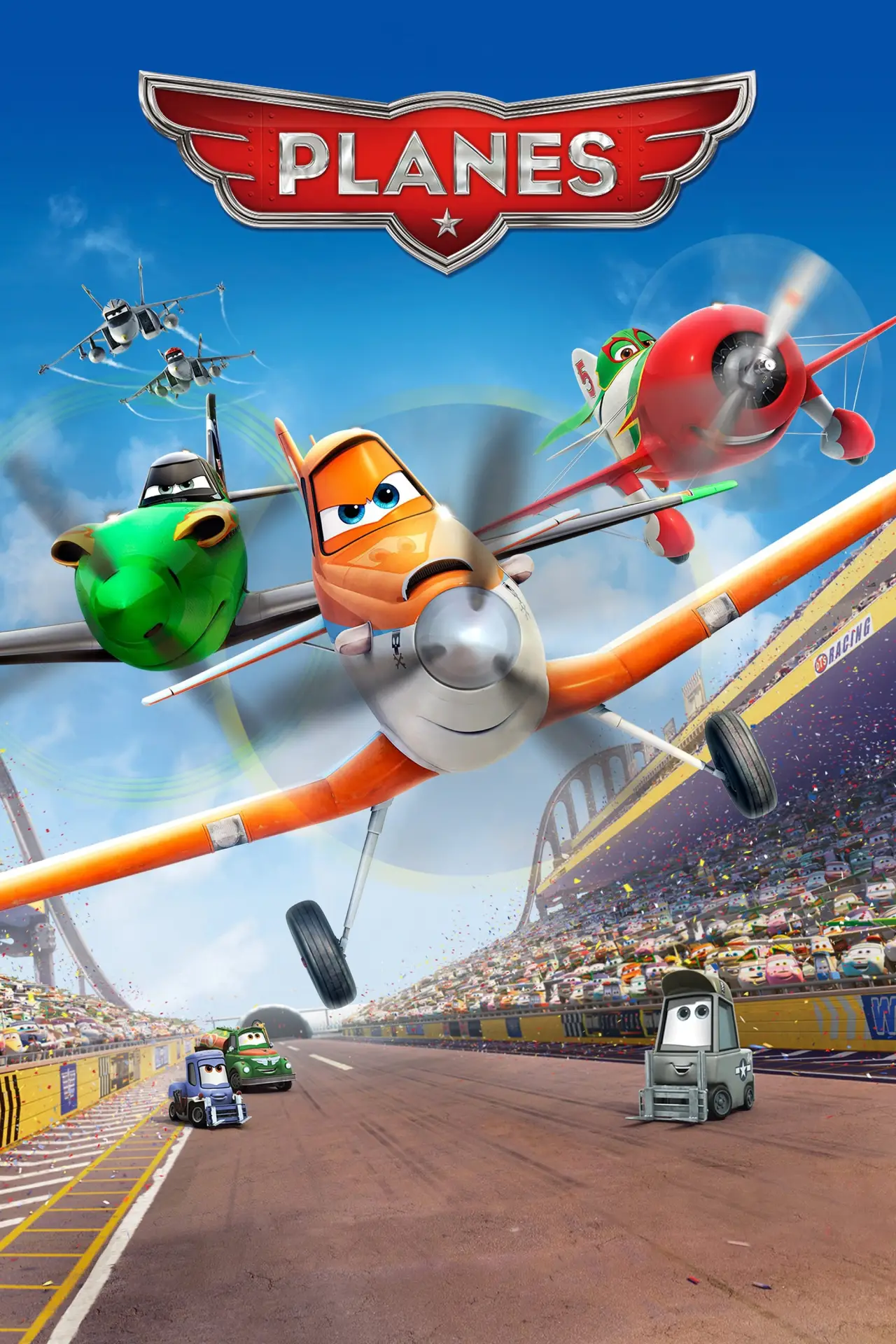
Dusty is a cropdusting plane who dreams of competing in a famous aerial race. The problem? He is hopelessly afraid of heights. With the support of his mentor Skipper and a host of new friends, Dusty sets off to make his dreams come true.
What's left behind the scenes
- Clay Hall and his team undertook several research trips to scout locations in the Midwest for the film, including: Ohio. The filmmakers visited the National Museum of the U.S. Air Force, where they studied the legendary flying fortress Memphis Belle, the airplane used by President John F. Kennedy, and the MiG-25 supersonic interceptor, which NATO calls the Foxbat. They also attended the Dayton Air Show, where they met pilots from the Tuskegee Airmen base. They even got to fly in a 40-year-old UH-1 Iroquois helicopter, known as "Huey" in the U.S. Army, and spoke with representatives from the Blue Angels aerobatic team. North Dakota. Several members of the crew went to the aviation museum in Fargo and looked at a restored Chance-Vought F4U Corsair single-seat carrier fighter. They also met a retired U.S. Air Force pilot who flew the TBM Avenger torpedo bomber from 1944-1945. This information was used to create the character of Skipper, a Navy veteran who trains Dusty. Minnesota. The filmmakers visited nine regional airports and airfields. Among them was Leaders Clear Lake Airport, which resembled an airplane graveyard. The airfield was surrounded by cornfields, in which old crop dusters and fuel trucks were scattered here and there. This location ultimately inspired the artists working on the design of Propwash Junction. There, they also found one of the old fuel trucks, literally falling apart near a cornfield, which served as the model for Dottie.
- Members of the film crew visited the deck of the USS Carl Vinson, an American aircraft carrier. This Nimitz-class ship was launched in 1980 and boasts a rich history. It served as the reference for the aircraft carrier that appears in the cartoon.
- The crew relied on real airplanes, and this, surprisingly, helped to tell the story. Considering that crop dusters don't fly higher than 300 meters above the ground, the screenwriters rightly assumed that Dusty would face a number of challenges that would hinder his dream of becoming the most famous air racer. Dusty’s acrophobia prompted the filmmakers to seek advice from specialists who could suggest what symptoms the main character should exhibit.
- In the early stages of production, it was noticeable that the characters looked natural as long as the aircraft’s landing gear didn't leave the ground, but the moment they took to the air and began performing aerobatics in three dimensions, everything became much more complicated. Initially, they looked like toys suspended on strings. The filmmakers turned to Jason McKinley (Red Tails) who served as an aviation consultant throughout the film's production. McKinley is a writer, producer, and director of a series of documentaries for the History Channel and specializes in staging air battles for film and television. McKinley fully supported John Lasseter's desire to maintain realism – the true size and speed of the airplanes, as well as adherence to the principles of physics.
- Aviation consultant Jason McKinley's expertise proved useful when the artists began working on the flight set designs and camera angles. The exterior of such scenes is extremely important for a realistic picture. The solution was to increase the size of the set to a point where the aircraft could fly at real speed, and, depending on the scenery, the cameras were positioned accordingly.
- In the American version, Rochelle, a plane from Canada, was used instead of Tanya, the Russian aircraft.
- The film used the sounds of real aircraft engines. Sounds of several old biplanes, twin engines, and even an F-18 fighter jet were recorded, and Dusty was 'voiced' by a real crop duster.
- Clay Hall and his team undertook several research trips specifically for the film's production, visiting several states in the Midwest, including Ohio. The filmmakers visited the National Museum of the U.S. Air Force, where they studied the legendary B-17 Flying Fortress 'Memphis Belle,' President John F. Kennedy's plane, and the MiG-25 supersonic interceptor, which NATO calls the 'Foxbat.' Additionally, studio specialists attended the Dayton Air Show, where they met with pilots from the Tuskegee Airmen. They also had the opportunity to fly in a 40-year-old UH-1 Iroquois helicopter, known in the U.S. Army by the nickname 'Huey,' and speak with representatives of the elite 'Thunderbirds' aerobatic team. In North Dakota, several crew members visited the aviation museum in Fargo and viewed a restored Chance Vought F4U Corsair single-seat carrier-based fighter. They also met with a retired U.S. Air Force pilot who flew a TBM Avenger torpedo bomber between 1944 and 1945. This information was used to create the character of Skipper, the Navy veteran who trains Dusty. In Minnesota, the filmmakers visited nine regional airports and airfields, including Leaders Clear Lake Airport, which resembled an aircraft graveyard. The airfield was surrounded by cornfields with old crop dusters and fuel trucks scattered here and there. This location ultimately inspired the artists working on the design of Propwash Junction. It was also there that they found one of the old fuel trucks, which was literally falling apart near a cornfield; the character Chuhak was based on it.
- In the early stages of production, it was noticeable that as long as the planes' landing gear remained on the ground, the characters looked natural; however, the moment they took to the air and began performing aerobatic maneuvers in three dimensions, everything became significantly more complex. Initially, they looked like toys hanging on strings. The filmmakers sought help from Jason McKinley (Red Tails), who served as the aviation consultant throughout the production of the film. McKinley is a writer, producer, and director of a series of documentaries for the History Channel and specializes in staging aerial battles for film and television. McKinley fully supported John Lasseter's desire to maintain realism—the true size and speed of the aircraft, as well as adherence to the laws of physics.
Similar movies
8.8/10
8.7/10

8.5/10

8.4/10

8.4/10
8.3/10

8.3/10
8.2/10
8.2/10
8.2/10


 Auditions in India
 Casting calls in USA
 Castingi w Polsce
 Кастинги в Україні
