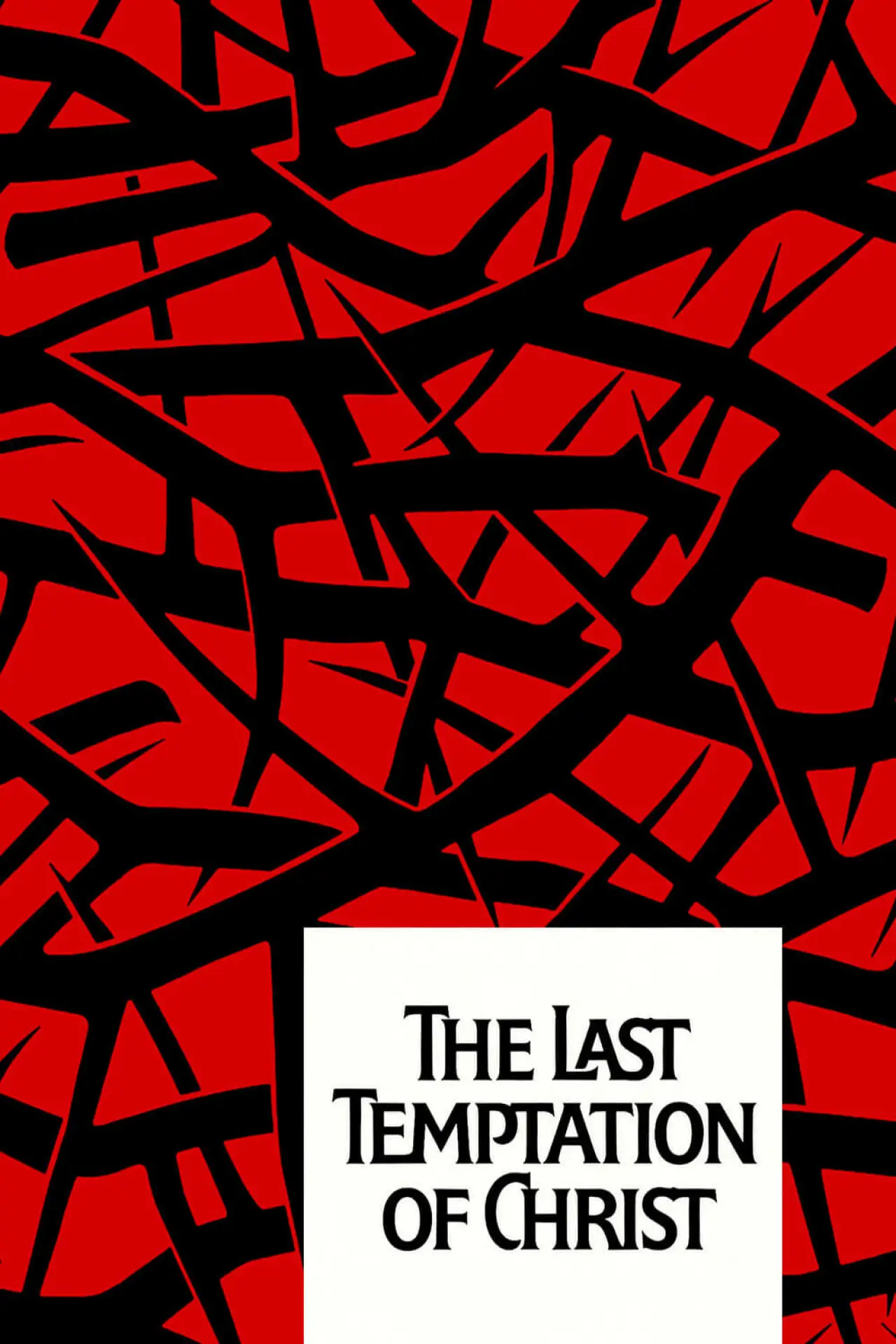
The Last Temptation of Christ




Country
Production
Genre
Budget
$7 000 000
Box office
$8 373 624
Director
Actors
Scenario
Producer
Barbara De Fina, Harry J. Ufland
Camera operator
Composer
Artist
John Beard, John Frankish
Audition
Cis Corman
Short description
Jesus, a humble Judean carpenter beginning to see that he is the son of God, is drawn into revolutionary action against the Roman occupiers by Judas -- despite his protestations that love, not violence, is the path to salvation. The burden of being the savior of mankind torments Jesus throughout his life, leading him to doubt.
What's left behind the scenes
- Scorsese first attempted to film an adaptation of the book in 1983. Filming began at Paramount Pictures with a budget of around $20 million. Aidan Quinn was to play Jesus, Harvey Keitel as Judas, and Sting as Pontius Pilate. The filming was halted shortly after starting, despite $3 million already being spent. This happened after a series of letters to the film company’s management from extremist Christian organizations. The filmmakers were accused of antisemitism and attempting to present their own interpretation of the biblical theme with homosexual undertones. This story deeply affected the director, and he even considered moving to Europe and switching to documentary filmmaking. In an interview, Scorsese bitterly noted that Hollywood cinema had become completely commercialized, saying: “I hope someday I will still film ‘The Last Temptation…’, but not in this country and not with this country’s money. That’s it. Forget about it. This film has nothing to do with the American film industry.” In 1987, Scorsese began working with a new agent, Michael Ovitz. Ovitz, who enjoyed great authority and connections in the film world, was able to get the project moving again. For the second time, Scorsese managed to interest Universal Pictures in the script. When one of the studio bosses asked the director why he decided to film a movie on such a topic, Scorsese replied that he wanted to better understand the nature of Christ. The company agreed to provide funding for the project, but only on the condition that Scorsese's next film for Universal Pictures would be strictly commercial.
- Scorsese made his first attempt to film the book back in 1983. Production of the film, with a budget of approximately $20 million, began at Paramount Pictures. Aidan Quinn was to play Jesus, Harvey Keitel as Judas, and Sting as Pontius Pilate. Shortly after starting, filming was halted despite $3 million already being spent. This occurred following a series of letters to the company's management from extremist Christian organizations. The filmmakers were accused of antisemitism and attempting to convey their interpretation of the biblical theme with homosexual motifs. This story deeply affected the director, and he even considered moving to Europe and switching to documentary filmmaking. In an interview, Scorsese bitterly noted that Hollywood cinema had become completely commercialized, stating: 'I hope that someday I will finally make "The Last Temptation...", but not in this country and not with this country's money. That's it. Forget about it. This film and the American film industry have nothing in common.' In 1987, Scorsese began working with a new agent, Michael Ovitz. Utilizing his great authority and connections in the cinematic world, Ovitz managed to get the project moving again. On his second attempt, Scorsese succeeded in piquing the interest of Universal Pictures with the script. When one of the studio bosses asked the director why he decided to make a film on such a subject, Scorsese replied that he wanted to better understand the nature of Christ. The company agreed to fund the project, but only on the condition that Scorsese's next film for Universal Pictures would be strictly commercial.
- Based on the real story of bank robber Brenden Abbott and his accomplice Brendan Berichon.
- "The Last Temptation of Christ" is a film adaptation of the novel of the same name by Nikos Kazantzakis.
- Martin Scorsese strictly banned smoking on set because he is an asthmatic himself, and also to ensure that no one could take unauthorized photos of the actors and actresses in their biblical costumes—this applied especially to Willem Dafoe, who played Jesus and who had been smoking incessantly with a cigarette in his mouth.
- Martin Scorsese strictly forbade smoking on the set because he himself has asthma, and to prevent anyone from photographing the actors and actresses in the guise of biblical characters – this especially applied to Willem Dafoe, who played Jesus and smoked incessantly – with a cigarette in his mouth.
- 'The Last Temptation of Christ' is an adaptation of the novel of the same name by Nikos Kazantzakis.
- The film's epigraph consists of the words of Nikos Kazantzakis: 'The dual nature of Christ—man's greatest thirst to know God, a thirst so human and yet so inhuman... has always been an unfathomable mystery to me. From early youth, my deepest suffering and the source of all my joys and torments was the incessant and ruthless battle between spirit and flesh... and my soul was the arena where these two armies met and crossed swords.'
- The epigraph to the film is a quote by Nikos Kazantzakis: "The dual nature of Christ—man’s greatest longing to know God, a longing so human and yet so inhuman… has always been a mystery to me. From early youth, my deepest suffering and the source of all my joys and torments has been the ceaseless and merciless battle between spirit and flesh… and my soul has been the arena where these two armies met and clashed."
- Willem Dafoe was unable to see anything for three days because special drops were administered to his eyes, which kept his pupils dilated even in bright sunlight.
- Martin Scorsese first read Nikos Kazantzakis's novel 'The Last Temptation' (1955) when Barbara Hershey recommended the book to him during the filming of Scorsese's second feature film (the 1972 crime melodrama 'Boxcar Bertha'). After reading years later that Scorsese finally had the opportunity to film this movie, she called him and literally begged the director to cast her as Mary Magdalene. Scorsese even conducted screen tests with her so that the actress would not feel he was casting her merely as a gesture of gratitude for having recommended the source novel to him many years prior.
- As an experienced stuntman, Nash Edgerton performed almost all of his own stunts in the chase scene.
- Martin Scorsese first read the novel ‘The Last Temptation’ (1955) by Nikos Kazantzakis (1883-1957) when Barbara Hershey recommended the book to him while filming Scorsese’s second feature film (it was the 1972 crime melodrama ‘Boxcar Bertha’). After reading many years later that Scorsese had finally been given the opportunity to film this movie, she called him and literally begged the director to cast her as Mary Magdalene. Scorsese even held a screen test with her so that the actress would not think he was casting her out of gratitude for her recommending the source novel to him many years ago.
- The film's budget was such that they had to save money on literally everything. There were not enough makeup artists on the crew, and Barbara Hershey had to touch up her own mehndi (henna body art; unlike tattoos, these are temporary decorations, but they last significantly longer than paint, etc.), as they kept smudging under the scorching sun.
- According to Martin Scorsese, the final shot of the film exists by pure chance. Due to some defect, light leaked into the camera and hit the film, creating a white veil effect exactly at the moment of Jesus's death.
- The film’s budget was so tight that they had to save on everything. There weren't enough makeup artists on set, and Barbara Hershey had to fix her own mendhi (henna body art; unlike tattoos, it is a temporary decoration, but lasts much longer than paint, etc.) herself, as it kept smudging under the scorching sun.
- Willem Dafoe couldn't see anything for three days because special eye drops were used on him, which dilated his pupils even in bright sunlight.
- According to Martin Scorsese, the film's final shot was due to chance. Due to some defect, light entered the camera and hit the film, creating a white haze just at the moment of Jesus’s death.
- The film’s budget was quite modest, so in the scene in the temple, when it seems like Roman soldiers are approaching Christ from all sides, the same five soldiers were used in all the shots.
- Brenton Thwaites' character moves in criminal circles. In preparation for the role, the actor befriended a man who received a prison sentence at a very young age and spent most of his life behind bars. Thwaites adopted many traits from him.
Similar movies
8.7/10
8.6/10
8.5/10
8.5/10
8.5/10
8.4/10
8.4/10
8.3/10

8.2/10
8.2/10


 Auditions in India
 Casting calls in USA
 Castingi w Polsce
 Кастинги в Україні
