Ten minute warm up routine before a filming shift
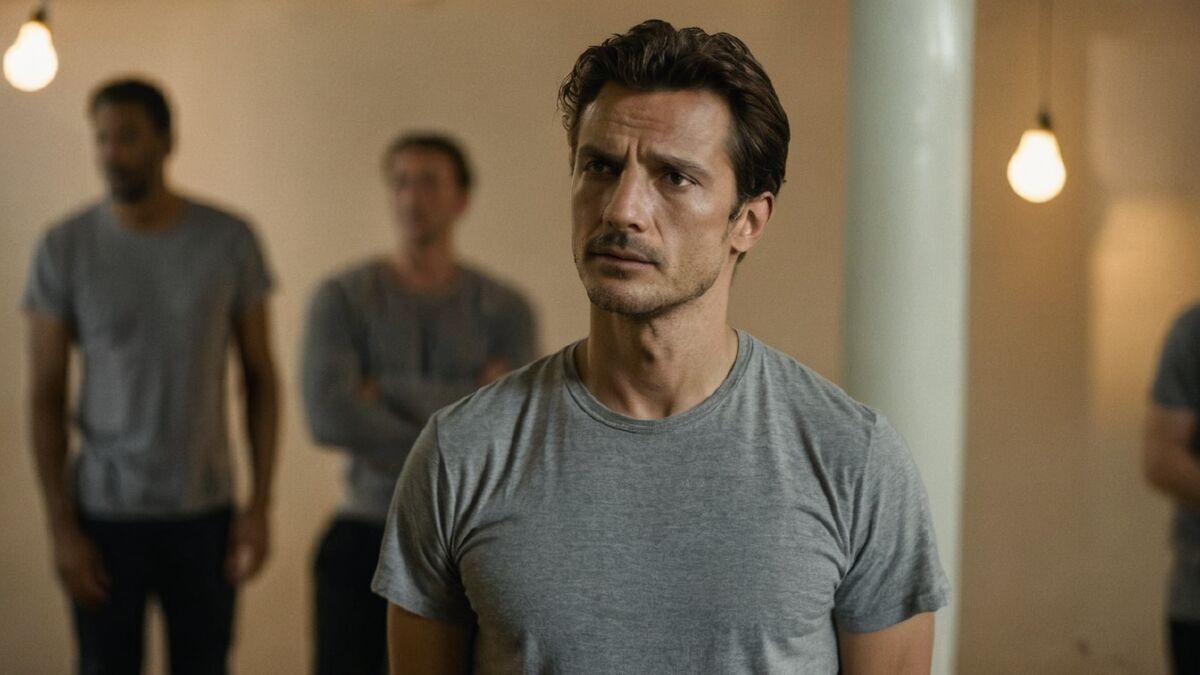
Behind the Scenes: Fitness: Ten minute warm up routine before a filming shiftOn set, you might be asked to enter a scene just one minute after spending four hours sitting in the makeup chair. Your body isn't ready: muscles are stiff, breathing is shallow, and your voice is cold. A ten-minute warm-up solves this problem, and it can be done right where you are standing.
Why It Is Necessary
- Long Wait Times. Several hours of static posture create tension in the neck, shoulders, and lower back—all of which are visible on camera.
- Cold Voice. Without a warm-up, the first line often sounds raspy or thin, and that ends up in the take.
- Shallow Breathing. Without proper breath support, you may struggle to finish a long sentence.
- Psychological Transition. A warm-up serves as a ritual to switch your mind from "waiting mode" to "work mode."
- Injury Prevention. This is especially critical if the scene involves physical movement.
The Routine: Ten Minutes
The sequence is important: work from top to bottom, moving from joints to breath and then to the voice.
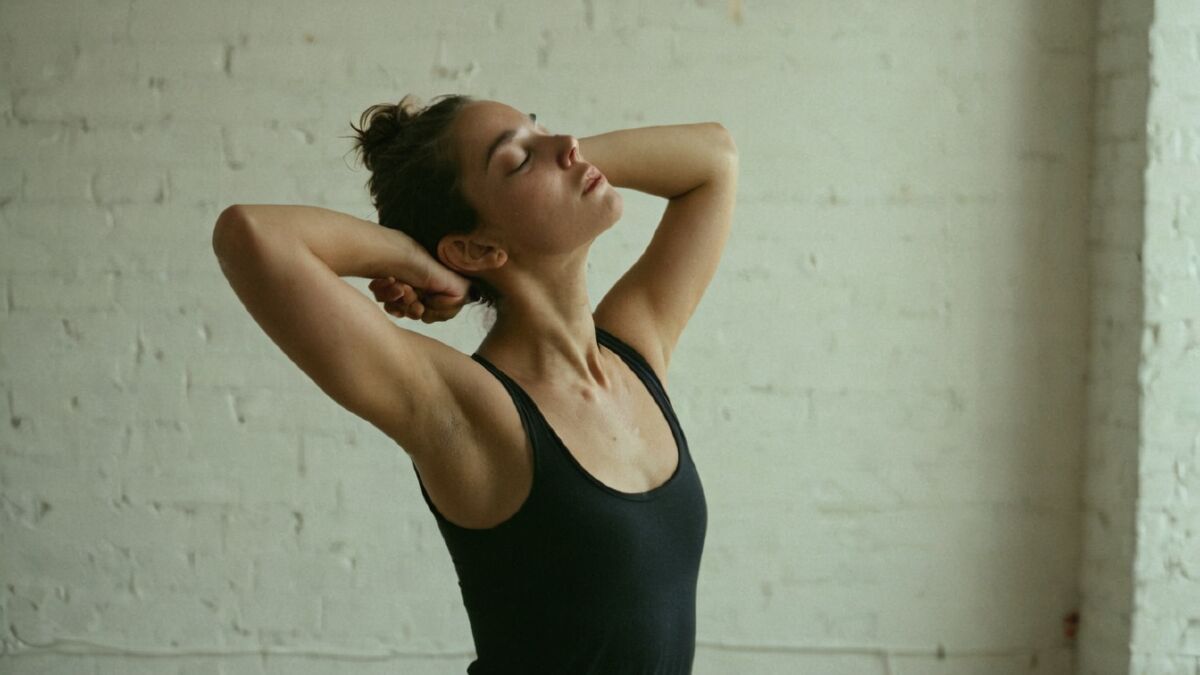
1. Joints — 2 Minutes
- Neck. Slow tilts forward-back and right-left, and semi-circles with the chin toward the chest. Do not tilt your head sharply backward.
- Shoulders. 8 circles forward and 8 backward, then shrug them up to your ears and drop them abruptly — 5 times.
- Arms. Circles with the elbows and wrists.
- Torso. Twists to the right and left with relaxed arms.
- Pelvis. Circles in both directions.
- Knees and Feet. Circles and calf raises (rising onto toes).
2. Spine — 2 Minutes
- Roll Down. Standing up, slowly lower yourself vertebra by vertebra, hang for a moment, and rise just as slowly. 3 times.
- Standing Cat-Cow. Hands on hips, round your back, then arch it. 8 times.
- Side Bends. 5 times on each side; reach upward rather than just leaning to the side.
3. Releasing Tension — 1 Minute
- Shaking. Relaxedly shake your wrists, arms, legs, and your entire body. 30 seconds. This is the most underrated exercise: it releases muscle tension faster than stretching.
- Tense and Release. Tense your entire body for 5 seconds, then release abruptly. 3 times.
4. Breathing — 2 Minutes
- Support Check. Place a hand on your stomach; inhale through the nose — the stomach should rise, not the chest. 5 cycles.
- Long Exhale. Inhale for a count of 4, exhale with a "sss" sound for 8, then for 12. 5 times.
- Pulsed Exhale. One inhale, then exhale in short bursts with a "ha" sound. 5 times.
5. Articulation — 2 Minutes
- Massage the face and jaw with your fingers.
- Open the mouth wide, hold, and release. 5 times.
- Flutter the lips (lip trills).
- Move the tongue in a circle behind the lips in both directions.
- Silent vowels with maximum amplitude: a-o-u-e-i.
6. Voice — 1 Minute
- Humming. On the exhale, sustain an "mmm" on a comfortable note, feeling the vibration in the lips. 5 times. This warms up the vocal cords gently.
- Gliding. Using the "mmm" or "ooo" sound, glide your voice from low to high and back. 3 times.
- Low-Volume Tongue Twister. One or two, performed slowly and clearly.
If Space Is Limited
In a cramped dressing room or while wearing a restrictive costume, use the three-minute condensed version: neck, shoulders, shaking the wrists, breathing with long exhales, humming, and silent vowels. This can be done while sitting and in any costume.
Right Before the Take
One minute before the command to start:
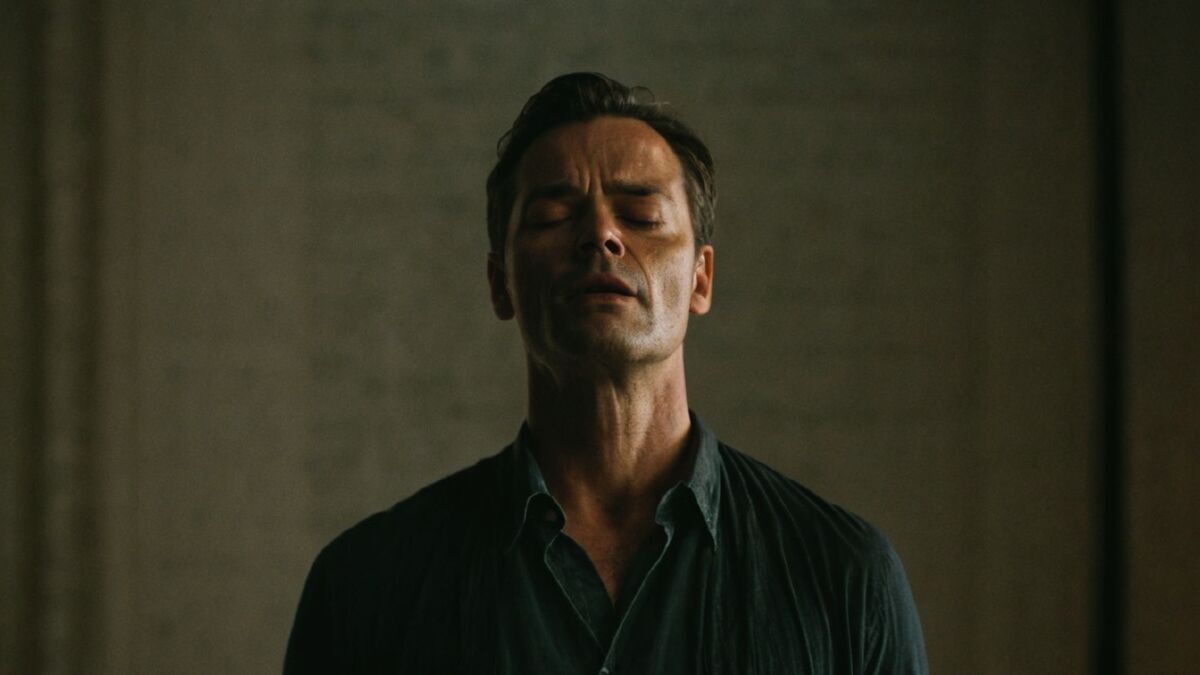
- Three deep breaths with long exhales.
- Drop your shoulders.
- Unclench your jaw — it is usually the first place to tense up and affects the entire face.
- Focus on one single thought about what happened a second before the scene begins.
What to Avoid During Warm-Up
- Deep Stretching. Overly relaxed muscles perform less efficiently; it is better to stretch after the shift.
- Strength Training. Exhausted muscles and shortness of breath will not help you on camera.
- Screaming and Loud Tongue Twisters. Vocal warming-up should be done quietly.
- Sharp Neck Movements. Especially tilting the head far back.
- Warming up in a heavy costume. Check with the costume department first to see what is permissible.
For Long Shifts
Repeat the short version every two to three hours of waiting, not just at the start. Always do it before a challenging scene: one that is emotionally demanding, physically taxing, or involves a long monologue.
Summary
- Order: joints, spine, releasing tension, breathing, articulation, voice.
- Full routine: ten minutes; condensed: three minutes (can be done seated).
- Shaking releases tension faster than stretching.
- Warm up the voice with quiet humming, not loud tongue twisters.
- Avoid deep stretching and strength exercises before a shift.
- Repeat the short version every two to three hours of downtime.
Find projects and shifts in the castings section.
Share


Author: Tom Ashwell, training and craft editor
Publication date: August 13 2026
Views: 28
Comments
 Auditions in India
 Casting calls in USA
 Castingi w Polsce
 Кастинги в Україні
