Zero Dark Thirty
The greatest manhunt in history.



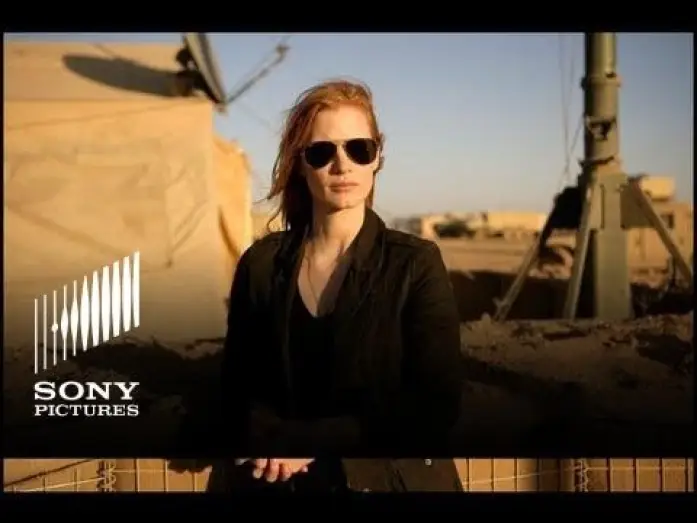
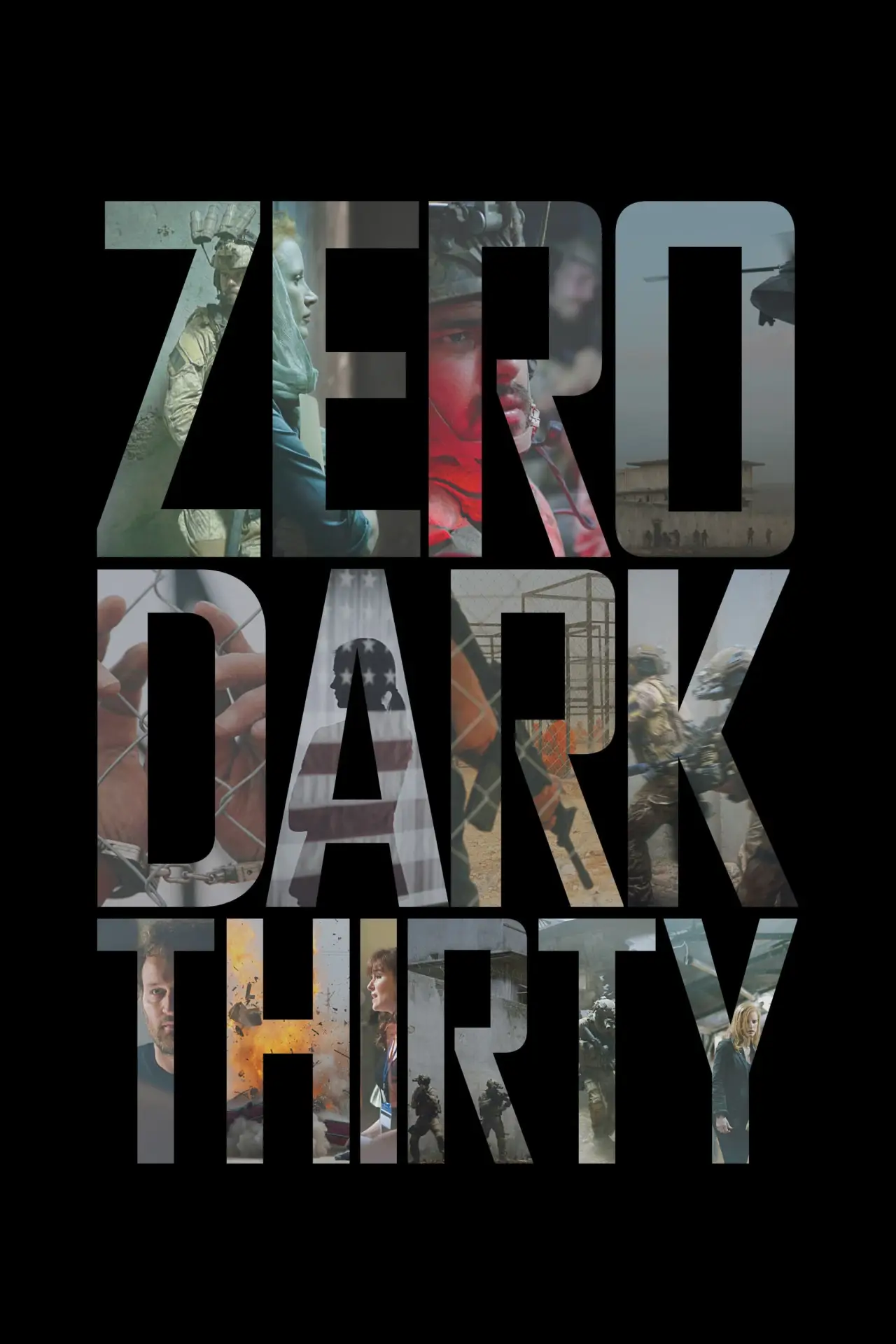
Country
Budget
$40 000 000
Box office
$132 820 716
Director
Actors
Scenario
Producer
Camera operator
Composer
Artist
Jeremy Hindle
Audition
Gail Stevens, Richard Hicks, Mark Bennett
Short description
A chronicle of the decade-long hunt for al-Qaeda terrorist leader Osama bin Laden after the September 2001 attacks, and his death at the hands of the Navy S.E.A.L. Team 6 in May, 2011.
What's left behind the scenes
- Joel Edgerton was initially considered for the lead role, but he left the project due to scheduling conflicts, and the role went to Jason Clarke. Later, when the scheduling issue was resolved, Edgerton returned to the project, but in a different role.
- Rooney Mara could have starred in this film, but she had to decline, and ultimately the role went to Jessica Chastain.
- Tom Hardy, Idris Elba, and Guy Pearce were considered for various roles in the film. Hardy's role ultimately went to Mark Strong.
- Initially, the film was about a decade-long, unsuccessful hunt for Osama bin Laden. After he was killed, the script was completely rewritten.
- There were previous negotiations with James Cameron, the ex-husband of this film's director, Kathryn Bigelow, for him to direct the film, but he declined in favor of working on the sequel to "Avatar" (2009).
- This is the first feature film where Jeremy Hindle worked as a production designer. Previously, Hindle collaborated with Australian cinematographer Greg Fraser on television commercials. Director Kathryn Bigelow praised Hindle for his remarkably accurate recreation of bin Laden’s compound, built from scratch in the Jordanian desert in less than three months.
- Jordan and the Indian city of Chandigarh, located near the Pakistani border, were used to film scenes set in Pakistan and Afghanistan. Some footage featuring stunt doubles was actually filmed in Pakistan.
- In the military memoir "No Easy Day," written by a member of a Naval Special Warfare Development Group, the film's main character, CIA operative Maya, is known only as Jen.
- The scene depicting the raid on Osama bin Laden's compound lasts about 25 minutes. That’s only a few minutes shorter than the duration of the actual Navy SEAL attack.
- Somewhat unusual was the reaction of CIA Director Michael Morell, who stated that while the filmmakers consulted with the CIA, the film is nonetheless a dramatization and not historically accurate. In particular, Morell refuted the film’s claim that enhanced interrogation techniques, also known as torture, were very helpful during the search for Osama bin Laden. Director Morell stated: “That depiction is false. We cannot allow a Hollywood movie to cloud our memory.”
- At the Lamborghini showroom in Kuwait, Dan asks if there is a Balboni among the cars on display. He is referring to the Gallardo LP 550-2 Valentino Balboni, a limited-edition version of the Gallardo named after Lamborghini’s test driver. It’s a car with a stripe down the middle.
- The stealth helicopters used in the actual mission were heavily modified Sikorsky UH-60 Black Hawks. A radar-absorbent coating, like that of an F-117 fighter jet, helped them avoid detection by Pakistani air defenses, and additional blades on the main and tail rotors created less noise than standard rotors.
- The strange night vision goggles with four lenses worn by the Navy SEALs are actually real. They are a cutting-edge development, the GPNVG-18 (Panoramic Night Vision Goggles) manufactured by L-3 Warrior Systems. The additional lenses provide a better peripheral view.
- Among the many books she researched in preparation for her role as a CIA operative, Jessica Chastain highlighted two that were of particular interest to her, namely Lawrence Wright's The Looming Tower: Al-Qaeda and the Road to 9/11 (published in Russian as “Al-Qaeda”) and Michael Scheuer's Osama Bin Laden (“Usama bin Laden”).
- Jessica Chastain consistently saved voice messages from director Kathryn Bigelow, and in one such message she learned that she had been chosen for the role of Maya. This message arrived on November 21, 2011, at 01:04.
- In January 2013, shortly before the film's release, three politically active members of the Academy of Motion Picture Arts and Sciences (Martin Sheen, David Klonoff, and Edward Asner) announced that they would organize a public condemnation of the film for its tolerance of torture.
- According to the film's advertising, its title has four meanings. Zero Dark Thirty is a military term denoting time (30 minutes after midnight). It can also be interpreted as the expression “Under the Cover of Darkness.” Furthermore, it is the time when the Navy SEAL helicopters took off to carry out the mission to eliminate the world's most wanted man – Osama bin Laden. And finally, the expression is used as a metaphor for the ten-year relentless pursuit of Osama bin Laden.
- The screenwriter, director, and producer, as well as much of the film crew, had previously worked on The Hurt Locker (2008).
- The prototype for Jessica Chastain's character was a real CIA employee whose name remains undisclosed. She was awarded a major U.S. military honor for her participation in the operation.
- As Bigelow had anticipated, immediately after the announcement of the development of such a political film, the film crew was met with a barrage of criticism. One of the first to voice his opinion was U.S. Representative Peter King, who wondered: "Was Bigelow granted access to classified documents?" The director responded with a curt "No comment." Despite this, screenwriter Boal admitted that much of the film was based on his own research. Later, opponents of President Obama claimed that representatives of his administration personally provided the filmmakers with secret data.
- Zero Dark Thirty is a military term denoting the precise time of 00:30. It was at this appointed hour that the group of Navy SEALs began to carry out their mission. Osama bin Laden was killed at 2 a.m. on May 2, 2011.
- Several important factors regarding the preparation and execution of the raid, which are detailed in the book No Easy Day, were embellished or omitted entirely in this film. These include the discussion of whether to bomb the compound or conduct a raid using special forces; the construction of a full-scale replica of the compound in North Carolina for training purposes and repeated exercises with the same team of Navy SEALs and helicopters that were used in the final raid; and the presence of backup "Black Hawk" helicopters at the forefront during the mission, which proved vital after a helicopter went down during the initial landing.
- Regardless of the film crew's clearances, the Pentagon found the film so realistic that the U.S. Department of Defense launched a special investigation to determine who had revealed all the secrets of the hunt for bin Laden to Bigelow. The investigation revealed that the classified information was leaked by Michael Vickers, the closest aide to U.S. Secretary of Defense Panetta.
- U.S. Senator John McCain, who himself was subjected to torture during his military career in Vietnam, said that the film made him sick — “because it’s wrong.” In a speech in the Senate, he said that “the application of ‘enhanced interrogation techniques’ to Khalid Sheikh Mohammed not only did not give us information about bin Laden’s courier Abu Ahmed, but actually provided false and misleading information.” John McCain, Dianne Feinstein, and Carl Levin sent a critical letter to Michael Lynton, Chairman of Sony Pictures Entertainment’s distribution, stating that “with the release of ‘Zero Dark Thirty,’ the filmmakers and your production studio are perpetuating the myth that torture is effective. You have social and moral obligations to present the facts accurately.”
- U.S. Secretary of Defense Leon Panetta, in an interview with NBC on February 3, 2013, confirmed that torture was used during the operation to eliminate the head of “Al-Qaeda” when asked about the film “Zero Dark Thirty.”
- When Joseph Bradley is watching the explosion of a London bus, a Google Chrome icon can be seen on his computer desktop, even though Chrome did not appear until September 2008.
- When Maya is talking with the CIA director over lunch, the Olympic Games symbol is visible on a bottle of Coca-Cola.
- In several instances, Maya pronounces the city name Peshawar as Pesh-a-war. In reality, it is more correctly pronounced as Pe-shawar.
- At the beginning of the waterboarding scene, during Ammar’s second interrogation, Dan puts on gloves to adjust the rope, and 10 seconds later, when he picks up a towel, the gloves are gone. In the next scene, the gloves are already in his pocket.
- When two armed motorcyclists block the passage of the CIA agents, a car approaches from behind them to prevent them from reversing. In the next shot, the camera changes angle. The two motorcyclists are still there, but the car that was approaching from behind the agents’ vehicle is no longer visible.
- Abu Ahmed never extends his right arm out of the car at all during the time the team films him in Peshawar. However, in the next scene, when Larry shows Maya one of the photographs, Abu’s right arm is extended out of the car window.
- When Faraj is arrested by a group of men dressed in black burqas, two of them are seen walking across a small bridge towards him. In the next shot, only one person is visible on the bridge.
- In the scene where the courier is pursued through the streets of Pakistan, an Indian flag is clearly visible in the background during a wide shot of the street.
- When the CIA agent asks for help from his Kuwaiti colleagues, the scene takes place in a Kuwaiti bar where girls are dancing and people are clearly drinking alcoholic beverages. In reality, alcohol is still strictly prohibited in Kuwait, and there are no bars or nightclubs there.
- Pakistanis speak Urdu, English, and other regional languages, but not Arabic.
- In the film, Osama bin Laden has a gray beard. In Mark Owen's book about the raid, he describes his great surprise when, standing over bin Laden's body, he saw his beard was as black as coal.
- The real suicide bomber at Camp Chapman in 2009 had visited the base several times, so he was considered trustworthy and was not searched at the entrance. The film portrays this incident as if intelligence forces first encountered the Jordanian mole.
- Joel Edgerton was originally cast in the lead role, but he left the project due to scheduling conflicts, and the role went to Jason Clarke. Later, once the scheduling issue was resolved, Edgerton returned to the project, but in a different role.
- Rooney Mara was considered for a role in the film but was forced to decline, and the part ultimately went to Jessica Chastain.
- Tom Hardy, Idris Elba, and Guy Pearce were considered for various roles in the movie. Hardy's potential role eventually went to Mark Strong.
- The film was originally about the failed ten-year hunt for Osama bin Laden. After he was killed, the script was completely rewritten.
- James Cameron, the ex-husband of the film's director Kathryn Bigelow, was previously in talks to direct the movie, but he declined in order to work on the sequel to Avatar (2009).
- This is the first feature film in which Jeremy Hindle worked as a production designer. Previously, Hindle collaborated with Australian cinematographer Greig Fraser on television commercials. Director Kathryn Bigelow praised Hindle for his remarkably accurate recreation of bin Laden's compound, which was built from scratch in the Jordanian desert in less than three months.
- The scene depicting the raid on Osama bin Laden's compound lasts about 25 minutes. This is only a few minutes shorter than the actual duration of the Navy SEALs' assault.
- The reaction of CIA Director Michael Morell was somewhat unusual; he issued a statement noting that although the production crew had consulted with the CIA, the film is nonetheless a dramatization and is not entirely historically accurate. In particular, Morell refuted the film's claim that enhanced interrogation techniques—namely torture—were highly instrumental in the search for Osama bin Laden. Director Morell stated: 'Such a portrayal of the situation is false. We cannot allow a Hollywood movie to cloud our memory.'
- Among the many books she researched while preparing for her role as a CIA officer, Jessica Chastain highlighted two of particular interest: Lawrence Wright's The Looming Tower: Al-Qaeda and the Road to 9/11 and Michael Scheuer's Osama Bin Laden.
- Jessica Chastain had constantly kept the voicemail from director Kathryn Bigelow, and it was in one of those messages that she learned she had been cast in the role of Maya. This message arrived on November 21, 2011, at 01:04.
- In January 2013, shortly before the film's release, three politically active members of the Academy of Motion Picture Arts and Sciences (Martin Sheen, David Kellenon, and Edward Esner) announced that they were organizing a public condemnation of the film for its tolerance toward torture.
- According to the film's promotion, its title has four meanings. Zero Dark Thirty is a military term denoting time (30 minutes after midnight). It can also be interpreted as the expression "under the cover of darkness." Additionally, it is the time when the Navy SEALs' helicopters took off for the mission to eliminate the world's most wanted man, Osama bin Laden. Finally, the phrase is used as a metaphor for the ten-year relentless pursuit of Osama bin Laden.
- The screenwriter, director, and producer, as well as a large part of the crew, had previously worked on the film "The Other Side of the War" (2008).
- The prototype for Jessica Chastain's character was a real CIA officer whose name remains undisclosed. For her participation in the operation, she was awarded a major U.S. military honor.
- Zero Dark Thirty is a military term referring to the exact time of 00:30. It was at this appointed hour that the team of Navy SEALs began carrying out their mission. Bin Laden was killed during the second hour of the morning on May 2, 2011.
- Several important factors regarding the preparation and execution of the raid, which are discussed in detail in the book No Easy Day, were embellished or entirely omitted in this film. These include the following: the debate over whether to bomb the compound or conduct a raid using special forces; the construction of a full-scale mock-up of the compound in North Carolina for training, with repeated drills involving the same SEAL team and helicopters used in the final raid; and the presence of backup Black Hawk helicopters on the front line during the mission, which proved vital after a helicopter crashed during the initial insertion.
- During the raid on bin Laden's compound, lights are visible in the windows of neighboring houses. In Mark Owen's book No Easy Day, as well as in New York Times articles about the raid, it was clearly stated that all electricity in the area had been cut off shortly before the raid began.
- The dogs used during the actual capture of Osama bin Laden were Belgian Malinois. In the film, however, German Shepherds were used instead.
- In the film, Osama bin Laden has a grey beard. In Mark Owen's book about the raid, he describes his great surprise when, standing over bin Laden's body, he saw that his beard was pitch black.
Similar movies
8.7/10
8.5/10
8.4/10
8.4/10
8.4/10
8.3/10
8.3/10
8.3/10
8.2/10
8.1/10


 Auditions in India
 Casting calls in USA
 Castingi w Polsce
 Кастинги в Україні
