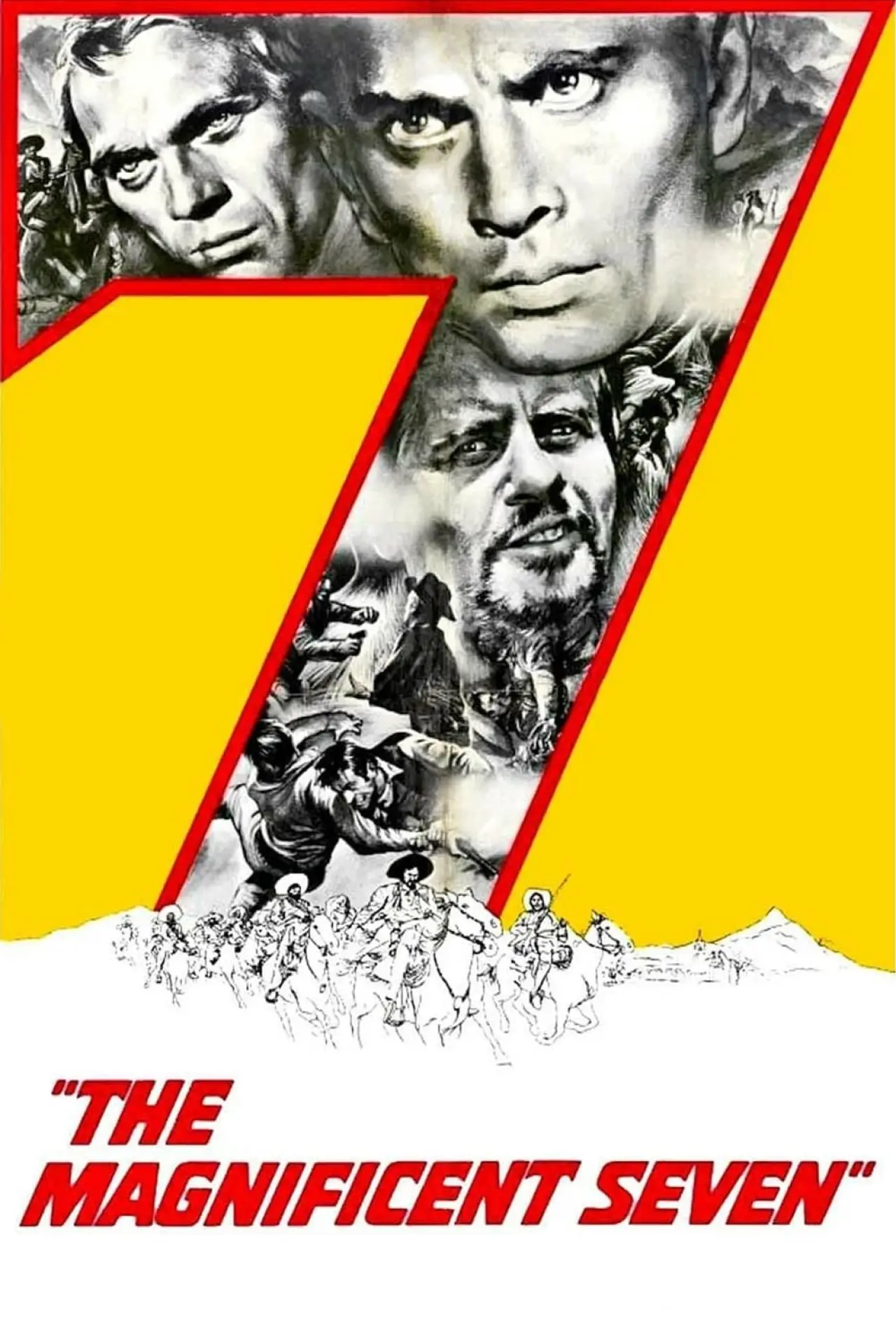
The Magnificent Seven
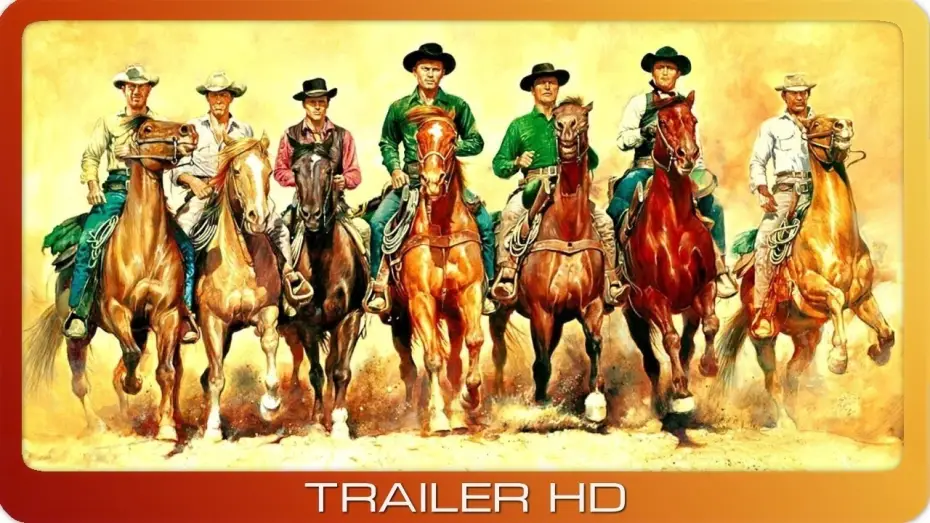
They were seven…and they fought like seven hundred!



Country
Production
Budget
$2 000 000
Box office
$4 905 000
Director
Actors
Scenario
Producer
John Sturges, Walter Mirisch
Camera operator
Composer
Artist
Audition
Editing
Short description
An oppressed Mexican peasant village hires seven gunfighters to help defend their homes.
What's left behind the scenes
- In the film 'Seven Samurai' (1954), none of the bandits are named, whereas in 'The Magnificent Seven', Calvera appears in a role pivotal to the movie.
- Brynner, who was shorter in stature than Steve McQueen, meticulously ensured he appeared taller in scenes with McQueen. To achieve this, a small mound of earth was piled up where Brynner was supposed to stand. McQueen, passing by these mounds, would deliberately stomp them down out of spite. Brynner and McQueen constantly competed on screen: McQueen would intentionally 'pull the blanket over himself,' shifting his hat to the back of his head or onto the bridge of his nose, or doing something else unnecessary but clearly visible to the camera. This greatly irritated Brynner, and he even hired a special assistant to count how many times McQueen needlessly adjusted his hat during filming.
- Brynner's character was also humorously reimagined in A. Strugatsky's science fiction novel 'Expedition to the Underworld', featuring the bald-headed space pirate captain Two-Headed Yul, who is reformed into a good person by the end.
- The image of Brynner's hero was also humorously refracted in the science fiction novel by the Strugatsky brothers, “Expedition to Hell,” where the bald captain of space pirates, Two-Headed Yul, operates, ultimately being reformed into a good man.
- On July 13, 1962, Nikita Khrushchev, in a conversation with American journalists, criticized the film: “I watched the movie ‘The Magnificent Seven.’ The actors in it play wonderfully. We released it on the screen and received many reprimands for it. Teachers spoke out in our press. A critical article was published titled ‘A Failing Grade for the Seven.’ This article stated that the film had a bad effect on the upbringing of young people. I agree with the teachers. You Americans often have such films on the screens where people beat each other’s faces, torture, and kill people, and there is a lot of perversion in the films. You consider this interesting. For us, the preaching of such phenomena is harmful…”. Naturally, the Soviet press held the same point of view.
- Yul Brynner celebrated his wedding to Doris Kleiner on the film set.
- To obtain permission to film in Mexico, the filmmakers had to make some changes to the script. In its initial version, like in Kurosawa’s film, the elder immediately suggested the peasants hire protectors, but Mexican officials disliked this moment – in their opinion, it created the impression that Mexicans couldn’t defend themselves.
- Gene Wilder auditioned for the role of Vin.
- Filming took place in the USA and Mexico from March 1st to April 1960.
- In 'The Magnificent Seven,' the character of Chico combines traits of two characters from the film 'Seven Samurai' (1954)—the young samurai Katsushirō Okamoto and the impostor samurai Kikuchiyō. Even the names were chosen accordingly. Kikuchiyō means 'boy'; he was given this nickname because he presented documents to the samurai stating he was 13 years old. In Spanish, Chico also means 'boy,' and he is the youngest of the seven.
- The film's cast was assembled very quickly in order to complete casting before the next actors' strike.
- In the final scene of the film, three boys come to Bernardo’s grave, lay flowers, and make the sign of the cross. Two do it like Catholics – from left to right. One, the one in the center, – from right to left, like an Orthodox Christian.
- Firearms were traditionally considered unacceptable for samurai and were used only by bandits in the film 'Seven Samurai' (1954). In 'The Magnificent Seven,' this motif is entirely eliminated by shifting the setting to the end of the 19th century.
- On the set of the film, Yul Brynner celebrated his wedding with Doris Kleiner.
- In "The Magnificent Seven", the character of Chico combines traits of two characters from the film "Seven Samurai" (1954) – the young samurai Katsushiro Okamoto and the impostor samurai Kikuchiyo. Even the names are chosen accordingly. Kikuchiyo means 'boy,' and he was nicknamed that because he presented the samurai with documents stating he was 13 years old. Chico, translated from Spanish, also means 'boy,' and he is the youngest of the seven.
- To obtain permission to film in Mexico, the filmmakers had to make some changes to the script. In the original version, as in Kurosawa's film, the elder immediately suggested that the peasants hire protectors, but Mexican officials disliked this point—in their view, it created the impression that Mexicans were unable to defend themselves.
- An important scene from "Seven Samurai" (1954), in which the peasants kill a captured bandit, is completely omitted from the plot of "The Magnificent Seven."
- Steve McQueen really wanted to star in this film, but he was not released from filming the television series “Wanted: Dead or Alive” (1958). McQueen, however, crashed a car and, pretending to be sick, secretly filmed in “The Magnificent Seven” without the television studio’s knowledge.
- Sterling Hayden was initially cast as Britt, but for an unknown reason, he was unable to film. James Coburn suggested James Coburn for the role of Britt – they had been friends with Coburn since school. Coburn was a big fan of the film “Seven Samurai” (1954) and particularly liked the samurai Kyuzo, whose analogue in “The Magnificent Seven” was precisely the role of Britt.
- Many moments from the film were parodied in John Landis's comedy 'Three Amigos!' (1986). The music for this film, as well as for 'The Magnificent Seven', was composed by Elmer Bernstein.
- Robert Vaughn, who played the role of Lee in the film, also appeared in the television series 'The Magnificent Seven' (1998-2000) as Judge Oren Travis.
- In "Seven Samurai" (1954), none of the bandits are named, while in "The Magnificent Seven," the role of Calvera, important to the film, appears.
- Brinner, who was shorter than Steve McQueen, was adamant about appearing taller than McQueen on screen. To achieve this, a small mound of earth was piled where Brinner was supposed to stand. Out of spite, McQueen would flatten these mounds every time he walked past them. Brinner and McQueen were in constant competition on set: McQueen would deliberately steal the spotlight by shifting his hat to the back of his head or over his nose, or by doing other unnecessary things that were highly visible to the camera. This greatly irritated Brinner, who even hired a special assistant to count how many times McQueen unnecessarily adjusted his hat during filming.
- The plot of 'The Magnificent Seven' completely excludes a scene that was important to 'Seven Samurai' (1954), in which the peasants kill a captured bandit.
- Robert Vaughn, who played the role of Lee in the film, also played Judge Oren Travis in the television series “The Magnificent Seven” (1998-2000).
- The film ranks second in attendance among all foreign films released in Soviet cinemas.
- Many moments from the film were parodied in John Landis's comedy "¡Three Amigos!" (1986). Elmer Bernstein composed the music for this film, as he did for "The Magnificent Seven."
- Mexican officials granted permission to film on the condition that the peasants in the film were required to wear clean white shirts. They also demanded that screenwriter Walter Newman travel to the filming location in advance to familiarize himself with the life of Mexican farmers, but Newman refused. William Roberts made changes to the script that were significant enough for him to receive a credit as a co-writer, however, Newman did not want to be a “co-author” of his script and ultimately removed his name from the credits altogether.
- The future famous composer John Williams participated in recording the music for this film – he played the piano in the orchestra.
- Firearms were traditionally considered unacceptable for samurai, and in "Seven Samurai" (1954) they were used only by bandits. In "The Magnificent Seven," this motif is completely excluded by moving the action to the late 19th century.
- Sterling Hayden was initially cast as Britt, but for unknown reasons, he was unable to film. James Coburn was suggested for the role of Britt by Robert Vaughn—he and Coburn had been friends since high school. Coburn was a great fan of the film 'Seven Samurai' (1954) and particularly liked the samurai Kyūzō, whose counterpart in 'The Magnificent Seven' was the role of Britt.
- In order to obtain permission to film in Mexico, the filmmakers had to make some changes to the script. In its original version, as in Kurosawa's film, the elder immediately suggested that the peasants hire defenders, but this moment did not appeal to Mexican officials – in their opinion, it created the impression that Mexicans could not defend themselves. As a result, in the film, the village elder sends the peasants across the border with the task of buying weapons.
- Mexican officials granted permission to film on the condition that the peasants in the movie must be dressed in clean white shirts. Additionally, they demanded that screenwriter Walter Newman travel to the filming location in advance to familiarize himself with the lives of Mexican farmers, but Newman refused. The script changes were made by William Roberts, and they were significant enough for him to be credited as a co-writer; however, Newman did not want to be a "co-author" of his own script and ultimately removed his name from the credits entirely.
- Steve McQueen desperately wanted to be in the movie, but he was refused leave from the filming of the TV series 'Wanted: Dead or Alive' (1958). However, McQueen crashed his car and, claiming to be ill, filmed his part in 'The Magnificent Seven' in secret from the television studio.
- The future famous composer John Williams participated in the recording of the music for this film—he played the piano in the orchestra.
Similar movies
8.6/10
8.3/10

8.2/10
8.2/10
8.1/10
8/10
8/10
7.9/10
7.9/10
7.9/10


 Auditions in India
 Casting calls in USA
 Castingi w Polsce
 Кастинги в Україні
