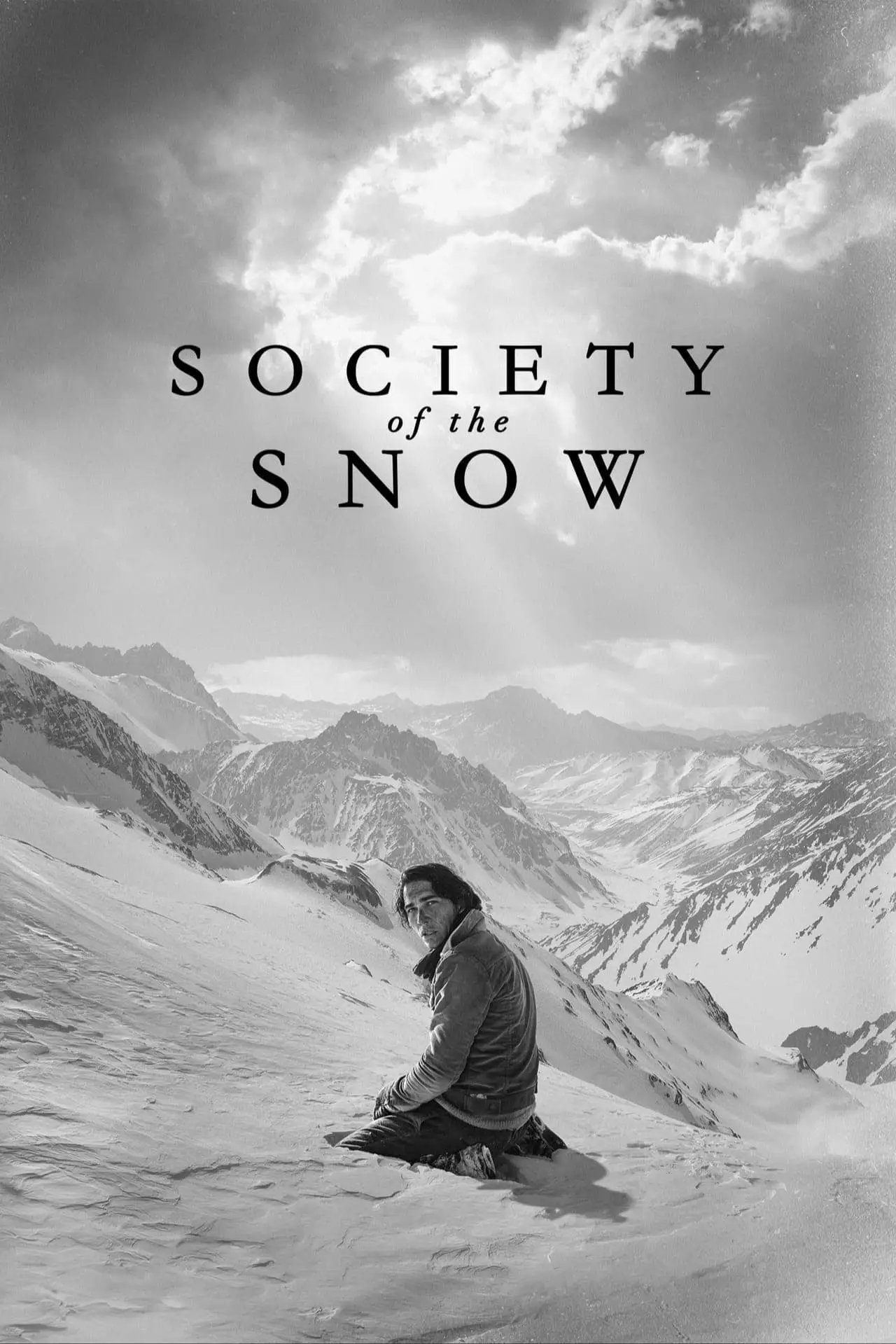
Society of the Snow
Based on a remarkable true story.



![Video for the film Society of the Snow — Official Trailer [Subtitled]](https://i.ytimg.com/vi/pDak4qLyF4Q/maxresdefault.jpg)
Country
Production
Budget
$65 500 000
Box office
$1 281
Director
Actors
Enzo Vogrincic, Agustín Pardella, Matías Recalt, Esteban Bigliardi, Diego Vegezzi, Fernando Contigiani García, Esteban Kukuriczka, Francisco Romero, Rafael Federman, Valentino Alonso
All actors and roles (10)
All actors and roles (10)
Scenario
Producer
Belén Atienza, J. A. Bayona, Sandra Hermida, Philip Bolus, Santiago López Rodríguez, Lilia Scenna, Steve Eddy
Camera operator
Composer
Artist
Alain Baineé, Damián Galán Álvarez
Audition
Javier Braier, María Laura Berch, Iair Said
Editing
Short description
On October 13, 1972, Uruguayan Air Force Flight 571, chartered to take a rugby team to Chile, crashes into a glacier in the heart of the Andes.
What's left behind the scenes
- Filming took 140 days, 72 of which the crew and actors spent in the mountains.
- The film was mainly shot in a Spanish village in the Sierra Nevada at an altitude of about 2700 meters, as well as in the Andes and Chile.
- The film was shot in chronological order to show how the starving characters gradually lost weight.
- According to director and screenwriter Juan Antonio Bayona, special attention was paid to the sound design during the making of the film. It was necessary to emphasize the silence. In particular, consultations were held with guides working in the mountains.
- The film depicts the plane crashing on the day of its departure from Uruguay. In reality, things were somewhat different, and due to bad weather over the Andes, the plane had to make an overnight stop at the airport in the Argentine city of Mendoza. According to Argentine law, foreign military aircraft are allowed to remain on the country's territory for only 24 hours, and in this case, after that, the pilots had to either return to Uruguay or continue their route to Chile. The next morning, the flight crew decided that, although the weather conditions over the Andes could not be called excellent, they had improved enough for the plane to continue to Chile. The plane took off and headed for Chile, but crashed.
- Before work began on this project, the relationship between the survivors of the crash and the families of the deceased was complex and extremely strained. It was difficult for the relatives of the deceased to accept the so-called "Andes miracle," as well as all the inevitable stories about what happened, which focused on what the survivors had to endure after the plane crash, but completely omitted those who had died. The filmmakers made every effort to show maximum tact and respect towards the families of the victims. The actors who played the deceased in the Andes met with the families of their characters. Juan Antonio Bayona managed to reconcile the families of the crash survivors and the deceased athletes. At the pre-screening of the film, many of them communicated with each other for the first time since those terrible events.
- The film details the consequences of rescuing the survivors in the Andes more thoroughly than Frank Marshall's 1992 film. In particular, it does not mention the public's reaction to the news of the cannibalism that gradually spread. The plane crash survivors remained silent about it for as long as they could, only telling close family members. Others believed that the young people had only managed to survive on food found on the plane and vegetation in the mountains. As soon as news of the cannibalism spread, the survivors called a press conference to put the matter to rest once and for all. Of course, some members of the public were horrified by the news. The issue became the subject of numerous debates on morality in critical situations.
- The survivors of the crash in the mountains believed that it had occurred over Chilean territory, so they headed west in the hope of returning to civilization. They walked a total of just over 61 kilometers. They did not realize they were in Argentina, and that a deserted hotel, with a road leading to a settlement, was located just over 20 kilometers to the east of the crash site. Today, that abandoned hotel serves as a base camp for those wishing to visit the crash site (they reach the hotel by vehicle and then walk).
- According to Juan Antonio Bayona, unlike other films on this topic, this one deliberately focuses on the need to remember the deceased. They all played an important role in the team while they were alive, and it was their deaths that helped the survivors last until rescue. The survivors themselves believed that the victims of the plane crash were not receiving enough attention, and their contribution to the events was not adequately appreciated.
- The film accurately shows how the plane crash survivors learn that Nando and Roberto have reached civilization, and how everyone begins to prepare for rescue. The film also shows that all the survivors are rescued at once. In reality, there wasn’t enough room for everyone in the helicopters, so some of the survivors had to spend another night on the mountainside. Several rescuers remained with them. It is said that the rescuers categorically refused to spend the night in the soiled wreckage of the fuselage and pitched a tent nearby, while one of them did spend the night with the crash victims who remained in the wreckage.
- Three survivors of the plane crash appeared in cameo roles in the film. These are Nando Parrado, playing himself, Roberto Canessa, playing the doctor who examines the survivors, and Carlitos Paes. He plays his father, the famous artist Carlos Páez Vilaró, who died in 2014, and reads a list of survivors into the telephone receiver in the film.
- Some details of the rescue were omitted from the film. Nando and Roberto saw Sergio Catalan, a muleteer from a village at the foot of the mountain, and shouted to attract his attention. Catalan shouted back a single word ("Tomorrow") and rode off for help. Nando and Roberto had to spend another night in the open and try to fall asleep near the rushing river. Upon seeing the boys, Catalan rode for 10 hours to the nearest police station. There, he was initially dismissed as either crazy or drunk, but it turned out he was telling the truth, and urgent measures were taken to locate and rescue the survivors of the plane crash.
- The film doesn't mention this, but the cigarettes the guys found in the luggage belonged to a passenger who died in the crash and was a representative of the family tobacco company “Abal Hermanos.” This explains the virtually inexhaustible supply of cigarettes for the survivors.
- According to director and screenwriter Juan Antonio Bayona, particular attention was paid to the sound design during the production of the film. It was essential that the sound emphasized the silence. Specifically, consultations were held with mountain guides.
- Before work began on this project, the relationship between the disaster survivors and the families of the deceased was complex and extremely strained. The relatives of the victims found it difficult to accept the so-called 'Andean miracle,' as well as the inevitable accounts of what happened, which focused on what the survivors endured after the plane crash but completely ignored those who perished. The filmmakers sought to show maximum tact and respect toward the loved ones of the crash victims. The actors who played those who died in the Andes met with the families of their characters. Juan Antonio Bayona managed to reconcile the families of the survivors and the deceased athletes. At the preview screening, many of them spoke with one another for the first time since those terrible events.
- The film provides more detail about the aftermath of the survivors' rescue in the Andes than Frank Marshall's 1992 movie. In particular, that film said nothing about the public's reaction to the news of the cannibalism episodes that emerged over time. The crash survivors kept this a secret for as long as they could, disclosing this detail only to their close relatives. Others believed that the young men had managed to survive solely on food found on board the plane and vegetation found in the mountains. As soon as the news of the cannibalism spread, the survivors called a press conference to settle the matter once and for all. Naturally, some members of the general public were horrified by the news. This issue became the subject of numerous debates regarding morality in critical situations.
- According to Juan Antonio Bayona, unlike other films on this topic, this one intentionally emphasizes the need to remember the deceased and to remember them specifically. During their lives, all of them played a significant role in the team, and it was through their deaths that the survivors were able to hold on until rescue. The survivors themselves felt that the victims of the crash were not given enough attention and that their contribution to the course of events had not been properly appreciated.
- The film's finale accurately depicts how the crash survivors learn that Nando and Roberto have reached people and how everyone begins preparing for rescue. The film also shows all the survivors being rescued at once. In reality, there was not enough room in the helicopters for everyone, so some of the crash survivors had to spend one more night on the mountainside. Several rescuers stayed with them. It is claimed that the rescuers categorically refused to spend the night in the filthy wreckage of the fuselage and pitched a tent nearby, although one of them did spend the night with the crash victims staying in the fuselage.
- Three of the plane crash survivors appeared in episodic roles in the film. These were Nando Parrado, playing himself; Roberto Canessa, playing the doctor who examines the survivors; and Carlitos Paez. The latter played his father, the renowned artist Carlos Páez Vilaró, who passed away in 2014; in the film, he reads a list of the survivors over the phone.
- Certain details of the rescue are omitted from the film. Nando and Roberto spotted Sergio Catalán, a muleteer from a village at the foot of the mountain, and shouted to get his attention. Catalán shouted back a single word ("Tomorrow") and left to get help. Nando and Roberto had to spend another night under the open sky, attempting to sleep beside a rushing river. After seeing the boys, Catalán rode for 10 hours to the nearest police station. At first, he was mistaken for a madman or a drunk, but it soon became clear that he was telling the truth, and urgent measures were taken to locate and rescue the survivors of the plane crash.
Similar movies
8.7/10
8.7/10

8.7/10
8.6/10
8.5/10
8.5/10
8.5/10
8.4/10

8.4/10
8.4/10


 Auditions in India
 Casting calls in USA
 Castingi w Polsce
 Кастинги в Україні
