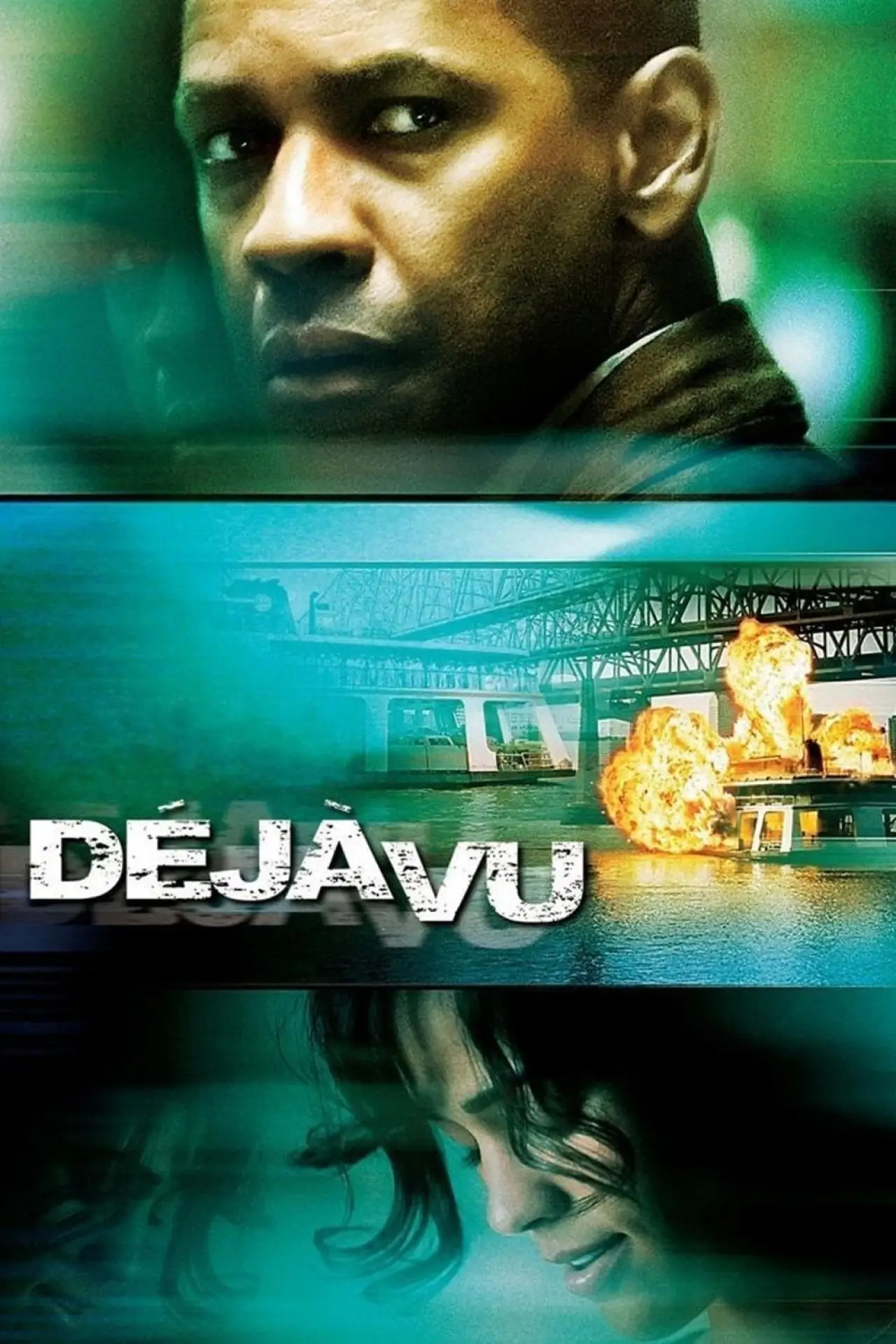
Déjà Vu
Déjà vu is thought to be a trick of the mind... but what if it's not?



Country
Genre
Budget
$75 000 000
Box office
$180 557 550
Director
Actors
Scenario
Producer
Camera operator
Paul Cameron
Composer
Artist
Chris Seagers, Julian Ashby, Nithya Shrinivasan
Audition
Suzanne Crowley, Denise Chamian, Billy Hopkins
Editing
Short description
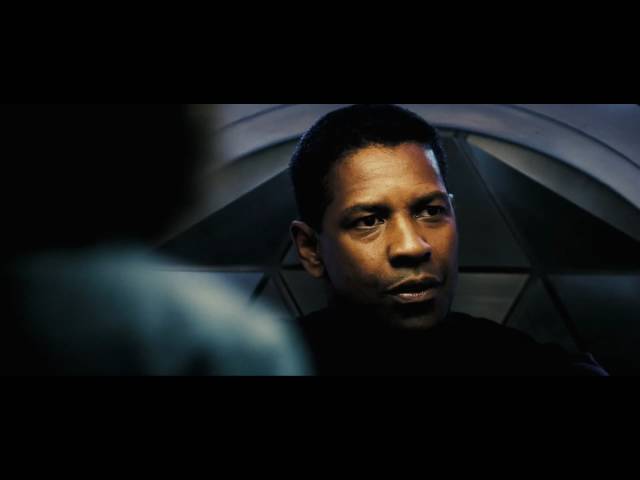
Called in to recover evidence in the aftermath of a horrific explosion on a New Orleans ferry, Federal agent Doug Carlin gets pulled away from the scene and taken to a top-secret government lab that uses a time-shifting surveillance device to help prevent crime.
What's left behind the scenes
- Caviezel had to fire MP-5 submachine guns, which requires special physical training. Before filming, he trained with Agency personnel who allowed him to fully experience the power of the weapon by providing him with live ammunition.
- Most of the chase scenes were filmed on the bridge across the Mississippi River, which connects the west and east banks of New Orleans. The bridge is about 100 meters high, so no mistakes could be made, especially during car collisions. Stunt coordinator Chuck Picerni from Stunts Unlimited comments: “Everything had to be done precisely. We had to make the chase on the bridge exciting, but at the same time not forget about safety and the fact that we were blocking such an important city artery. I think the number of people working on the stunt setup, including local drivers and professional stunt performers, sometimes reached 50.”
- In addition, a number of military technologies – such as Infrared, Thermal Imaging, and Heat Impulse – were used during filming, making the action even more realistic.
- Filming was originally scheduled to begin in October 2005; after the city was devastated by Hurricane Katrina, the project was on the verge of cancellation. After the project was revived, 'Déjà Vu' became the first film to be shot in the ruined city.
- Bill Marsili began writing the screenplay for the film as early as 1997.
- Meanwhile, newcomer Paula Patton had to not only be bound and gagged, beaten, and stuffed into a black zippered bag, but also film in the treacherous waters of the Mississippi River with a 5-pound car steering wheel tied to her hands.
- During the interrogation scene with Doug Carlin questioning Carroll Orsted, a pack of red cigarettes on the table constantly changes its position with each frame change: sometimes it stands on its side, sometimes it lies flat.
- To emphasize the realism of the action, Jerry Bruckheimer and Tony Scott invited several consultants from the Bureau of Alcohol, Tobacco, Firearms and Explosives – the agency that in real life investigates all major terrorist attacks involving explosives. It, in particular, investigated such tragic events as the bombing of the Alfred P. Murrah Federal Building in Oklahoma City and the 1993 World Trade Center bombing. Among the consultants was retired agency employee Jerry Raden, who had spent 20 years investigating similar large-scale incidents.
- The Time Track camera, manufactured by Digital Air, was used during filming, often employed in cinema to create the effect of "frozen motion." When filming interiors in Claire’s house, every movement by Paula Patton leaves a trail behind, creating an amazing ghostly effect, as if the scene were filmed with 160 cameras lined up in a row. A Lydar camera, developed for military purposes, was used to scan rooms – such as Claire’s house – and create diagrams displayed on screens in the laboratory. Lydar technology cannot scan people, so Tony Scott asked Asylum, the company that did the film's special effects, to create a computer projection of a person. Asylum created 100 additional shots with visual effects for the film.
- The idea for the film was partially borrowed from Orson Scott Card’s novel "The Columbus Affair," which describes two different histories of mankind, both of which feature organizations dedicated to observing historical events. Some members of these organizations decide to personally change the past and make a jump.
- James Caviezel, who played Urstadt, the main suspect in the bombing, had a particularly difficult time. In one gripping scene, Urstadt is hit by a car; during filming, this situation was recreated with stunning realism: before that, Caviezel was placed in a steel cage for his own safety. The actor recalls: “They put me in a cage, then two cars raced towards me. I had to muster all my willpower not to back down. I was thinking of only one thing: if the cage doesn’t hold – goodbye, legs.”
- In the scene where the protagonist walks towards the terrorist’s “riverside cottage,” the helmet and gun repeatedly jump from one hand to the other.
- To emphasize the realism of the action, Jerry Bruckheimer and Tony Scott invited several consultants from the Bureau of Alcohol, Tobacco, Firearms and Explosives (ATF)—the agency that, in real life, investigates all major terrorist attacks involving explosives. Specifically, it investigated tragic events such as the bombing of the Alfred P. Murrah Federal Building in Oklahoma and the 1993 World Trade Center car bombing. Among the consultants was retired agency employee Jerry Rudden, who spent 20 years investigating such large-scale incidents.
- Most of the chase scenes were filmed on the Mississippi River bridge, which connects the west and east banks of New Orleans. The bridge is approximately 100 meters high, so there was no room for error, especially during car collisions. Stunt coordinator Chuck Picerni of Stunts Unlimited commented: 'Everything had to be executed precisely. We had to make the chase on the bridge exciting, but at the same time, we couldn't forget about safety and the fact that we were closing off such a vital city artery. I think the number of people working on the stunt coordination, including local drivers and professional stunt performers, sometimes reached as many as 50 people.'
- A Time Track camera produced by Digital Air, frequently used in cinema to create 'bullet time' or 'frozen motion' effects, was used during filming. When shooting the interiors of Claire's house, every movement by Polly Patton leaves a trail, creating a stunning ghostly effect as if the scene were captured by 160 lenses lined up in a row. Lidar cameras, originally developed for military purposes, were used to scan rooms—such as Claire's house—and generate diagrams displayed on screens in the laboratory. Since Lidar technology cannot scan people, Tony Scott asked Asylum, the company providing the film's special effects, to create a computer-generated version of a human projection. Asylum created 100 additional visual effects shots for the movie.
- Filming was originally scheduled to begin in October 2005; however, after the city was devastated by Hurricane Katrina, the project came close to being cancelled. Once the project resumed, 'Déjà Vu' became the first film to begin shooting in the devastated city.
- The idea for the film was partially borrowed from Orson Scott Card's novel 'The Memory of Empire' (The Redemption of Christopher Columbus), which describes two different stories of humanity, both featuring organizations created to view historical events. Some members of these organizations decide to personally change the past and make the leap.
- James Caviezel, who played Urstadt, the primary suspect in the explosion, had a particularly difficult time. In one gripping scene, Urstadt is hit by a car; this situation was simulated on set with startling realism: for his own safety, Caviezel was placed inside a steel cage. The actor recalls: 'I was put in a cage, and then two cars rushed toward me. I had to summon all my willpower not to refuse. I thought only one thing: if the cage doesn't hold—goodbye, legs.'
- Meanwhile, budding actress Paula Patton not only had to be tied up with a gag in her mouth, beaten, and stuffed into a black zippered bag, but also film in the treacherous depths of the Mississippi River with a 5-pound steering wheel tied to her wrists.
Similar movies
9/10
8.2/10

8/10
8/10
8/10

7.9/10
7.9/10
7.9/10
7.9/10
7.9/10


 Auditions in India
 Casting calls in USA
 Castingi w Polsce
 Кастинги в Україні
