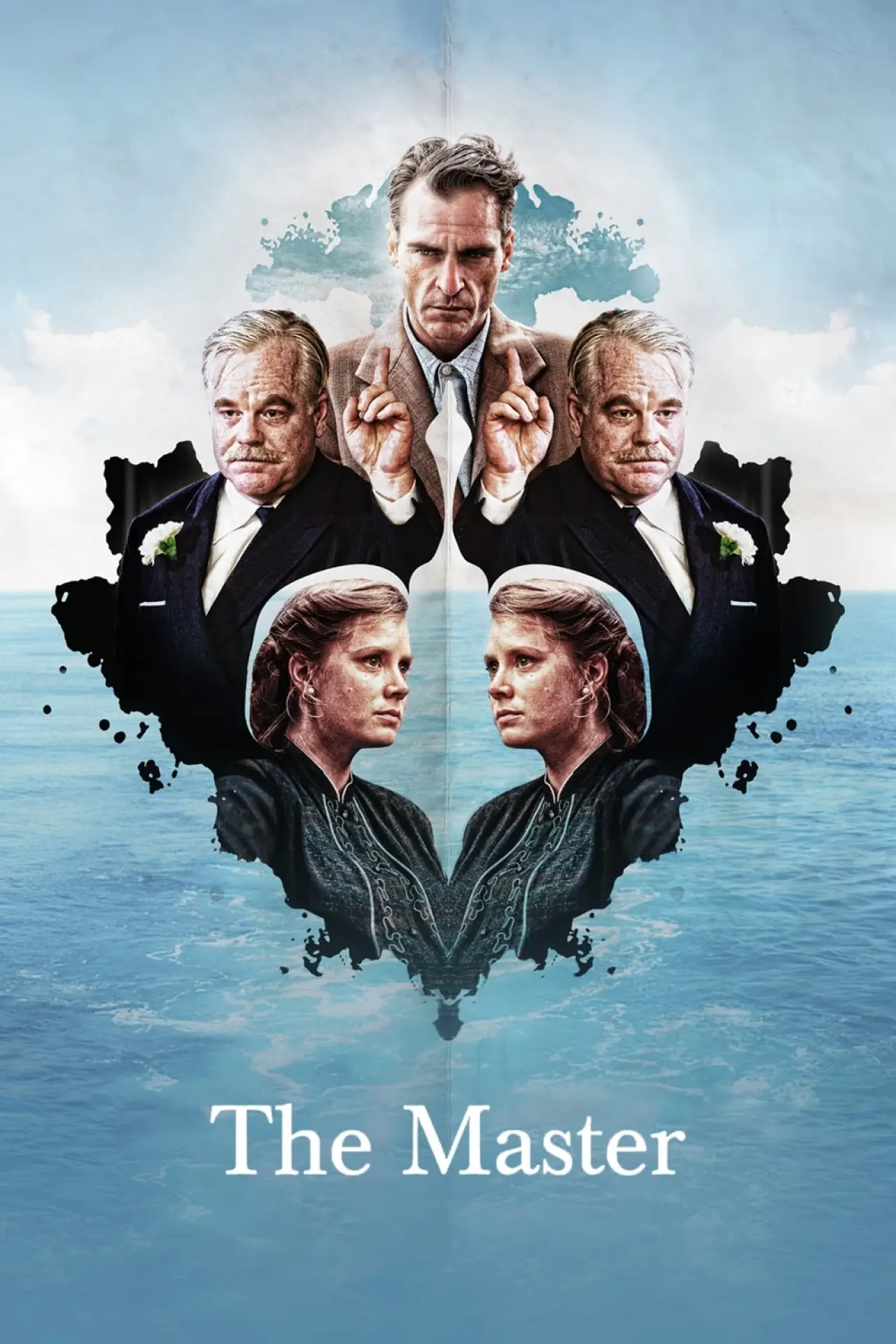
The Master
Every man needs a guide.




Country
Production
Genre
Budget
$32 000 000
Box office
$28 258 060
Director
Actors
Scenario
Producer
Camera operator
Composer
Artist
Jack Fisk, David Crank, Ruth de Jong
Audition
Cassandra Kulukundis
Editing
Leslie Jones, Peter McNulty
Whole Team (163)
Whole Team (163)
Short description
Freddie, a volatile, heavy-drinking veteran who suffers from post-traumatic stress disorder, finds some semblance of a family when he stumbles onto the ship of Lancaster Dodd, the charismatic leader of a new "religion" he forms after World War II.
What's left behind the scenes
- Jeremy Renner was considered for the role of Freddy Quell.
- In an interview with Newsweek, the director admitted that "The Master" contains several scenes written for "Oil", but not included in the final script, as well as stories from Jason Robards about his drinking bouts in the Navy during World War II, which the actor told on the set of "Magnolia". Freddy’s farming background is taken from the life of writer John Steinbeck. Furthermore, Anderson has always been interested in the story of L. Ron Hubbard, but the director did not want to make a film directly about the leader of Scientology. Anderson wanted to explore the post-war period, which was conducive to the emergence of various spiritual movements.
- Reese Witherspoon was considered for the role of Peggy during pre-production in 2010. But the role ultimately went to Amy Adams.
- This is the first film by Paul Thomas Anderson in which Robert Elswit did not work as a cinematographer. He was busy at the time and was filming "The Bourne Legacy" (2012).
- This is the first feature film in the last 16 years to be shot entirely in 65mm format, using a Panavision System 65 camera. The last full-length film of this format was Kenneth Branagh's 'Hamlet' (1996).
- Paul Thomas Anderson did not use Digital Intermediate when making the film, instead opting for photochemical color correction, which resulted in a higher resolution due to less manipulation of the footage.
- The Rorschach test cards in the scene with the psychologist in the hospital are genuine. However, the psychologist skips cards one through four, thereby violating the strict rules for administering the test.
- The ship in the film is named Alithia, which translates from Greek as 'Truth'.
- Paul Thomas Anderson initially wanted to cast his children in the film, specifically in the portrait studio scene, but decided against it because his children, of mixed race, didn't appear consistent with the period.
- The scene where Freddie extracts ethanol from a torpedo on the ship is based on a true story told by Jason Robards to Paul Thomas Anderson.
- Gillian Bell was cast in the film because Paul Thomas Anderson was a fan of the show "Workaholics" (2011) in which she appeared.
- Paul Thomas Anderson personally handled the editing of the film's trailers without any studio authorization. These trailers were notable for consisting of footage that was not included in the final version of the film.
- A total of three takes of the scene in the prison cell were made, but the first take was ultimately used in the film.
- Freddie is from Lynn, Massachusetts. The father of director Paul Thomas Anderson, Ernie Anderson, was also born in this city.
- The very first lines in the film, when Freddie is talking on the beach, were completely improvised.
- During the scene in the prison cell, Joaquin Phoenix breaks a real toilet. His actions were completely improvised. Joaquin did not intend to break it and didn't even think it was possible.
- When Freddie first visits Doris's house, a wide shot shows aluminum numbers indicating the street number. These numbers only appeared in the 1960s.
- In the scene where Freddie walks from the wood paneling to the window and back, the second time he walks towards the paneling, he furiously hits and breaks it. In subsequent scenes, this paneling appears undamaged.
- When the skeptic challenges Lancaster, a shadow of a microphone is visible on the wall behind Lancaster.
- The architectural style of the house in Philadelphia where the heroes stay is known as Californian. Such houses cannot be found in Philadelphia itself, or anywhere nearby.
- When Freddy breaks the toilet in his prison cell, it can be noticed that there is no water in it.
- John Huston's documentary 'Let There Be Light' (1946) had a significant influence on the creation of this film. Director Paul Thomas Anderson confirmed that he used materials from this film. Producer JoAnne Sellar also said that they used it as a reference when designing the sets and costumes.
- Jeremy Renner was considered for the role of Freddie Quell.
- In an interview with Newsweek magazine, the director admitted that "The Master" contains several scenes written for "There Will Be Blood" that didn't make it into the final script, as well as Jason Robards' stories about his drinking binges in the Navy during World War II, which the actor shared on the set of "Magnolia." Freddie's farming background was drawn from the life of writer John Steinbeck. Additionally, Anderson had always been interested in the history of L. Ron Hubbard, but the director did not want to make a film directly about the leader of the Scientologists. Anderson wanted to explore the post-war era, which was conducive to the birth of various spiritual movements.
- Reese Witherspoon was considered for the role of Peggy during production in 2010. However, the role ultimately went to Amy Adams.
- The first Paul Thomas Anderson film for which Robert Elswit did not serve as cinematographer. He was busy at the time filming "The Bourne Legacy" (2012).
- The first feature film in the last 16 years to be shot entirely in 65mm format, using the Panavision System 65 camera. The last feature film in a similar format was Kenneth Branagh's "Hamlet" (1996).
- John Huston's documentary "Let There Be Light" (1946) had a great influence on the creation of this film. Director Paul Thomas Anderson confirmed that he used materials from that film. Producer Joanne Sellar also mentioned that they looked to this film when designing the sets and costumes.
- Paul Thomas Anderson did not use a Digital Intermediate when making the film; instead, he used photochemical color grading, which resulted in a higher resolution due to less manipulation of the captured footage.
- Paul Thomas Anderson originally wanted to cast his own children in the film, specifically in the portrait studio scene, but decided against it because his mixed-race children did not look period-appropriate.
- The scene in which Freddie extracts ethanol from a torpedo on the ship is based on a true story told to Paul Thomas Anderson by Jason Robards.
- Gillian Bell landed the role in the film because Paul Thomas Anderson was a fan of the show Workaholics (2011), in which she appeared.
- Paul Thomas Anderson personally edited the film's trailers without any authorization from the studio. These trailers were notable for consisting of footage that was not included in the final cut of the movie.
- Freddy is originally from Lynn, Massachusetts. Ernie Anderson, the father of director Paul Thomas Anderson, was also born in this city.
- During the scene in the prison cell, Joaquin Phoenix breaks a real toilet. His actions were completely improvised; Joaquin didn't intend to break it and didn't even think it was possible.
Similar movies
8.8/10
8.7/10
8.7/10
8.7/10
8.7/10
8.5/10
8.5/10
8.5/10
8.5/10
8.4/10


 Auditions in India
 Casting calls in USA
 Castingi w Polsce
 Кастинги в Україні
