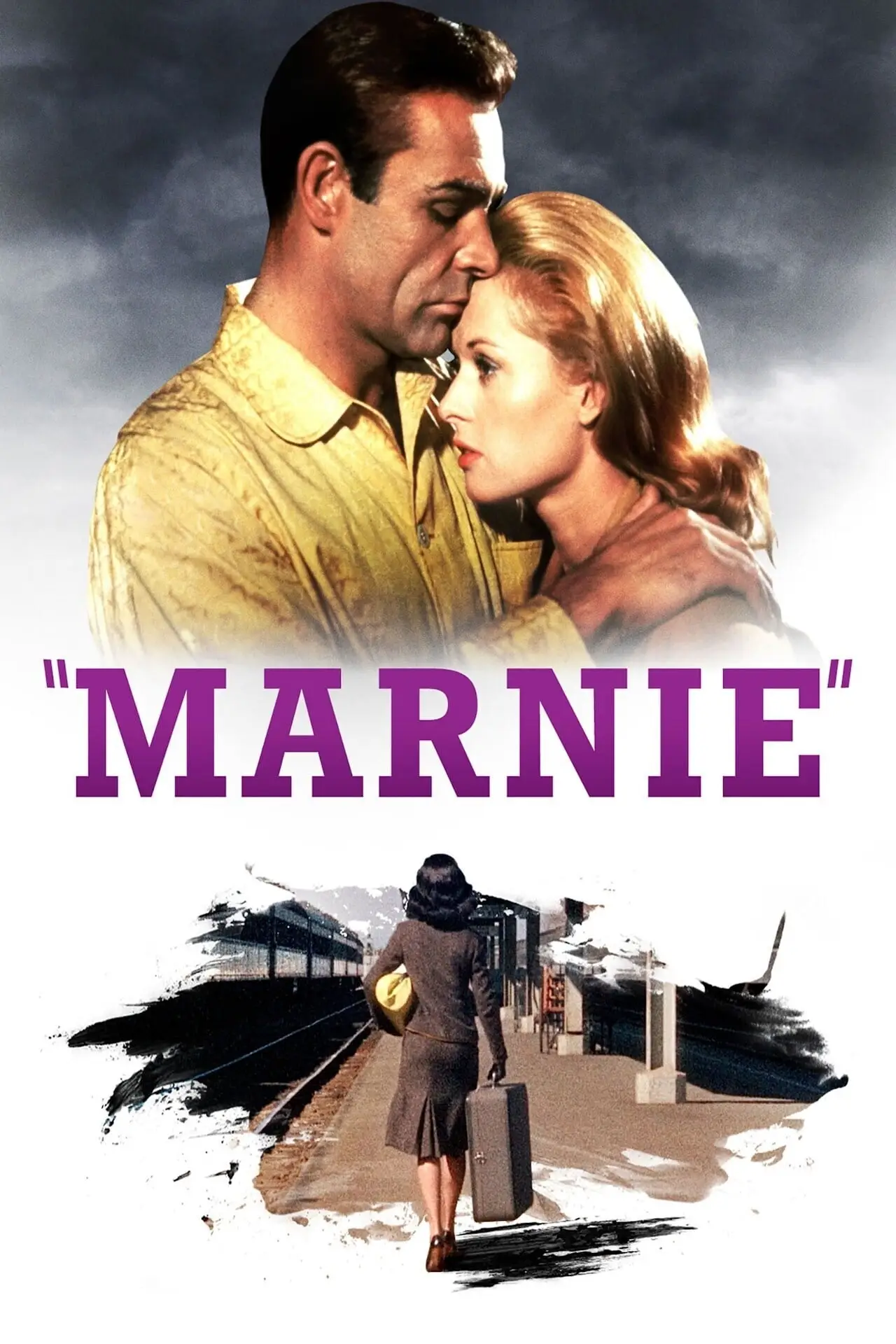
Marnie
The more he loved her . . . The more she hated him . . . For trying to unravel her secret!




Country
Production
Budget
$3 000 000
Box office
$7 000 000
Director
Actors
Tippi Hedren, Sean Connery, Diane Baker, Martin Gabel, Louise Latham, Bob Sweeney, Milton Selzer, Mariette Hartley, Alan Napier, Bruce Dern
All actors and roles (10)
All actors and roles (10)
Scenario
Producer
Camera operator
Composer
Artist
Robert F. Boyle
Audition
Editing
Short description
Marnie is a beautiful but emotionally withdrawn thief, stealing from employers before disappearing under new identities. When her new boss, Mark Rutland, discovers her secret, his fascination turns to obsession, and he blackmails her into marriage, convinced he can cure her. But as he probes deeper into Marnie’s fractured mind, long-buried fears and compulsions begin to surface.
What's left behind the scenes
- The famous biographer Donald Spoto, in his book about Hitchcock «The Dark Side of Genius», called «Marnie» Hitchcock's final masterpiece.
- Diane Baker recalled that while filming the scene where her character eavesdrops on a conversation between Marnie and Mark, Hitchcock approached her, placed his hands on her face, and literally showed her the exact facial expression he wanted for that scene.
- The director's cameo – at the fifth minute, Hitchcock emerges from a hotel room and watches Marnie Edgar (Tippi Hedren) and a servant with purchases walk away down the corridor, then turns his head towards the audience.
- Alfred Hitchcock wanted Grace Kelly, who was by then the Princess of Monaco, to return to the big screen in the lead role of this film. However, the people of Monaco and the royal family were not thrilled by the idea of Kelly playing an unstable thief.
- «Marnie» was the last film for which Bernard Herrmann wrote the music (prior to this, he had collaborated with Hitchcock seven times).
- The director's cameo occurs at the five-minute mark: Hitchcock exits a hotel room and watches Marnie Edgar (Tippi Hedren) and a servant carrying shopping bags walk away down the corridor, before turning his head toward the audience.
- Diane Baker was not allowed to read the script until she agreed to participate. She only knew three things – the film was called 'Marnie', it was directed by Alfred Hitchcock, and Tippi Hedren played the lead role.
- Joseph Stefano wrote his own version of the script, which was much closer to the original source material, and included two characters absent from Hitchcock's film: a psychotherapist to whom Mark takes the main character, and Terry, Marnie's colleague who is in love with her.
- During filming, a conflict arose between Hitchcock and Tippi Hedren, and he threatened to destroy her career. Shortly thereafter, the director gave the actress's five-year-old daughter, Melanie (the future Melanie Griffith), an unforgettable gift: a doll depicting her mother lying in a small coffin. Despite this, Tippi Hedren calls 'Marnie' the favorite film of her career.
- Louise Latham plays Tippi Hedren's mother, although Latham is only 8 years older than Hedren.
- Paramount executives suggested Lee Remick to Hitchcock for the lead role. Marnie could also have been played by Eva Marie Saint, Susan Hampshire, Vera Miles, and director Sydney Pollack's wife, Claire Griswold.
- Paramount bosses suggested that Hitchcock cast Lee Remick in the lead role. Marnie could have also been played by Eva Marie Saint, Susan Hampshire, Vera Miles, or director Sydney Pollack's wife, Claire Griswold.
- Dianne Baker recalled that during the filming of the episode where Baker's character overhears a conversation between Marnie and Mark, Hitchcock approached her, placed his hands on her face, and literally showed her the expression he wanted from her in that scene.
- Louise Latham, who played Marnie's mother, suggested Jay Preston Allen to Hitchcock. She and Louise were classmates at a boarding school in Texas.
- Alfred Hitchcock wanted Grace Kelly, by then already Princess of Monaco, to return to the big screen and play the lead role in this film. However, the residents of Monaco and the royal family were not enthusiastic about the idea of Kelly playing an unstable thief.
- Louise Latham, who played Marnie's mother, suggested Jay Presson Allen to Hitchcock. She and Louise had been classmates at a boarding school in Texas.
- Joseph Stefano wrote his own version of the screenplay, which was much closer to the original source and included two characters absent from Hitchcock's film: the psychotherapist to whom Mark takes the protagonist, and Terry, Marnie's coworker who is in love with her.
- In 2008, Vanity Fair magazine organized a photoshoot dedicated to the work of Hitchcock. Actress Naomi Watts portrayed Marnie in the shoot.
- “Marnie” is the last film for which Bernard Herrmann composed the music (prior to this, he had collaborated with Hitchcock seven times).
- “Marnie” was the last film for which Bernard Herrmann composed the music (prior to this, he had collaborated with Hitchcock seven times).
- Initially, Evan Hunter adapted Winston Graham's novel. Hunter insisted that the scene in which Mark rapes Marnie be removed from the script, arguing that it was low and that Mark would lose the audience's respect. Hitchcock fired him and hired Jay Presson Allen, who decided that the character's behavior and Sean Connery's own charm would subsequently 'justify' Mark.
- In 2008, Vanity Fair magazine organized a photo shoot dedicated to the work of Hitchcock. Actress Naomi Watts appeared as Marnie.
- Diane Baker was not allowed to read the script until she agreed to take part. She knew only three things: the film was titled 'Marnie,' it was directed by Alfred Hitchcock, and the lead role was played by Tippi Hedren.
- Screenwriter Jay Presson Allen made Mark's hobby zoology because it was her own interest, and also because Mark, based on his knowledge, psychoanalyzes Marnie in the film.
- During filming, a conflict arose between Hitchcock and Tippi Hedren, and he threatened to ruin her career. Shortly thereafter, the director gave the actress's five-year-old daughter, Melanie (future Melanie Griffith), an unforgettable gift – a doll depicting her mother lying in a small coffin. Despite this, Tippi Hedren calls "Marnie" her favorite film in her career.
- Renowned biographer Donald Spoto, in his book about Hitchcock, “The Dark Side of Genius,” called “Marnie” Hitchcock’s last masterpiece.
- Screenwriter Jay Presson Allen made zoology Mark's passion because it was her own hobby; furthermore, in the film, Mark uses his knowledge to psychoanalyze Marnie.
- Initially, Evan Hunter adapted Winston Graham's novel. Hunter insisted on removing the episode in which Mark rapes Marnie from the script, as he considered it base and would cause Mark to lose respect in the audience's eyes. Hitchcock fired him and hired Jay Presson Allen, who decided that the character's behavior and Sean Connery's charisma would subsequently 'justify' Mark.
Similar movies

8.7/10
8.4/10
8.2/10

8.2/10
8.2/10
8.1/10
8.1/10
8/10
8/10

8/10


 Auditions in India
 Casting calls in USA
 Castingi w Polsce
 Кастинги в Україні
