Cleopatra
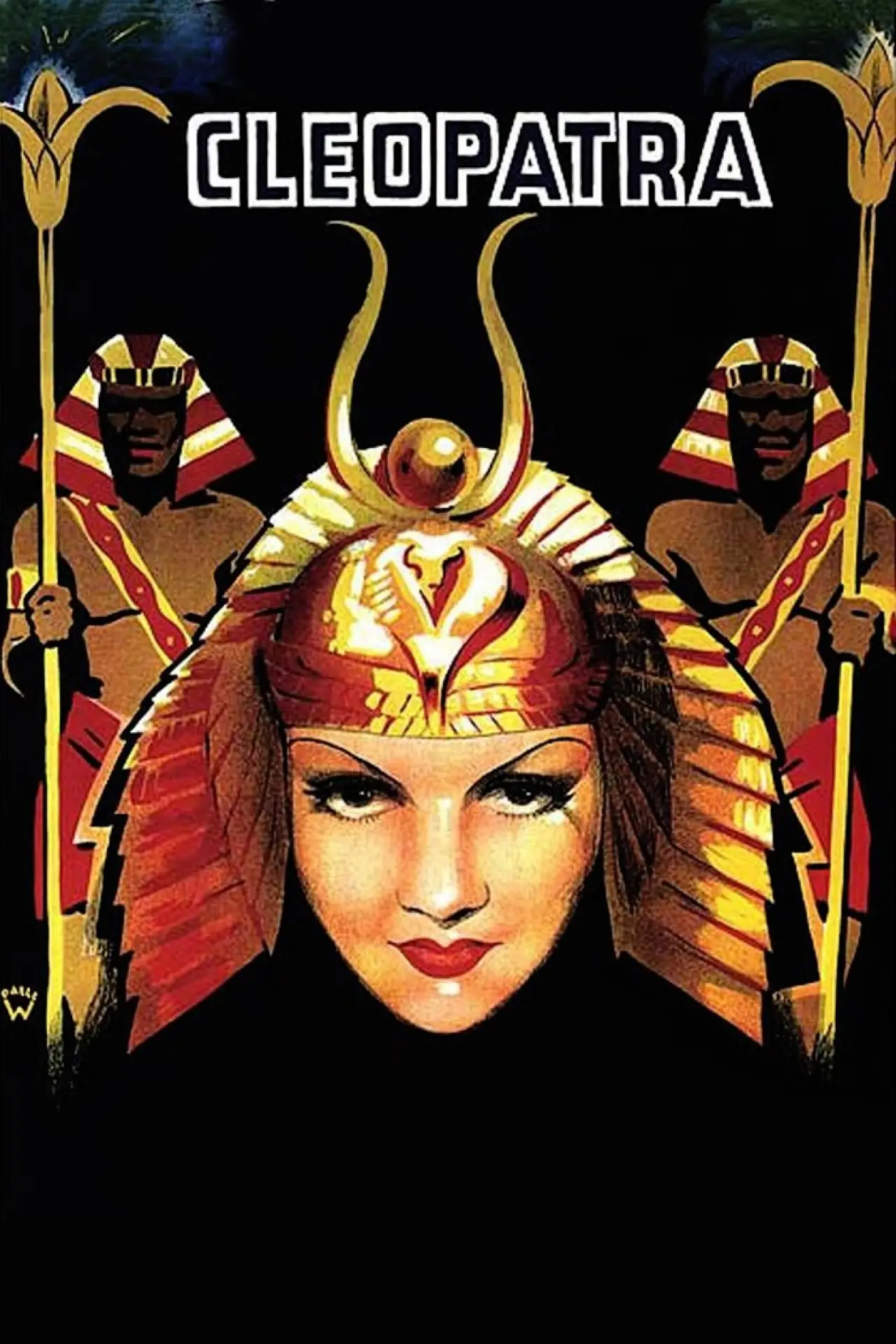
The love affair that shook the world!



Country
Production
Budget
$0
Box office
$0
Director
Actors
Scenario
Producer
Camera operator
Composer
Rudolph G. Kopp
Artist
Audition
Billy Gordon
Editing
Short description
The queen of Egypt barges the Nile and flirts with Mark Antony and Julius Caesar.
What's left behind the scenes
- During pre-production, Cecil DeMille wanted to rewatch the 1917 film of the same name directed by J. Gordon Edwards (1867-1925) starring Theda Bara (1885-1955) as Cleopatra. No copies of the film could be found in Los Angeles, so he had to request one from the New York office of 20th Century Fox. After watching the film, DeMille sent it back. On July 9, 1937, a fire in the archives destroyed nearly all the films stored there, presumably including the 1917 original of "Cleopatra" along with the others. Thus, DeMille's viewing on February 15, 1934, was likely the last time anyone ever saw the picture.
- Problems with the costumes prepared for filming arose almost every day. Claudette Colbert repeatedly felt that a particular dress did not fit her quite right, necessitating further alterations.
- During pre-production, Cecil DeMille wanted to revisit the 1917 film of the same name directed by J. Gordon Edwards (1867-1925) and starring Theda Bara (1885-1955) as Cleopatra. No copies of the film could be found in Los Angeles, so he had to request one from the New York office of 20th Century Fox. After watching the film, DeMille sent it back. On July 9, 1937, a fire in the archives destroyed almost all the films stored there, presumably including the original "Cleopatra" from 1917 along with the others. So DeMille's viewing on February 15, 1934, was most likely the last time anyone ever saw that film.
- British actor Henry Wilcoxon made his American cinema debut in this film.
- Italian audiences received the film very poorly, and Italian film critics called it a "parody and farce".
- By 1934, the so-called Hays Code (the national standard for moral censorship in US film production) was already in full effect, and Cecil B. DeMille could not resist the temptation to demonstrate his attitude toward it (though he remained within the rules). 'Cleopatra' begins with a scene featuring a slave who is clearly nude, but is lit from such perspectives and angles that it was simply impossible to find fault with it. The slave holds an incense burner in each hand as the film's title appears on the screen.
- When Cecil B. DeMille (1881-1959) first began discussing the role of Cleopatra with actress Claudette Colbert (1903-1996), she was very anxious about the scene with the asp, as she had a general fear of snakes. On the day the scene was scheduled to be filmed, DeMille ordered the largest snakes available from the Los Angeles Zoo and approached the prop throne, where the actress sat as Cleopatra, with one of them. She shrieked in terror and began begging the director not to come any closer with the snake. DeMille then produced a smaller snake and asked the actress if she would agree to work with that one, to which she immediately agreed.
- Problems with the costumes prepared for filming arose almost every day. Claudette Colbert repeatedly felt that a particular dress didn't fit quite right, and then the dress had to be altered.
- British actor Henry Wilcoxon made his American film debut in this movie.
- When Cecil B. DeMille (1881-1959) first began discussing the role of Cleopatra with actress Claudette Colbert (1903-1996), she was very worried about the scene with the snake, as she was fundamentally afraid of reptiles. On the day the scene was scheduled to be filmed, DeMille ordered the largest snakes available from the Los Angeles Zoo and approached the prop throne with one of them, where the actress was seated in the guise of Cleopatra. She screamed in fear and begged the director not to come any closer with the snake. Then DeMille took out a smaller snake and asked the actress if she would agree to work with it, to which she immediately agreed.
- In 1934, the so-called Hays Code (the national standard of moral censorship in American film production) was already in full effect, and Cecil B. DeMille couldn't resist the temptation to demonstrate his attitude towards it (albeit while staying within its limits). "Cleopatra" begins with a scene featuring a slave, clearly nude, but lit from angles designed to make any objections impossible. The slave holds a censer in both hands, and the film's title appears on the screen.
Similar movies
8.5/10
8.5/10
8.1/10
8.1/10
7.9/10
7.8/10
7.8/10
7.7/10
7.7/10
7.6/10


 Auditions in India
 Casting calls in USA
 Castingi w Polsce
 Кастинги в Україні
