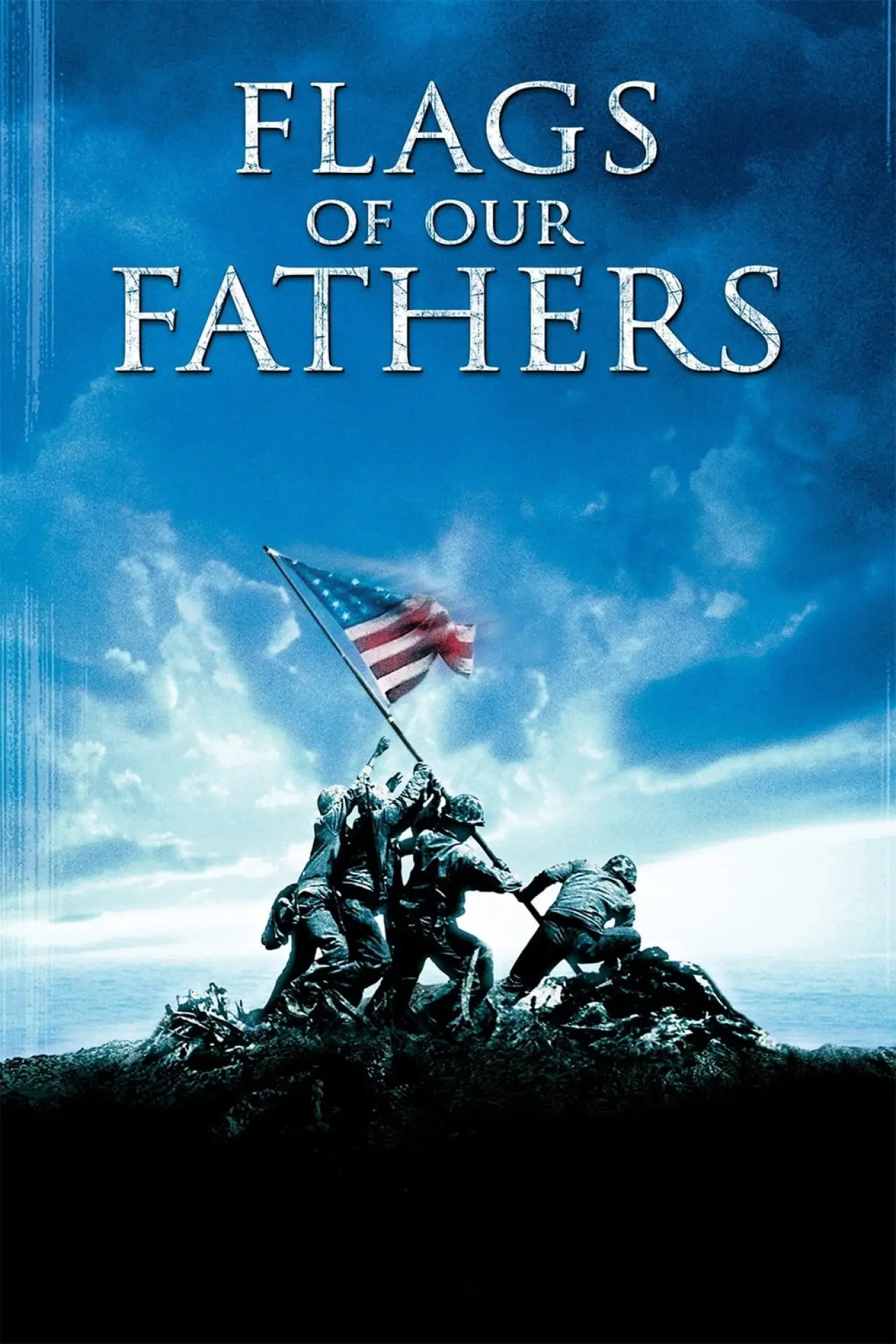
Flags of Our Fathers
A single shot can end the war.



Country
Budget
$90 000 000
Box office
$65 900 249
Director
Actors
Scenario
Producer
Camera operator
Composer
Artist
Henry Bumstead, Matthias Wittmann
Audition
Phyliss Huffman, Phyllis Huffman
Editing
Joel Cox
Whole Team (76)
Whole Team (76)
Short description
There were five Marines and one Navy Corpsman photographed raising the U.S. flag on Mt. Suribachi by Joe Rosenthal on February 23, 1945. This is the story of three of the six surviving servicemen - John 'Doc' Bradley, Pvt. Rene Gagnon and Pvt. Ira Hayes - who fought in the battle to take Iwo Jima from the Japanese.
What's left behind the scenes
- The voiceover in the advertisement belongs to Clint Eastwood.
- In addition to directing, Clint Eastwood took on an unusual role for himself – composing the film's music.
- A significant portion of the filming took place in Iceland because the black sand on the beaches reminded Clint Eastwood of the sand on the beaches of Iwo Jima.
- The original of the top photograph from the stack is kept at the Australian War Memorial. It is dated October 24, 1943, was taken in Aitape, New Guinea, and shows the preparation for the execution of prisoner of war Sergeant Leonard George Siffleet (1916-1943) by beheading, carried out by Japanese officer Yasuno Chikao.
- The flag raising was indeed staged. The photograph gained incredible popularity in the United States. It depicts five marines and a medic raising the US flag. The fact is that the famous photograph by Rosenthal depicts the second flag raising on Suribachi, which was indeed a staged event, and it was this one that Joe Rosenthal (1911-2006) had in mind when he answered affirmatively to the question of whether the photograph was staged.
- Some battle scene plans were filmed as follows: Sony HVR-Z1U video cameras were placed inside dummy 50 caliber ammunition, and extras simply ran around the set with them.
- Real marines were used during filming to portray extras.
- Clint Eastwood directed the film, and Steven Spielberg served as producer, but originally Spielberg bought the rights to adapt the original novel and in early 2001 commissioned William Broyles Jr. to write the screenplay. However, he did not like the final result, and the script was shelved until he met Eastwood in 2004.
- Clint Eastwood deliberately didn't tell the actors where the squibs were hidden or when they would detonate, in order to capture their genuine fear, but the actors' safety was of paramount importance.
- Adam Beach nearly missed the opportunity to star in the film because he was ill when Clint Eastwood called to inform him he had been cast. Only the intervention of a lawyer helped him.
- The original of the top photograph from the stack is kept at the Australian War Memorial. It is dated October 24, 1943, was taken in Aitape, New Guinea, and shows the preparation for the execution of prisoner Sergeant Leonard George Siffleet by beheading, carried out by Japanese officer Yasuno Ticao.
- The flag raising was indeed staged. The photograph gained incredible popularity in the United States. It depicts five marines and a medic raising the American flag. The fact is that the famous photograph by Rosenthal depicts the second flag raising on Suribachi, which was indeed staged, and it was this one that Joe Rosenthal had in mind when he answered affirmatively to the question of whether the photograph was staged.
- Steven Spielberg bought the rights to adapt the novel and in early 2001 commissioned William Broyles Jr. to write the screenplay, but he didn't like the result, and the screenplay was shelved until he met Eastwood in 2004.
- Clint Eastwood deliberately didn't tell the actors where the squibs were hidden, or when they would explode, in order to capture their genuine fear.
- Adam Beach almost missed the chance to star in the film because he was sick when Clint Eastwood called him with the news that he had been cast.
- The raising of the flag was indeed staged. In the US, the image gained incredible popularity, depicting five Marines and a corpsman raising the US flag. The fact is that Rosenthal's famous photograph depicts the second raising of the flag over Suribachi, which was indeed staged, and this is what Joe Rosenthal meant when he answered affirmatively to the question of whether the photo was staged.
- Steven Spielberg purchased the film rights to the novel and, in early 2001, commissioned William Broyles Jr. to write the screenplay; however, he was dissatisfied with the result, and the script was shelved until his meeting with Eastwood in 2004.
- Clint Eastwood deliberately did not tell the actors exactly where the squibs were hidden or when they would explode in order to capture their genuine reactions of fright.
- Adam Beach almost missed his chance to appear in the film because he was ill when Clint Eastwood called to inform him that he had been cast in the role.
Similar movies
8.4/10
8.3/10
8.1/10
8.1/10
8.1/10
8.1/10
8.1/10
8/10
8/10
8/10


 Auditions in India
 Casting calls in USA
 Castingi w Polsce
 Кастинги в Україні
