Waterloo
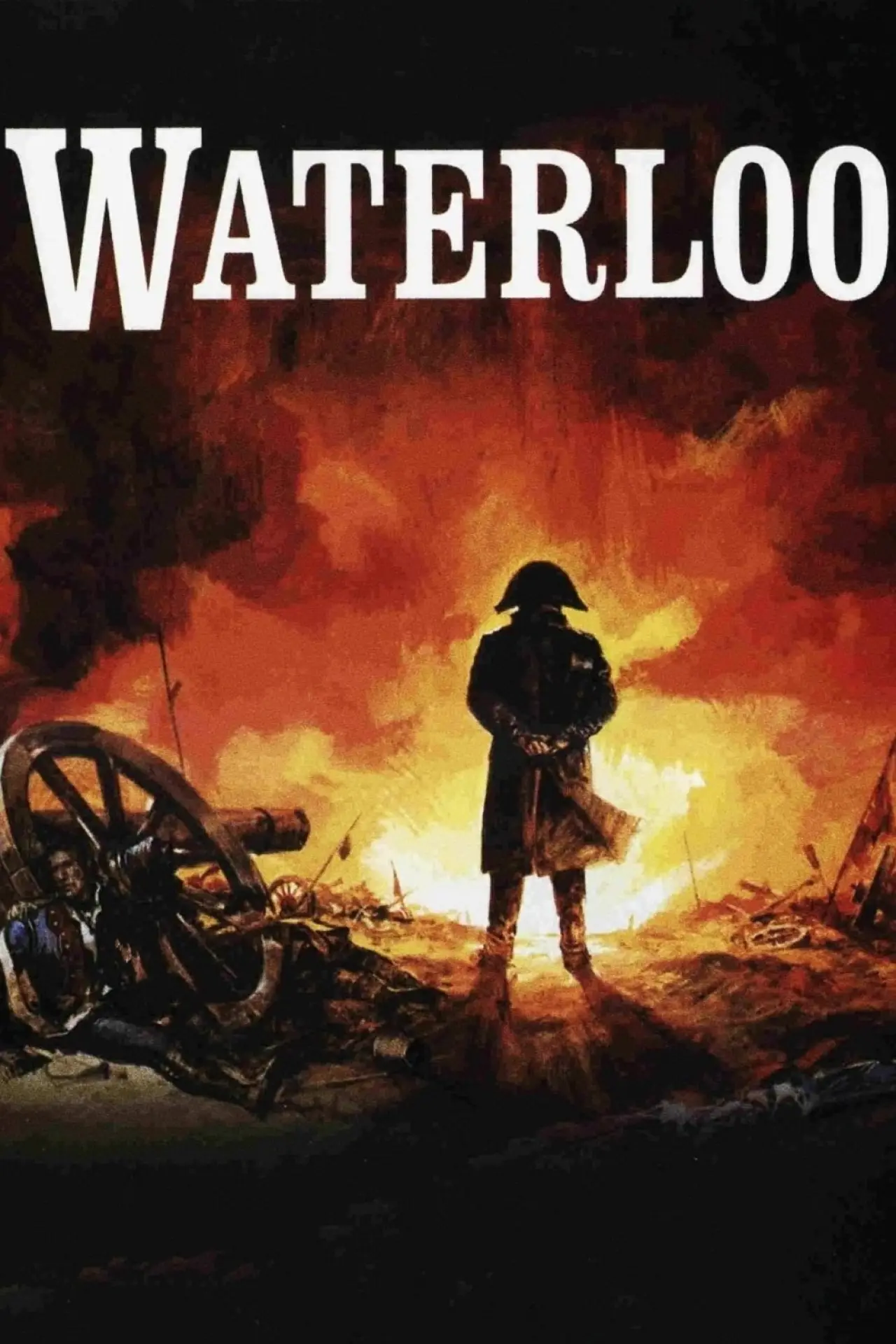
One incredible afternoon Napoleon met Wellington . . . at Waterloo.



Country
Production
Budget
$25 000 000
Box office
$3 052 000
Director
Actors
Rod Steiger, Christopher Plummer, Orson Welles, Jack Hawkins, Virginia McKenna, Dan O'Herlihy, Rupert Davies, Philippe Forquet, Gianni Garko, Ivo Garrani
All actors and roles (10)
All actors and roles (10)
Scenario
Producer
Camera operator
Armando Nannuzzi
Composer
Artist
Mario Garbuglia, Said Menyalshchikov
Audition
Editing
Richard C. Meyer, Guy Luongo, Piotor M. Sviridov
Whole Team (41)
Whole Team (41)
Short description
After defeating France and imprisoning Napoleon on Elba, ending two decades of war, Europe is shocked to find Napoleon has escaped and has caused the French Army to defect from the King back to him. The best of the British generals, the Duke of Wellington, beat Napolean's best generals in Spain and Portugal, but now must beat Napoleon himself with an Anglo Allied army.
What's left behind the scenes
- Fifteen thousand Soviet soldiers were used in the mass scenes of the film, portraying infantry units.
- Rod Steiger went to the hospital before filming to find out why his side might hurt the way it hurt the legendary commander during an attack that occurred on the eve of the Battle of Waterloo.
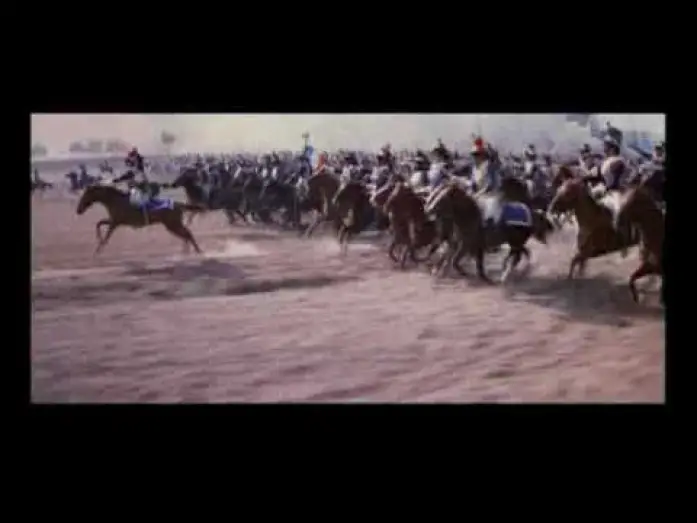
- In 1967, on the initiative of Semyon Budyonny, the Eleventh Separate Cavalry Guard Film Regiment was recreated. Soldiers serving in this regiment participated in the filming of battle scenes. They had to be able not only to ride horses, but also to jump onto them at a gallop, overcome obstacles, and perform various stunts. Naturally, those who had experience in equestrian schools and participated in races were more skilled in all of this.
- The filming of the movie was mainly done in Ukraine, Herzegovina, and Czechoslovakia.
- The crossing of the Seine River near Paris was filmed on the Chop River (Western Ukraine), on one of the banks of which sets depicting Paris were erected.
- In the scene depicting 'the dead field after Napoleon's battle,' horses were given alcohol and lay as if dead, cotton wool soaked in red paint was scattered everywhere, and mannequins depicting dead soldiers were lying around.
- For the film's author, lighting was of great importance, and often the same scene was shot in multiple takes until the director was satisfied with the result.
- The film's consultant was Army General Ivan Evgenievich Oslikovsky.
- Disagreements often arose between Bondarchuk and Oslikovsky, for example, when the director wanted to shoot a scene at two o'clock in the afternoon – the lighting was perfect, but the horses refused to cooperate – they knew it was feeding time and wouldn't move until they'd eaten. This irritated Bondarchuk, to which Oslikovsky responded with suffering: “I can command people, soldiers, but how do I command animals?” In addition, each squadron was assigned horses of a specific color; for example, the first squadron had bay horses, the second had dappled gray horses, the third had chestnut horses, and so on. And, depending on the changing lighting, Bondarchuk would order horses of a certain color to perform at a specific moment.
- After filming “Waterloo,” which lasted three months, the Cavalry Regiment also appeared in other films, including “The Chase” as members of the Black Hundreds.
- On the first day of filming in Rome, a scene of a ball given by the Duchess of Richmond in honor of the commanders of the allied armies was shot at the studio.
- Almost all location shooting took place in western Ukraine.
- A museum now stands on the site of the actual Battle of Waterloo. Therefore, the battle scenes were filmed near the village of Nizhne Solotvino in Transcarpathia, in a location with terrain very similar to the real battlefield.
- Sergei Bondarchuk was well acquainted with locations in Transcarpathia from filming the 1967-68 film 'War and Peace'.
- Before filming, Rod Steiger visited a hospital to find out what could cause side pain similar to that experienced by the legendary commander during an attack on the eve of the Battle of Waterloo.
- In 1967, at the initiative of Semyon Budyonny, the Eleventh Separate Cavalry Guards Cinematic Regiment was re-established. Soldiers serving in this regiment participated in the filming of battle scenes. They were required not only to ride horses but also to mount them at full gallop, clear obstacles, and perform various stunts. Naturally, those who had attended equestrian schools or participated in horse racing before their service possessed the most skill in these activities.
- After the filming of 'Waterloo,' which lasted three months, the Cavalry Regiment appeared in other films as well, including 'The Flight,' playing the role of Black Hundredists.
- Sergei Bondarchuk was well acquainted with the locations in Transcarpathia from the filming of 'War and Peace' in 1967-68.
Similar movies
8.3/10
8.2/10
8.2/10
8.2/10
8.1/10
8/10
7.9/10
7.9/10
7.9/10
7.9/10


 Auditions in India
 Casting calls in USA
 Castingi w Polsce
 Кастинги в Україні
