Arrival
Why are they here?



Country
Production
Genre
Budget
$47 000 000
Box office
$203 388 186
Website
Director
Actors
Amy Adams, Jeremy Renner, Forest Whitaker, Michael Stuhlbarg, Mark O'Brien, Tzi Ma, Abigail Pniowsky, Julia Scarlett Dan, Jadyn Malone, Frank Schorpion
All actors and roles (10)
All actors and roles (10)
Scenario
Producer
Aaron Ryder, Shawn Levy, David Linde, Karen Lunder, Daniel S. Levine, Dan Cohen, Stan Wlodkowski, Eric Heisserer, Glen Basner, Tory Metzger
Camera operator
Composer
Artist
Patrice Vermette, Marc Aubry, Steve Cady
Audition
Editing
Short description
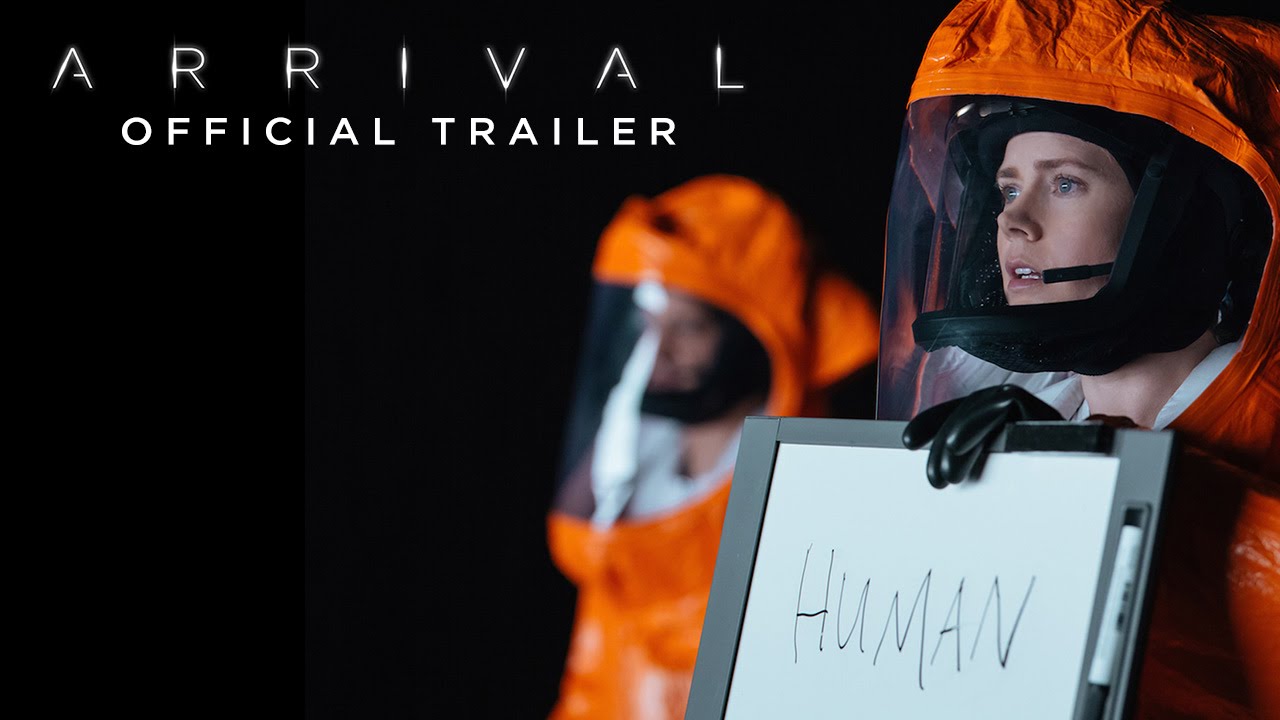
Taking place after alien crafts land around the world, an expert linguist is recruited by the military to determine whether they come in peace or are a threat.
What's left behind the scenes
- The written form of the alien language was invented by artist Martine Bertrand from Montreal, and Hanna’s drawings are actually drawings by Bertrand’s son.
- Before Denis Villeneuve became the director of the film, Nick Mathieu could have been in charge of the production.
- When conceiving the aliens, the filmmakers at one point or another considered octopuses, whales, elephants, and spiders. Director Denis Villeneuve wanted the aliens to generally resemble “something one might imagine in a surreal dream or nightmare,” and closer to the end of the film’s production, he wanted them to evoke associations with death.
- Filming began on June 7, 2015, in Montreal.
- The decision regarding the exterior appearance of the alien spacecraft was made at the very beginning of the project, but Denis Villeneuve struggled with the concept of its interior. He couldn't quite visualize it, as it needed to be designed in a way that allowed humans to move through it freely. Eventually, it was decided to use shifts in the direction of gravity, a solution that everyone found completely logical and obvious.
- A fragment that later became Louise's dream scene, performed by Amy Adams, was originally filmed as a standard conversation between characters played by Adams, Jeremy Renner, and Forest Whitaker. The scene was then removed from the film entirely, but Denis Villeneuve and Joe Walker soon realized that this was the only scene mentioning the linguistic relativity hypothesis, which is crucial to the plot. Also known as the Sapir-Whorf hypothesis, it suggests that the structure of a language influences the worldview and perceptions of its speakers, as well as their cognitive processes. It was decided to re-include the episode in the film, but this time in the form of a dream.
- Amy Adams' character managed to prevent the human armed forces from attacking the spacecraft from other worlds by traveling into the future and returning; afterwards, she convinced the character played by Forest Whitaker with a single phrase to abandon his warlike plans. By Denis Villeneuve's decision, the phrase remained off-screen, and it became known to the general public thanks to screenwriter Eric Heisserer. According to him, Adams' character repeated a phrase spoken by the future deceased wife of the character played by Whitaker: "After the war, there are no winners, only widows."
- Director Denis Villeneuve and screenwriter Eric Heisserer invented a fully functional language for the alien civilization. They and other members of the production team managed to create over a hundred different, completely functional logograms (a logogram is a grapheme representing a word or morpheme), 71 of which were used in this film.
- Bradford Young, nominated for the Oscar for 'Best Cinematography,' became the first African American to be nominated in this category.
- The film was originally titled "Story of Your Life," but focus group testing revealed that most people disliked the title, and it was eventually changed to "Arrival."
- Before Denis Villeneuve became the film's director, Nick Mathieu was considered to direct the picture.
- Amy Adams’s character managed to prevent a human military attack on the spacecraft arriving from another world by traveling to the future and returning, after which she convinced the character played by Ma Zhi to abandon his warlike plans with a single phrase. At Denis Villeneuve’s direction, the phrase remained off-screen, but it became known to the general public thanks to screenwriter Eric Heisserer. According to him, Adams’s character repeated a phrase spoken by the future wife of Ma Zhi’s character, who had died: “There are no winners in war, only widows.”
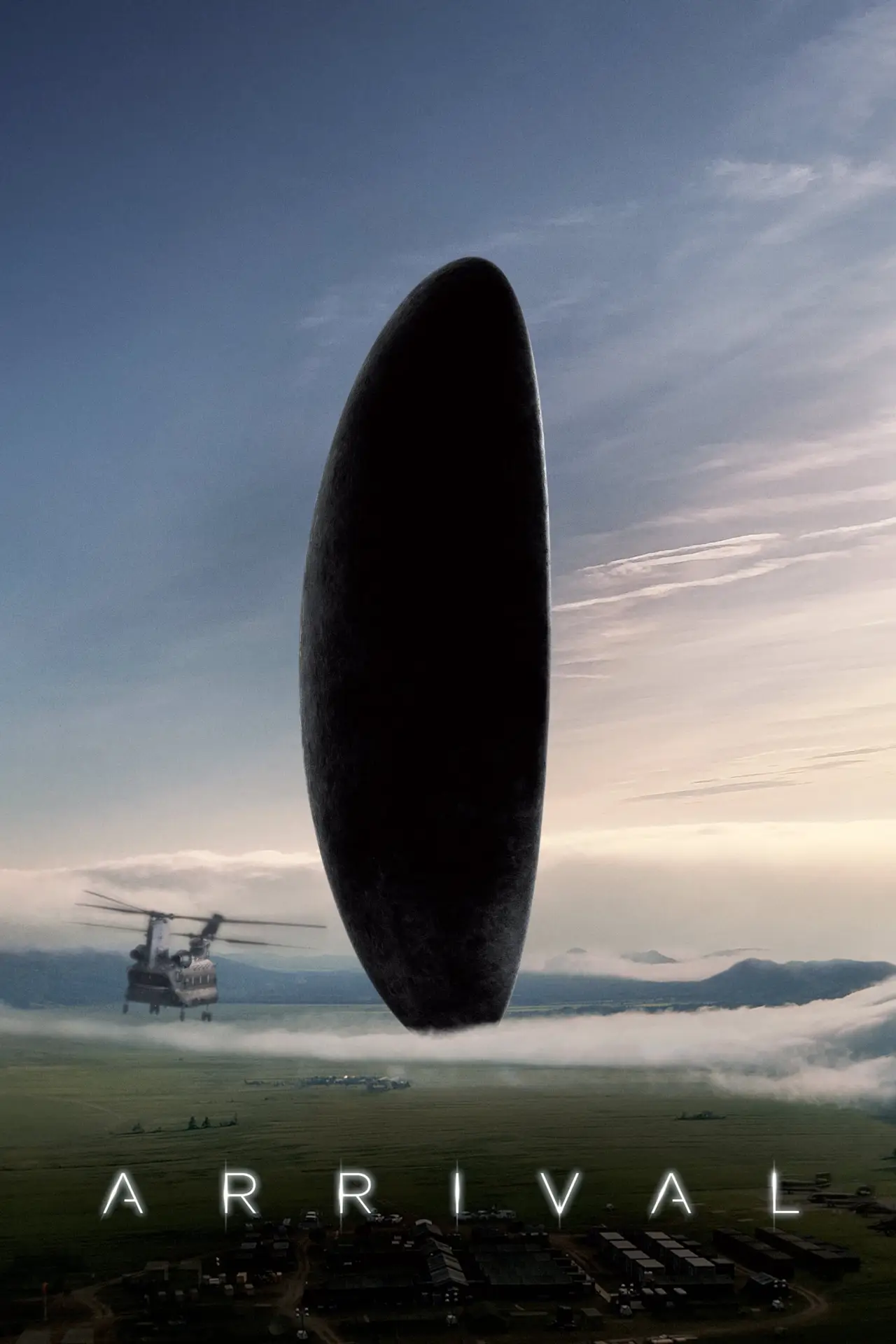
- The appearance of the spacecraft was borrowed from an asteroid called (15) Eunomia, discovered on July 29, 1851, by the Italian astronomer Annibale De Gasparis. Villeneuve liked the asteroid's look, which he described as "absolutely insane" and "somewhat like an egg." The director decided that this specific appearance for the spacecraft would perfectly convey a sense of mystery and threat simultaneously.
- A fragment that would eventually become the scene of Louise’s dream, performed by Amy Adams, was originally shot as a regular conversation between the characters played by Adams, Jeremy Renner, and Forest Whitaker. The scene was then completely removed from the film, but soon Denis Villeneuve and Joe Walker realized that this scene was the only place where the extremely important, from a plot perspective, hypothesis of linguistic relativity was mentioned. Also known as the Sapir-Whorf hypothesis, it suggests that the structure of a language influences the worldview and outlook of its speakers, as well as their cognitive processes. It was decided to re-include this episode in the film, but already in the form of a dream.
- Director Denis Villeneuve and screenwriter Eric Heisserer invented a full-fledged language of an alien civilization. They and the rest of the film crew managed to come up with over a hundred different fully functional logograms (a logogram is a grapheme depicting a word or morpheme), and 71 logograms were used in this film.
- Jeremy Renner and Amy Adams had previously starred together in "American Hustle" (2013).
- The decision regarding the exterior design of the alien spacecraft was made early in the project, but Denis Villeneuve struggled with the concept of its interior. He simply couldn't visualize it, as it needed to allow people to move around freely. Eventually, they decided to use variations in the direction of gravity, a solution that seemed perfectly logical and obvious to everyone.
- Bradford Young, nominated for an “Oscar” for “Best Cinematography,” was the first African American nominated in this category.
- The film is based on Ted Chiang's novella "Story of Your Life" (1998).
- From the very beginning, Denis Villeneuve only envisioned Amy Adams in the role of Louise. She gave her consent to participate in the project within 24 hours of receiving and reading the script.
- While developing the concept of the aliens, the filmmakers considered octopuses, whales, elephants, and spiders at various times. Director Denis Villeneuve wanted the aliens to generally resemble "something one might imagine in a surreal dream or a nightmare," and toward the end of production, he wanted them to evoke associations with death.
- Bradford Young, nominated for an "Oscar" for "Best Cinematography," was the first African American to be nominated in this category.
- From the very beginning, Denis Villeneuve saw only Amy Adams in the role of Louise. Within twenty-four hours of receiving and reading the script, she agreed to take part in the project.
- The spacecraft’s exterior was inspired by the asteroid (15) Eunomia (sometimes spelled Eunoemia), discovered on July 29, 1851, by Italian astronomer Annibale de Gasparis. Villeneuve liked the asteroid’s appearance, which he himself described as “utterly insane” and “something resembling an egg.” The director decided that this appearance would perfectly convey a sense of mystery and, at the same time, threat.
- The composer of "Arrival", Jóhann Jóhannsson, had already written music for Villeneuve's films such as "Sicario" (2015) and "Prisoners" (2013).
- Before Denis Villeneuve became the director of the film, Nick Mathieu could have directed it.
- Denis Villeneuve and the screenwriters working on the project did everything possible to ensure the plot twists were scientifically flawless. For consultations on these matters, they turned to the renowned scientist and inventor Stephen Wolfram and his son, Christopher Wolfram.
- Denis Villeneuve and the screenwriters working on the project did everything possible to ensure the plot’s twists and turns were scientifically impeccable. They consulted with the renowned scientist and inventor Stephen Wolfram and his son, Christopher Wolfram, on all these matters.
Similar movies
8.7/10
8.2/10

8.1/10

8.1/10
8.1/10
8/10
8/10
7.9/10
7.9/10

7.9/10


 Auditions in India
 Casting calls in USA
 Castingi w Polsce
 Кастинги в Україні
