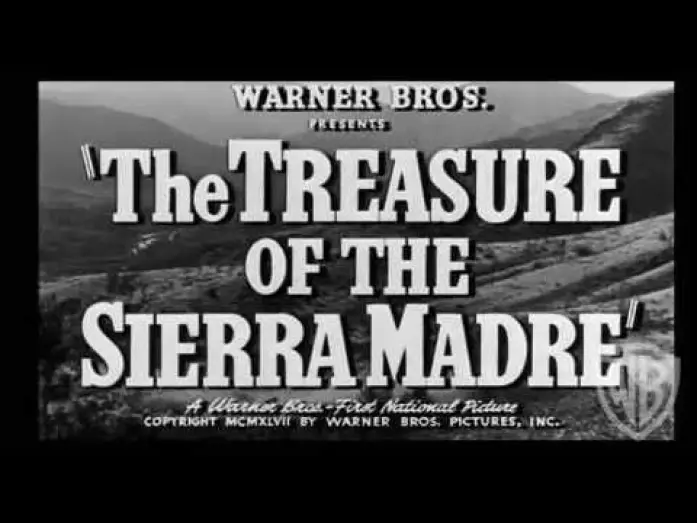
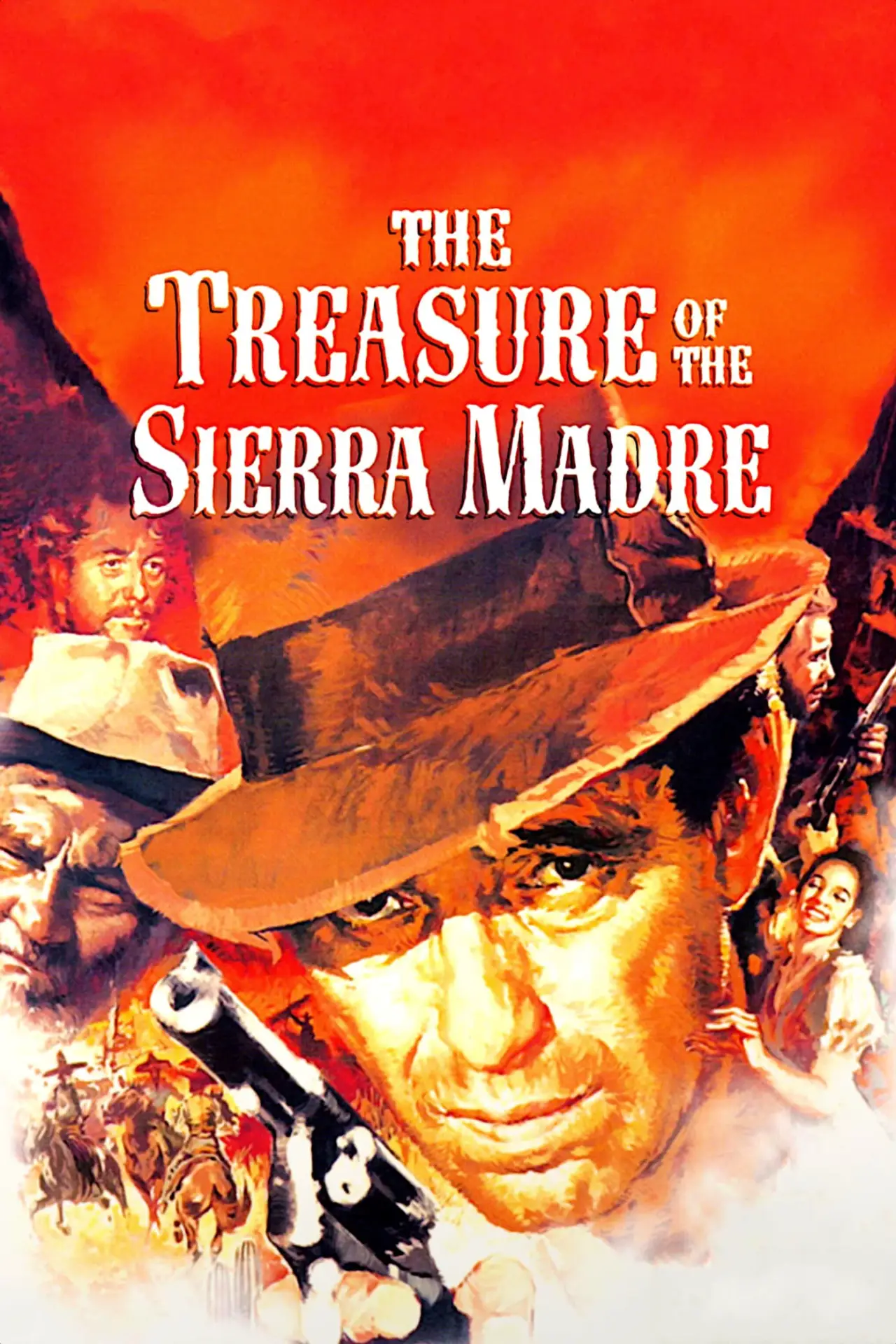
The Treasure of the Sierra Madre
The nearer they get to their treasure, the farther they get from the law.



Country
Production
Budget
$3 800 000
Box office
$215 419
Director
Actors
Scenario
Producer
Camera operator
Ted D. McCord
Composer
Artist
Audition
Editing
Short description
Two jobless Americans convince a prospector to travel to the mountains of Mexico with them in search of gold. But the hostile wilderness, local bandits, and greed all get in the way of their journey.
What's left behind the scenes
- At one point during filming, the gambling yachtsman Humphrey Bogart began to worry that he would miss the yacht races from Catalina to Hawaii, in which he participated every year. Studio management repeatedly assured him that work on the film would be completed by the start of the races, but the actor soon began to pester John Huston with the question of when filming would end. This ultimately annoyed the director, and after another such question, he grabbed Bogart by the nose and twisted his hand. Bogart didn't ask him that question again.
- John Huston chose to adapt the novel "The Treasure of the Sierra Madre" because he hoped the role of the elderly gold prospector would bring his father, Walter Huston, the long-awaited "Oscar".
- Humphrey Bogart began losing his hair in 1947, partly due to hormones he was taking to conceive children with his wife, Lauren Bacall (1924-2014)—though in this case, early baldness was likely the result of alcohol abuse and a vitamin B deficiency. By the time he arrived in Mexico, he was completely bald. The actor wore a wig during filming.
- Steven Spielberg later said that he drew inspiration for the character of Indiana Jones primarily from the image of Dobbs in this film, played by Humphrey Bogart (1899-1957).
- In some scenes, Walter Huston had to speak Spanish, but he did not know the language. John Huston specifically hired a Mexican, who recorded all of Walter Huston Sr.'s lines, and Huston simply memorized them by ear, doing so well that many later told him he spoke Spanish like a native speaker.
- Initially, producer Henry Blanke (1901-1981) even liked that Walter Huston (1883-1950), who played Howard, drew the audience's attention away from Humphrey Bogart; however, as filming continued, he began to have doubts, and John Huston was hinted that he should suggest his father be more modest in front of the camera.
- At one point during filming, the avid yachtsman Humphrey Bogart began to worry that he would miss the Catalina to Hawaii yacht race, which he entered every year. The studio management repeatedly assured him that work on the film would be finished by the start of the race, but the actor continued to pester John Huston, asking when filming would finally end. Eventually, the director grew tired of it; after one such question, he grabbed Bogart by the nose and twisted his arm. Bogart never asked him that question again.
- John Huston chose the novel "Treasures of the Sierra Madre" for the adaptation, hoping that the role of the elderly gold prospector would bring his father, Walter Huston, a long-awaited Oscar.
- The film was shown in Soviet cinemas under the title "My Treasure."
- Initially, producer Henry Blank (1901-1981) even liked the fact that Walter Huston (1883-1950), who played Howard, was drawing attention away from Humphrey Bogart, but as filming progressed, doubts began to creep in, and John Huston began to hint to his father that he should behave more modestly in front of the camera.
- Director and screenwriter John Huston (1906-1987) was intrigued by Bruno Traven (1890-1969), the author of the eponymous novel (1927) that served as the literary source, who lived in seclusion in Mexico. Traven had no objections regarding the director chosen to film his novel or the screenplay—apparently giving his consent in writing—and sent his close friend Hal Croves to the set, who served as a technical advisor and translator, earning $150 a week for his services. It is believed that Traven himself operated under the pseudonym 'Croves,' although Traven always denied this. Huston did not want to pester him with questions, but his wife at the time, Evelyn Keyes (1916-2008), was convinced that Croves was indeed the mysterious writer, Traven. She claimed that he constantly gave himself away by saying 'I' in certain situations when he should have said 'he,' and that his speech contained too many turns of phrase similar to those in Traven's letters to Huston. To this day, it is known for certain that 'Bruno Traven' was a pseudonym, although the writer's true identity has never been established.
- Director and screenwriter John Huston (1906-1987) was attracted to the author of the novel serving as the literary source, the eponymous novel (1927) by B. Traven (1890-1969), who lived in seclusion in Mexico. Traven had no objections to either the director who would film his novel or the screenplay – apparently, he gave his approval in writing – and sent his close friend Hal Croves to the set, who became a technical advisor and translator and received $150 a week for it. It is believed that Traven himself performed under the pseudonym “Croves,” although Traven always denied this. Huston himself did not want to bother with these questions, but his then-wife, Evelyn Keyes (1916-2008), was convinced that Croves was the same mysterious writer, Traven. She claimed that he constantly gave himself away, saying “I” in certain situations when he should have said “he,” and his speech contained too many phrases similar to those in Traven’s letters to Huston. At present, it is known for certain that “B. Traven” is a pseudonym, although the writer’s true identity has never been established.
- As a high-ranking American whom Dobbs begs for coins, the director himself appears on screen.
- The film's budget exceeded $5 million, making it the most expensive movie produced by Warner Bros. until 1948. Additionally, the fact that filming took place in Mexico added to the studio management's concerns. Initially, studio executives insisted that Humphrey Bogart's character remain alive throughout the film; later, they insisted he survive until nearly the very end. Director John Huston did things his own way. The film received critical acclaim, but the initial box office returns were not particularly satisfactory.
- The film's budget exceeded $5 million, making it the most expensive film from Warner Bros. until 1948, and the fact that filming took place in Mexico added to the studio executives' concerns. Initially, the studio heads insisted that the character played by Humphrey Bogart should remain alive altogether, then they began to insist that he survive almost to the very end of the film. Director John Huston did things his own way. The film received critical acclaim, but box office receipts immediately after its release were not particularly satisfactory.
- Initially, John Huston filmed Dobbs's death, played by Humphrey Bogart, more graphically (as in the book) than the version that ultimately remained in the film. When the character played by Alfonso Bedoya (1904-1957) strikes Dobbs with a machete, he completely decapitates him, after which the head (a prop, of course) rolls and falls into the water. It was 1948, and censorship wouldn't allow such details to be shown, so the film only shows the machete strike.
- One of the first Hollywood films shot "on location" outside the United States – in the Mexican state of Durango and the city of Tampico. To emphasize the local flavor, the director left the dialogue of the local residents in Spanish without subtitles.
- Humphrey Bogart began losing his hair in 1947, partly due to hormones he was taking to have children with his wife, Lauren Bacall (1924-2014) – although in this case, the early baldness was likely due to alcohol abuse and a lack of vitamin B in his body. By the time he arrived in Mexico, he was already completely bald. The actor wore a wig during filming.
- Steven Spielberg later said that in developing the character of Indiana Jones, he drew inspiration primarily from the image of Dobbs in this film, played by Humphrey Bogart (1899-1957).
- In some scenes, Walter Huston had to speak Spanish, a language he did not know. John Huston specifically hired a Mexican man to record all of Huston Sr.'s lines, which Huston then simply learned by ear. He did this so well that many people later told him he sounded like a native speaker.
- Initially, John Huston filmed the death of Humphrey Bogart's character, Dobbs, more vividly (as in the book) than the version that ultimately remained in the movie. When the character played by Alfonso Bedoya (1904-1957) strikes Dobbs with a machete, he completely decapitates him, after which the head (a prop, of course) rolls and falls into the water. It was 1948, and the censors could not allow such details to be shown, so the film only depicts the blow of the machete.
Similar movies
7.8/10
7.7/10
7.6/10
7.3/10
7.3/10
7.3/10
7.2/10
7.2/10
7.2/10
7.1/10


 Auditions in India
 Casting calls in USA
 Castingi w Polsce
 Кастинги в Україні
