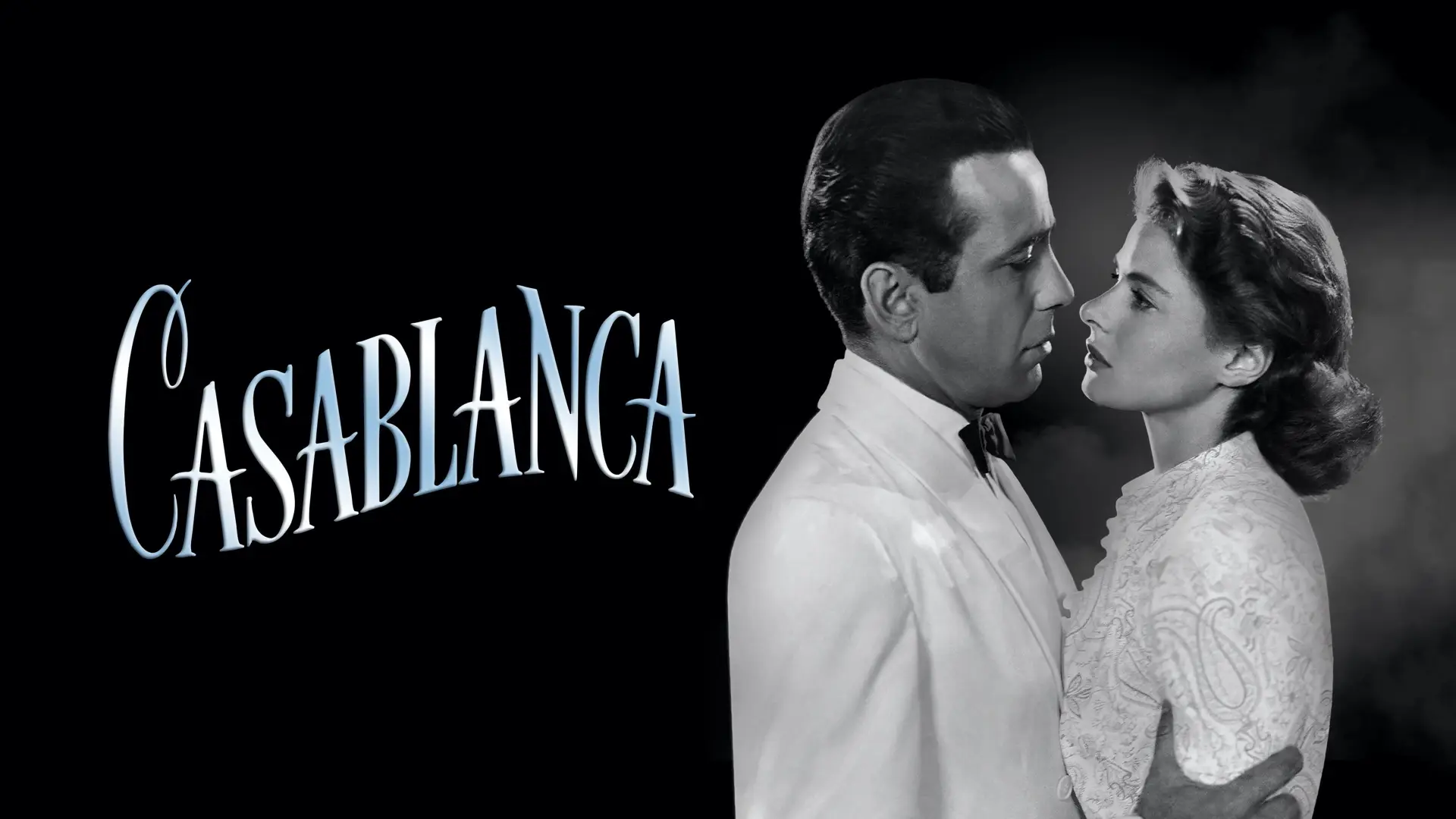
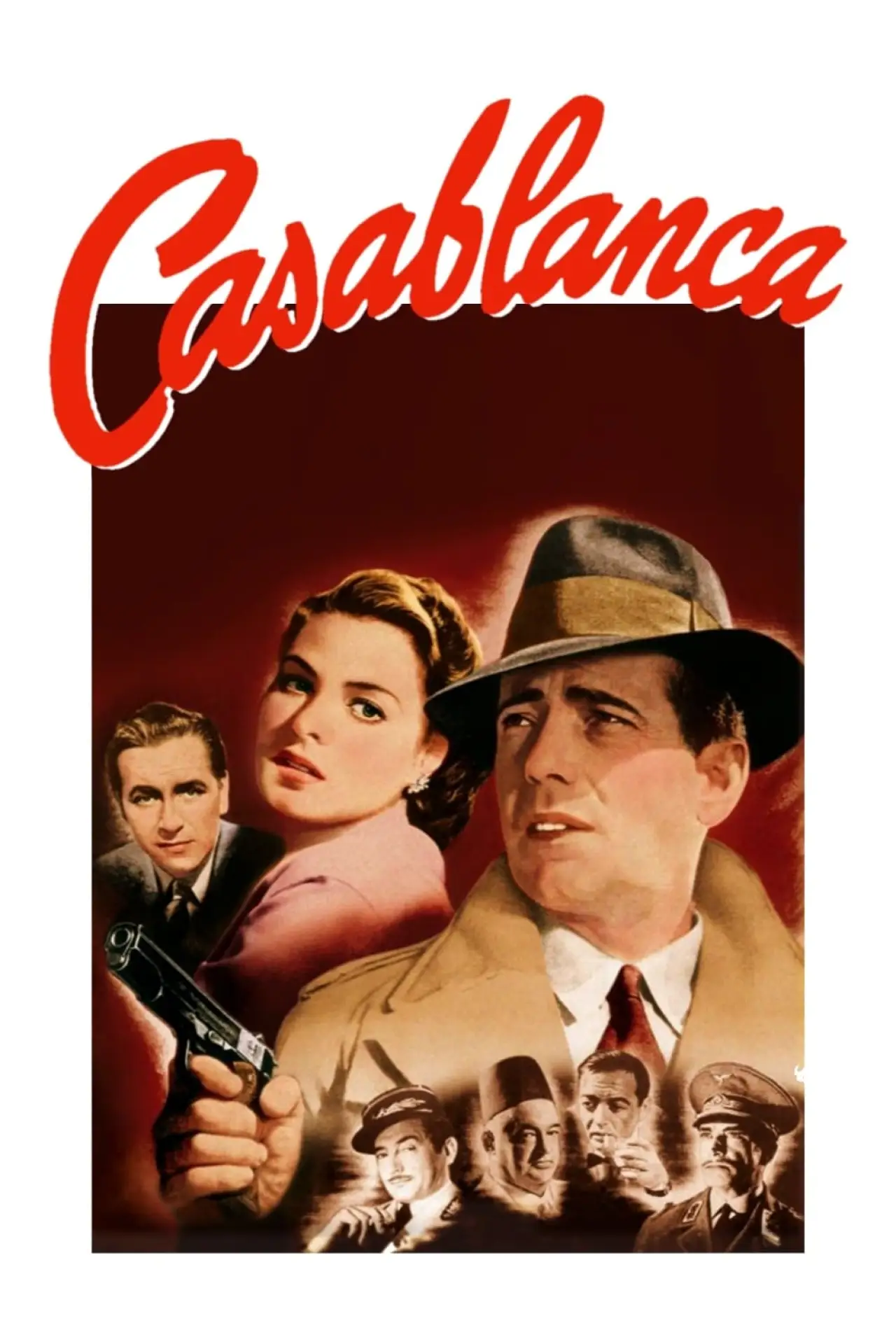
Casablanca
They had a date with fate in Casablanca!



Country
Production
Budget
$878 000
Box office
$10 462 500
Director
Actors
Scenario
Producer
Camera operator
Composer
Artist
John Beckman
Audition
Editing
Short description
In Casablanca, Morocco in December 1941, a cynical American expatriate meets a former lover, with unforeseen complications.
What's left behind the scenes
- Since 1957, many cinemas began showing the film during summer exams, initially at Harvard, and then at other universities. Twenty years later, it was calculated that “Casablanca” was shown on American television more often than any other film. To further facilitate the introduction of the film to new generations of television viewers, Ted Turner financed the colorization of “Casablanca” in the 1980s. This step provoked a mixed reaction among film buffs: Bogart's son, for example, compared coloring the film to attaching hands to the Venus de Milo.
- While working on the script, Epshteyn and Koch were in different locations.
- Starting in 1957, many cinemas began screening the film during summer exams, initially at Harvard and later at other universities. Twenty years later, it was calculated that "Casablanca" was broadcast on American television more often than any other film. To further facilitate the introduction of the film to new generations of viewers, Ted Turner funded the colorization of "Casablanca" in the 1980s. This move sparked a mixed reaction among cinephiles; Bogart's son, for example, compared coloring the film to adding arms to the Venus de Milo.
- According to Bergman’s recollections, due to her height, the director made the shorter Bogart stand on boxes or sit on cushions when they filmed scenes together. Immediately after filming wrapped, Bergman had her hair cut short for her next film, which made reshooting certain scenes impossible.
- The third screenwriter, Howard Koch, was the author of the sensational radio play “The War of the Worlds,” which caused panic among millions of Americans (who believed that Mars had attacked Earth).
- The script was finished just three days before filming began, and the ending of the film could not be figured out until the last day of shooting. When Ingrid Bergman asked who her character was in love with, director Michael Curtiz suggested she play as if she was hesitant in her feelings between two men.
- The third screenwriter, Howard Koch, was the author of the sensational radio broadcast "The War of the Worlds," which caused panic among millions of Americans (who believed that Martians had invaded Earth).
- In the 80s, the script was sent to various Hollywood studios and film companies under its original title, just for laughs. Many didn't recognize it as "Casablanca" and considered the script not good enough to make a decent movie.
- Neither Bogart nor Bergman were the director's first choices. Initially, the lead role was planned for Ronald Reagan—the future U.S. president—who was then at the peak of his Hollywood fame. The leading female role was to be played by actress Michele Morgan, who demanded a fee of $55,000. The producer refused to pay this amount when it became clear that Ingrid Bergman was willing to accept half that sum.
- While working on the script, the Epsteins and Koch were in different locations.
- Following the Allied landings in Africa, plans emerged to reshoot a scene with Rick and Renault, but they had to be abandoned due to the actors’ commitments to other projects. In addition, influential producer David O. Selznick opposed the new ending.
- The play arrived at the Warner Bros. story department on December 8, 1941, and on December 31, producer Hal B. Wallis, who would go on to make the film, gave it a different title—"Casablanca."
- The Epstein brothers finished the script three days before filming began, which director Michael Curtiz started on May 25, 1942. Howard Koch completed his version of the script two weeks after filming had already begun.
- Neither Bogart nor Bergman was the director's first choice. Initially, Ronald Reagan – at the height of his Hollywood fame at the time – was planned for the lead role, the future President of the United States. And the leading female role was to be played by actress Michelle Morgan, who demanded a fee of $55,000. The producer refused to pay this amount when it turned out that Ingrid Bergman agreed to half the sum.
- The film’s premiere was timed to coincide with Casablanca appearing on the front pages of American newspapers: in November 1942, Allied forces occupied Casablanca, and in January 1943, the meeting between Roosevelt and Churchill took place there. Considering this, Warner Bros. decided not to postpone the film’s premiere. However, American soldiers in North Africa did not see it: the authorities did not want to provoke the numerous supporters of the Vichy regime in the French colonies.
- The ironic formulation “the usual suspects,” put into the mouth of Captain Renault, was used as the title of a cult film of the 1990s.
- Due to the Allied landings in Africa, plans emerged to film an additional scene featuring Rick and Renault, but these had to be abandoned because the actors were busy with other projects. Furthermore, the influential producer David O. Selznick opposed the new ending.
- In the film “Black Cat, White Cat” (dir. Emir Kusturica, 1998), the character Grga repeatedly watches the final scenes of “Casablanca” with a phrase he repeats and quotes: “I think this is the beginning of a beautiful friendship.”
- The majority of actors who played the roles of Nazis were Jewish.
- Paul Henreid, who was cast as Laszlo, did not get along with the other actors; Ingrid Bergman considered him a “prima donna,” and Henreid himself spoke disparagingly about Humphrey Bogart’s acting abilities.
- The film's screenwriters, Julius and Philip Epstein, were twin brothers who had not worked together until 1938.
- The Epstein brothers finished working on the script three days before filming began, which director Michael Curtiz started on May 25, 1942. Howard Koch completed his version of the script two weeks after filming began.
- Composer Max Steiner wrote the music for the film, alternating motifs from two main melodies: the romantic theme 'As Time Goes By' (from a 1931 musical) and the patriotic 'La Marseillaise.'
- In 1940, playwright Murray Burnett, along with Joan Allison, wrote the play "Everybody Comes to Rick's," which served as the basis for the film. The play was never staged in the theater.
- Paul Henreid, who was cast as Laszlo, did not get along with the other actors; Ingrid Bergman considered him a 'prima donna,' and Henreid himself spoke dismissively of Humphrey Bogart's acting abilities.
- The film's screenwriters, Julius and Philip Epstein, were identical twin brothers who had not worked together before 1938.
- The screenplay was finished just three days before filming began, and the film's finale could not be devised until the final day of shooting. When Ingrid Bergman asked whom her character was in love with, director Michael Curtiz suggested she act as if she were torn between two men.
- The play reached the script department at Warner Bros. studios on December 8, 1941, and on December 31, the future film's producer, Hal B. Wallis, gave it a different title: "Casablanca".
- Bogart's famous final line — "I think this is the beginning of a beautiful friendship" — was written after filming had wrapped and was recorded by Bogart approximately one month after work on the movie had ended.
- According to Bergman's recollections, because of her height, the director forced the shorter Bogart to stand on blocks or sit on cushions when they filmed together. Immediately after filming ended, Bergman cut her hair short for her next movie, making it impossible to reshoot any of the scenes.
- Bogart’s famous final line, “I think this is the beginning of a beautiful friendship,” was written after filming was completed and voiced by Bogart approximately a month after work on the film had finished.
- They couldn't come up with the film's ending until the very end of shooting.
- In the film 'Black Cat, White Cat' (dir. Emir Kusturica, 1998), the character Grga repeatedly watches the final frames of 'Casablanca' with the phrase, which he repeats and quotes: 'I think this is the beginning of a great friendship.'
- Composer Max Steiner wrote the music for the film, alternating motifs from two main melodies – the romantic theme “As Time Goes By” (from the 1931 musical) and the patriotic “La Marseillaise.”
- In 1940, playwright Murray Burnett and Joan Alison wrote the play "Everyone Comes to Rick's," which served as the basis for the film. The play was never actually staged in a theater.
Similar movies
8.2/10
8.1/10
8.1/10

8/10
8/10
8/10
7.9/10
7.9/10
7.9/10
7.9/10


 Auditions in India
 Casting calls in USA
 Castingi w Polsce
 Кастинги в Україні
