The Abyss
When you get there, you will understand.



Country
Production
Genre
Budget
$69 500 000
Box office
$89 761 361
Director
Actors
Scenario
Producer
Gale Anne Hurd, Van Ling
Camera operator
Composer
Artist
Leslie Dilley, Dan Webster
Audition
Howard Feuer
Editing
Conrad Buff IV, Howard E. Smith, Joel Goodman
Whole Team (167)
Whole Team (167)
Short description
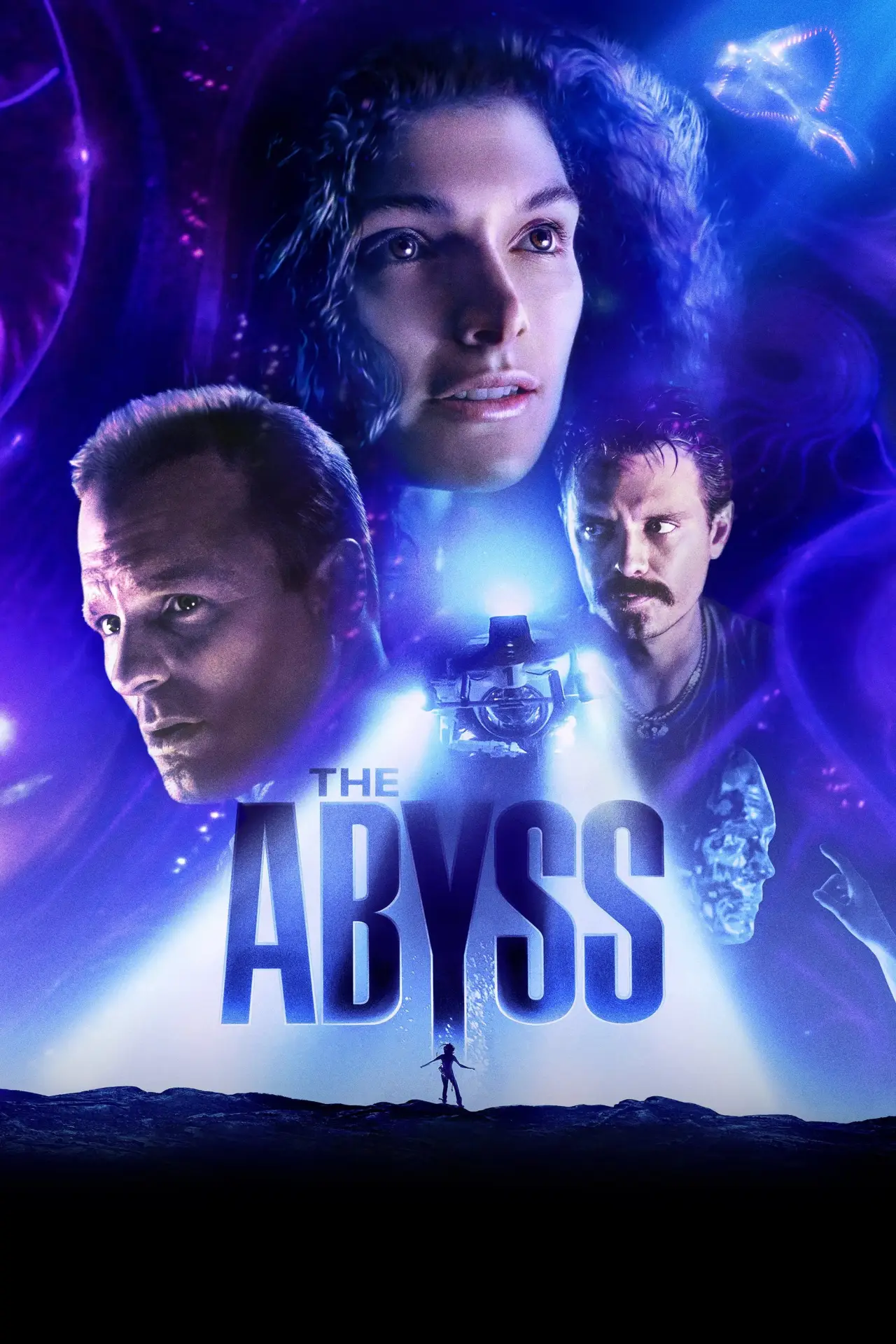
A civilian oil rig crew is recruited to conduct a search and rescue effort when a nuclear submarine mysteriously sinks. One diver soon finds himself on a spectacular odyssey 25,000 feet below the ocean's surface where he confronts a mysterious force that has the power to change the world or destroy it.
What's left behind the scenes
- Due to financial reasons, the sets for the 'Deepcore' oil rig were not dismantled after filming. They are located in an abandoned (and drained) nuclear power plant facility in South Carolina, where the film was shot. 20th Century Fox covered the sets with signs warning potential photographers of their ownership rights to the mockup (and sketches) of the rig and prohibiting any photo or video recording in its vicinity by copyright law. Official information about this is displayed on the rig's hull itself.
- Due to the sufficient depth and time spent underwater, the cast and crew had to undergo decompression.
- During the exhausting and problematic filming, the cast and crew began to give the film various offensive nicknames, such as “Abyss Native,” “Curse,” and “Life is the Abyss You Dive Headfirst Into.”
- Stunt doubles were used in very few scenes. When Bud pulls Lindsay onto the drilling platform, Mary Elizabeth Mastrantonio holds her breath herself. When the rig floods and the characters flee from the water, drowning before closed doors and dodging collapsing fragments of the rig—all of this was performed by the actors, not stunt doubles.
- The tank was filled with water to a depth of 12 meters, but even then, too much light from the surface was penetrating. To block the light, the water's surface was covered with a huge piece of waterproof canvas and billions of tiny black plastic balls. However, during a severe storm, the canvas was destroyed, forcing the filming to be moved to nighttime.
- Most of the underwater filming took place in a half-constructed nuclear reactor facility in Gaffney, South Carolina. It was the largest underwater filming set in the world, holding 7 million gallons of water.
- The mini-submarines in the wide shots are simply models suspended by wires in a smoky room and filmed in slow motion.
- The final scene, in which an alien ship surfaces in the ocean, was intended to take place in spring or summer. However, since the film was shot on the eve of winter, each actor had to put several ice cubes in their mouth to prevent their breath from steaming.
- To show the actors' faces, special masks were developed. They featured built-in microphones designed so that the actors' lines could be incorporated into the film. The noises created by the regulators in the helmets were removed during subsequent sound processing.
- The role of Commodore De Marco was originally intended for Lance Henriksen, but he was unable to appear in the film due to scheduling conflicts.
- It is said that Mary Elizabeth Mastrantonio suffered physical and emotional distress due to the intense pressure she experienced on set, and Ed Harris once had to pull over to the side of the road on his way home due to an uncontrollable crying fit.
- Filming also took place in the world's largest underground lake—a cave in Bonne Terre, Missouri, which served as the backdrop for several scenes.
- Mike Cameron, James Cameron's brother, played a dead crew member from the sunken submarine. To accomplish this, he had to hold his breath at a depth of 4.5 meters and allow a crab to crawl out of his mouth.
- The episode in which Catfish de Vries (played by Leo Burmester) shoots at the bathyscaphe with a submachine gun while Lieutenant Kofie (played by Michael Biehn) is retreating was filmed using live ammunition. In connection with this, the underwater automatic camera was isolated and enhanced security measures were taken.
- It is said that Mary Elizabeth Mastrantonio suffered physical and emotional distress due to the intense pressure she felt on set, and Ed Harris once had to pull over on his way home because of a bout of uncontrollable sobbing.
- In the episode where a water tentacle swims up to Badu, bubbles come out of his mouth and nose, which should not happen with that type of breathing.
- Before filming, the entire cast had to undergo a course with qualified divers.
- The American Humanist Association deemed the film unacceptable due to a scene featuring a rat submerged in an oxygen-rich liquid. This was not merely for show; the rat was actually put into a state of fear by being submerged in the liquid, causing it to panic and struggle, after which it was pulled out by its tail to let the liquid drain from its lungs.
- During the grueling and problematic shoot, the cast and crew began giving the film various offensive nicknames, such as "Native of the Abyss," "The Curse," and "Life is an Abyss You Dive Into Headfirst."
- The water in both tanks was heavily chlorinated to prevent the growth of microbes. This resulted in many of the actors' hair turning a gray or even white shade.
- The scene with the tentacled creature moving through the launch shaft was described in the script in such a way that it could be removed without damaging the plot; moreover, no one knew what it would look like. The actors interacted with a section of heater hose, which was supported by crew members.
- Mike Cameron, James Cameron's brother, played the dead crew member from the sunken submarine. To accomplish this, he had to hold his breath at a depth of 4.5 meters and allow a crab to crawl out of his mouth.
- Underwater filming took place at the unfinished Cherokee Nuclear Power Plant, located near the town of Gaffney, South Carolina, USA.
- Most of the underwater filming took place in a half-built nuclear reactor facility in Gaffney, South Carolina. It was the largest underwater filming stage in the world, holding 7 million gallons of water.
- The film's plot point – an attack by a nuclear warhead by a group of xenophobes, and the thwarting of this attack by a group advocating for contact – resembles a similar plot device in the 1973 novel "Rendezvous with Rama".
- Filming also took place in the world’s largest underground lake – a cave in Bonne Terre, Missouri, which was used as a backdrop for some scenes.
- Stunt performers were involved in very few scenes. When Bud hauls Lindsay onto the drilling platform, Mary Elizabeth Mastrantonio held her own breath. When the rig is flooded and the characters flee from the water, drowning before closed doors and dodging debris from the collapsing rig – all of this was performed by the actors, not stunt doubles.
- To heat the water in the tank of an unfinished nuclear power plant, James Cameron used several natural gas tankers connected directly to gas burners.
- The episode in which Catfish de Vries (played by Leo Burmester) fires a submachine gun at the bathyscaphe during Lieutenant Kofee's (played by Michael Biehn) retreat was filmed using live ammunition. Consequently, the underwater automatic camera was isolated, and increased security measures were implemented.
- The role of Commodore DeMarco was originally intended for Lance Henriksen, but he was unable to appear in the film due to scheduling conflicts.
- The tank was filled with water to a depth of 12 meters, but even then, too much light penetrated from the surface. To block it out, the water's surface was covered with a huge piece of waterproof canvas and billions of tiny black plastic balls. However, during a severe storm, the canvas was destroyed, so filming was moved to nighttime.
- The company mentioned in the film is called "Benthic Petroleum." In oceanography, the word "benthic" means "relating to the bottom of a body of water."
- The final scene, where the alien ship rises to the surface of the ocean, implied that it would be spring or summer. But since the film was shot on the eve of winter, each actor had to put several ice cubes in their mouth to avoid creating steam when exhaling.
- Special masks were developed to show the actors' faces. They had microphones built in so that the actors' spoken lines could be included in the film. Noise created by the regulators in the helmets was removed during post-production sound processing.
- Liquid breathing actually exists. Five rats were used in five different takes, all of whom survived and were vaccinated by a veterinarian. The rat that actually appears in the film died of natural causes a few weeks before the premiere. According to James Cameron, the scene with the rat was cut from the British version of the film because the Royal Veterinary Service considered the episode painful for the animal. James Cameron himself repeatedly assured that no harm was done to the rats used in these takes.
- An extended version of the film exists with a runtime of 171 minutes.
- The film's plot point—a nuclear warhead attack by a group of xenophobes and the thwarting of this attack by a group of contact supporters—recalls a similar plot device in the 1973 novel 'Rendezvous with Rama'.
- Because the model of the ship 'Benthic Explorer' was very large and used for filming in the open sea, the production company was required to register it with the Coast Guard.
- Before filming began, director James Cameron contacted Orson Scott Card to discuss the possibility of creating a book based on the upcoming film. Initially, Card replied that he did not do "novelizations," but after his agent informed him that James Cameron would be directing the film, he agreed to consider it. Once the screenplay was released and Card received assurances from Cameron regarding his right to develop the novel's conceptual line at his own discretion, he set to work. After meeting with Cameron, Card soon wrote the first three chapters of the novel, detailing the lives of Bud and Lindsey Brigman before the events shown in the film. Cameron gave these chapters to Ed Harris and Mary Elizabeth Mastrantonio, which helped them fully realize their characters.
- The episode with the water tentacle moving through the descent shaft was written into the script in such a way that it could be removed without harming the plot; furthermore, no one knew what it would actually look like. The actors interacted with a piece of heater hose held up by crew members.
- The episode in which Zubatka fires an automatic weapon at the launch shaft during Lieutenant Kofey's retreat was filmed using live ammunition. In this regard, the underwater automatic camera was isolated and enhanced safety measures were taken.
- The mini-submarines in the large shots were merely models suspended on wires in a smoky room and filmed in slow motion.
- Before the start of filming, director James Cameron contacted Orson Scott Card to discuss the possibility of creating a book based on the future film. Card initially replied that he did not do "novelizations," but after his agent informed him that James Cameron was directing the film, he agreed to consider it. A script was released, and Card, after receiving assurances from Cameron regarding his right to develop the novel's ideological line as he saw fit, took on the work. After meeting with Cameron, Card soon wrote the first three chapters of the novel, telling the story of Bud and Lindsey Brigman's lives before the events shown in the film. Cameron gave these chapters to Ed Harris and Mary Elizabeth Mastrantonio, which helped them fully develop their characters.
- The American Humanist Association deemed the film unacceptable due to a scene featuring a rat submerged in oxygen-rich liquid. And this wasn't simply for attention. The rat was actually put into a state of fear by being submerged in the liquid, which caused it to panic and struggle, after which it was pulled out by its tail, allowing the liquid to drain from its lungs.
Similar movies
8.5/10
8.3/10

8.2/10
8.2/10
8/10
8/10
7.9/10
7.8/10

7.8/10
7.7/10


 Auditions in India
 Casting calls in USA
 Castingi w Polsce
 Кастинги в Україні
