Leviathan




Country
Production
Budget
$220 000 000
Box office
$4 439 481
Director
Actors
Aleksey Serebryakov, Elena Lyadova, Vladimir Vdovichenkov, Roman Madyanov, Anna Ukolova, Aleksey Rozin, Sergey Pokhodaev, Platon Kamenev, Sergey Bachurskiy, Valeriy Grishko
All actors and roles (10)
All actors and roles (10)
Scenario
Andrey Zvyagintsev, Oleg Negin
Producer
Aleksander Rodnyansky, Sergey Melkumov, Ekaterina Marakulina
Camera operator
Mikhail Krichman
Composer
Andrey Dergachev
Artist
Andrey Ponkratov
Audition
Elina Ternyaeva
Editing
Anna Mass
Whole Team (28)
Whole Team (28)
Short description
In a Russian coastal town, Kolya is forced to fight the corrupt mayor when he is told that his house will be demolished. He recruits a lawyer friend to help, but the man's arrival brings further misfortune for Kolya and his family.
What's left behind the scenes
- Filming of the movie lasted from August 1 to November 8, 2013. Shooting took place in the villages of Teriberka and Tumanny, and the cities of Kirovsk, Monchegorsk, Apatity, and Olenegorsk in the Murmansk region, as well as in Poshekhonye (Yaroslavl region). Some interiors were filmed in Moscow to save on expedition costs.
- The scene of a feast following the announcement of the verdict in the property dispute involving Nikolai, Dmitry, and Lilia was halved during the editing stage.
- The film received its distribution certificate before July 1, 2014—meaning before the law banning obscene language in cinema came into effect—and could have been shown in its original form. However, the film's producer, Alexander Rodnyansky, noted that the profanity in the movie would still have to be edited. "We did indeed receive the distribution certificate, but that does not exempt us from the responsibility of complying with the laws of the Russian Federation."
- The first day of filming was marked by an unpleasant incident. During the shooting of the first scene, in which Nikolai and Romka drive through a stone gorge, the front wheel of a Nissan Terrano burst. Sergei Pokhodaev, who was driving, and Alexei Serebryakov, controlling the car from the passenger seat with a special duplicate system, lost control. The car crashed into vehicles belonging to the film crew. Fortunately, no one was injured in the accident. Due to the damage to the car, the shooting schedule had to be changed urgently. Another car of the same make was purchased in St. Petersburg and painted the same color. Simultaneously, the damaged car was being repaired, resulting in two cars being used in the film, both of which were constantly on set. Two or three weeks later, in the same place during the shooting of a similar scene, when Nikolai drives through the stone gorge early in the morning to meet Dmitry at the station, the situation repeated itself. In the very first take, two wheels burst on the main car, but Alexei Serebryakov managed to maintain control and an accident was avoided.
- In one of the scenes that didn't make the final cut of the film, Elena Lyadova's character drives away from the parking lot. While reversing, Elena collided with a car parked behind her. Everyone escaped with just a fright, and the director also compensated the owner of the damaged car for the minor damage. Thus, all the actors who drove Nikolai's car were involved in accidents. And this always happened during filming.
- After the director learned Heemeyer’s story, he came across a text retelling a medieval chronicle from the time of Martin Luther (Michael Kohlhaas). The plot of the novel, written by Heinrich von Kleist, was almost identical to Heemeyer’s story in every detail. It became clear that this was a timeless plot, the origins of which, with some effort, could also be found in the story of the unfortunate biblical Job.
- The first day of filming was marked by an unpleasant incident. While filming the first shot, in which Nikolai and Romka drive through a rocky gorge, a front tire blew out on the Nissan Terrano. Sergey Pokhodaev, who was behind the wheel, and Aleksei Serebryakov, who was controlling the vehicle from the passenger seat using a special duplicate system, lost control. The car crashed into the crew's vehicles. Fortunately, no one was injured in the accident. Due to the damage to the car, the filming schedule had to be urgently revised. Another car of the same make was purchased in St. Petersburg and painted in the same color. Simultaneously, the damaged car was repaired; as a result, two cars were used in the film, both of which were constantly present on set. Two to three weeks later, in the same location during the filming of a similar scene—where Nikolai drives through the rocky gorge early in the morning to meet Dmitry at the station—the situation repeated itself. In the very first take, two tires on the picture car blew out at once, but Aleksei Serebryakov managed to maintain control and an accident was avoided.
- The film was supposed to open the Russian Cinema program at the 36th Moscow International Film Festival. However, the screening did not take place – due to the film's use of profanity, it was not granted a distribution certificate in Russia.
- The scene in the train car, where Dmitry returns to Moscow, was significantly shortened during editing. It was filmed in a real moving train. However, the train's route was short, so the crew was provided with two cars attached to each other "in reverse." Thus, when the train reached its destination, the crew simply moved to the adjacent car. The train then traveled in the opposite direction, but the direction of travel in the shot remained correct.
- The story of the film's creation began in 2008. During the filming of 'Apocrypha' for the cinema almanac 'New York, I Love You' (2008), Inna Braude, a translator and assistant to Andrey Zvyagintsev, told him the famous story of Marvin John Heemeyer, a welder from Colorado. Heemeyer took revenge on local authorities for what he believed was the unfair seizure of his land using an armored bulldozer.
- The film mentions the Pussy Riot "punk prayer service" twice – near the end of the film, the group's name flashes on a television screen, and in the finale, this action is mentioned by an archpriest during a sermon.
- Actress Anna Ukolova gained 15 kg for the filming, at the director's request.
- In the scene where Romka runs out of the house to meet the arriving Dmitry, the director deliberately did not warn Sergey Pokhodaev, who played Romka, that Vdovichenkov would be giving him a gift (a model airplane for self-assembly). This improvisation was introduced from the third take and eventually made it into the film.
- To get into character, Alexei Serebryakov would take his character's costume the day before filming and wear it to get used to it, arriving and leaving the set in it. Having turned down other projects, he did not leave Teriberka for two and a half months, dedicating himself entirely to filming. Elena Lyadova did the same.
- In January 2015, a month before the planned start of the film's theatrical release in Russia, pirated copies of the film were illegally uploaded to the internet. Rodnyansky suspected the selection committee of one of the film festivals. Writer Dmitry Bykov, given what he considered the dubious chances of success for the Russian release, advised the producers to be glad that at least the residents of the northern territories where it was filmed would see the film in a pirated copy, and even suspected them of distributing the film in this way.
- The shot of the old photograph of the house, which Nikolai places on the table to show Dmitry, was filmed during post-production in the Moscow office after it became clear that the scene would be significantly cut. This panoramic photograph, taken in 1929, was found by executive producer Ekaterina Marakulina in the local history museum of the village of Teriberka. It is a remarkable coincidence that the camera angle overlooking the village and Nikolai's house was determined during the preparation stage, when the crew did not yet have this old photograph. In other words, someone 85 years ago set up a camera almost in the same spot from which the film crew decided to shoot this panorama.
- This is Andrey Zvyagintsev’s most “crowded” film. The core group of characters consists of 8 people.
- In December 2014, American film critic Todd McCarthy compiled a list of the top ten films of the outgoing year. 'Leviathan' took the top spot on this list.
- The second version of the script, already titled “Leviathan,” was completed in the fall of 2012 and combined allusions to the American tragedy of Marvin John Heemeyer, the story of the biblical Job, and Thomas Hobbes’ philosophical treatise “Leviathan, or The Matter, Form, and Power of a Commonwealth, Ecclesiastical and Civil.”
- During the filming of the breakfast scene at Nikolay's house after Dmitry's arrival, Romka is rude to Lila, for which he receives a cuff to the back of the head from his father. Eight takes were filmed. When asked how he managed to portray the reaction to the cuff so naturally, Sergey Pokhodaev replied: 'He hits them for real.'
- For those who watched a pirated copy of the film and wanted to thank its creators, the website www.leviathan-film.ru was opened. According to the film's producer, the funds received will be donated to the 'Give Life' charitable foundation.
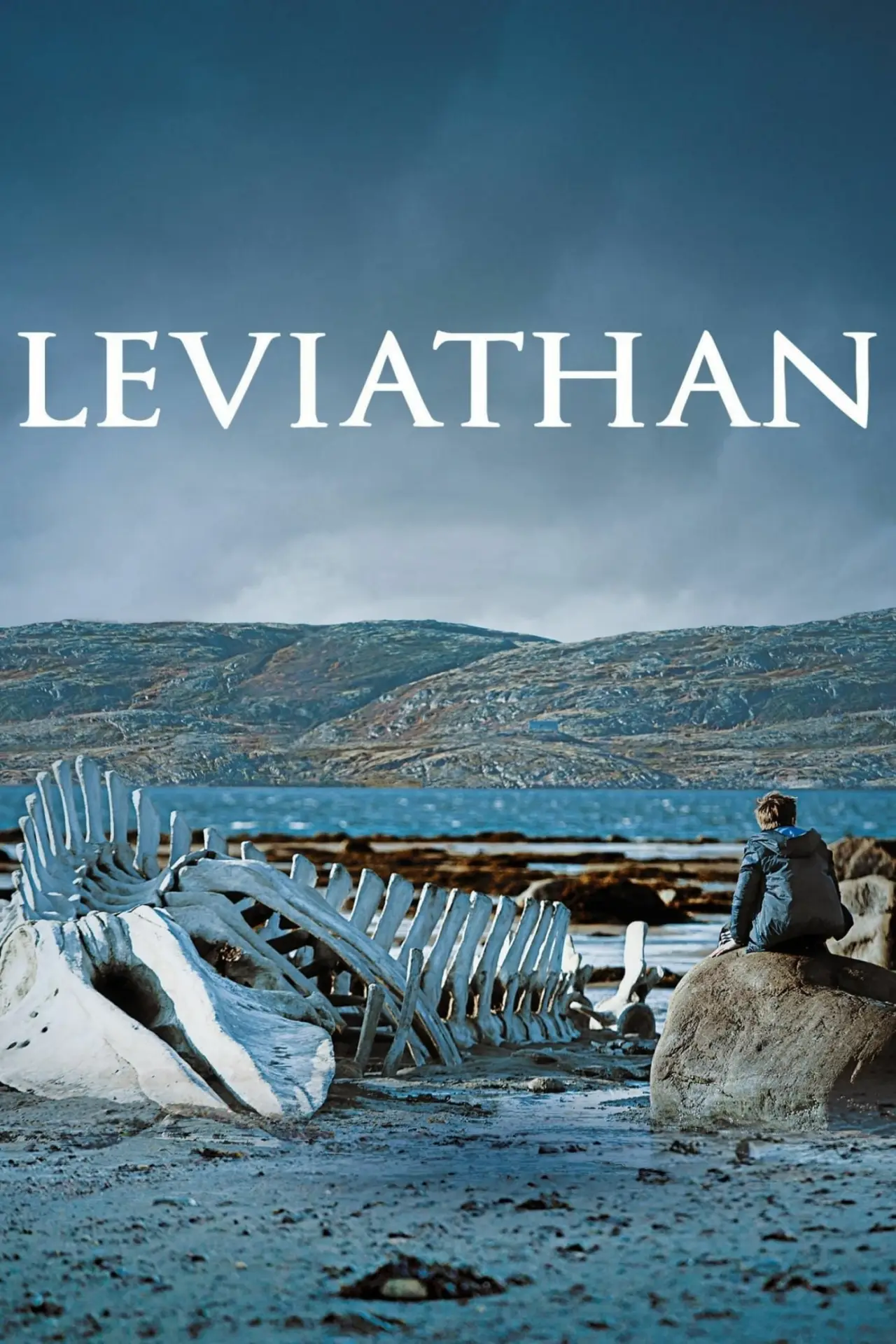
- A 1.5-ton, 24-meter-long blue whale skeleton, constructed by the props department on a metal frame at the request of production designer Andrey Ponkratov, was assembled in a bay near the village of Teriberka over six days.
- The search for actors took almost a year. Several months passed between Vladimir Vdovichenkov’s audition and his approval for the role. During this time, Vdovichenkov received an offer to star in the British film “Black Sea” directed by Kevin Macdonald, starring Jude Law. Vdovichenkov had already given a verbal commitment to the British filmmakers, and then he was informed that he had been approved for the role in “Leviathan.” This presented Vdovichenkov with a serious choice, which he made in favor of working with Zvyagintsev.
- In the winter (by December 2010), Oleg Negin wrote the first version of the script under the working title 'Batya' (Father). It was set in Russia but mirrored the events of the American tragedy, including the protagonist's rebellion. The script was filled with profanity, which somewhat unsettled the film's producer, Alexander Rodnyansky, and prevented the project from launching immediately after the completion of the film 'Elena' (2011).
- In the winter (already in December 2010), Oleg Negin wrote the first version of the script, tentatively titled "Batya" (Dad), which was set in Russia but mirrored the events of the American tragedy, including the protagonist's rebellion. The script was replete with profanity, which somewhat troubled the film's producer, Alexander Rodnyansky, and prevented the project from launching immediately after completing work on "Elena" (2011).
- The "Picnic by the Lake" scene was filmed over five days. The shot in which the stone thrown by Dmitry skips across the water like a pancake was filmed separately from the five-day block. Andrei Zvyagintsev and Leonid Dolenko, a shareholder in the group, personally demonstrated the art of skipping pancakes, taking turns. It is unknown whose throw made it into the final cut.
- In one of the scenes that didn't make it into the final cut of the film, Elena Lyadova's character is leaving a parking lot. While reversing, Elena crashed into a car parked behind her. Everyone escaped with only a minor scare, and the director compensated the owner of the damaged car for the slight loss. Consequently, every actor who drove Nikolay's prop car ended up in an accident, and it always happened while the camera was rolling.
- The film features a scene where the characters played by Alexei Serebryakov, Elena Lyadova, and Vladimir Vdovichenkov arrive at the city's central square, where a Lenin monument is located. One of the childhood photographs provided by Elena Lyadova for filming shows her and her mother standing in exactly the same square. This photo stands on the dresser in Nikolai's house and can be seen in the scene when Pasha comes to Nikolai to inform him that the missing Lilia has been found.
- In the scene where Romka runs out of the house to meet the arriving Dmitry, the director intentionally did not warn Sergey Pokhodaev, who played Romka, that Vdovichenkov would be giving him a gift (a model airplane kit). This improvisation was introduced starting from the third take and ultimately made it into the film.
- The film's creation began in 2008. During the filming of "Apocryph" for the anthology film "New York, I Love You" (2008), translator and Andrei Zvyagintsev's assistant Inna Braude told him the famous story of Marvin John Heemeyer, a welder from Colorado—the man took revenge on local authorities for what he considered an unfair seizure of his land using an armored bulldozer.
- A total of three and a half hours of usable footage was shot during the entire filming period, requiring 85,000 meters of film.
- According to director Andrey Zvyagintsev, the swearing in the film had to be cut out "while still alive": "There's articulation, but no sound—it's a trauma."
- The film features popular Russian 'shanson' songs: 'Vladimirsky Central' (Mikhail Krug), 'Gorodskoy Shalman, Zhizn Propashchaya' (Lyubov Uspenskaya), and 'O Bozhe, Kakoy Muzhchina!' (Natali). According to the director, he selected 'songs that are heard in every dive bar and every little restaurant' and make up our sonic environment.
- In the scene of Nikolay's first meeting with Pasha at the traffic police post, Sergey Pokhodaev's father, Aleksei, played the role of Pasha's partner.
- This is Andrey Zvyagintsev's most 'populous' film. The circle of central characters consists of 8 people.
- In the village of Teriberka, the 'Nikolai's House' set was constructed, consisting of a two-story wooden house, an auto repair shop, and a greenhouse. Construction took place from May to July 2013, carried out by the art department under the leadership of the film's production designer, Andrey Ponkratov.
- The shot of a fly hitting the glass at the beginning of the scene where Dmitry rereads a complaint he just typed on his computer about the mayor was filmed spontaneously when the director accidentally noticed the insect during preparation for the scene.
- The scene in which Lila and Angela gut fish on a conveyor belt was filmed in a real working environment at a fish processing factory during a night shift. The actresses received prior instruction and took the place of two workers at the conveyor belt. Along with Lilia in the factory van traveled residents of the village of Teriberka, actual factory workers.
- The 'Picnic by the Lake' scene was filmed over five days. The shot in which the stone thrown by Dmitry skips across the water was filmed separately from the five-day block. Andrey Zvyagintsev personally demonstrated his skill at skipping stones, taking turns with the crew's grip, Leonid Dolenko. No one knows whose throw actually made it into the final cut.
- The shot of the old photograph of the house, which Nikolay places on the table to show Dmitry, was filmed during the editing stage right in the Moscow office, once it became clear that the scene would be significantly shortened. This panoramic photograph, taken in 1929, was found by executive producer Ekaterina Marakulina in the local history museum of the village of Teriberka. It is a surprising coincidence that the camera's viewpoint of the village and Nikolay's house had been determined during the preparation stage, before the crew even had this old photograph. In other words, someone 85 years ago placed their camera almost exactly at the same spot from which the film crew decided to shoot this panorama.
- During the filming of the breakfast scene in Nikolai's house after Dmitry's arrival, Romka is rude to Lila and receives a slap from his father. Eight takes were filmed. When asked how he manages to portray the reaction to the slap so naturally, Sergei Pokhodayev replied, "He hits them for real."
- In search of a filming location, the film crew visited more than 70 cities within a 600-kilometer radius of Moscow, traveling from Pskov to Vladimir, from Yaroslavl to Orel, even venturing into Belarus. The final choice fell on the village of Teriberka, located on the shore of the Barents Sea (Murmansk region).
- In the village of Teriberka, a set called “Nikolay’s House” was constructed, consisting of a two-story wooden house, an auto repair shop, and a greenhouse. Construction took place from May to July 2013 by the art department under the direction of production designer Andrey Ponkratov.
- The film was shown to the selection committee of the 67th Cannes International Film Festival before the editing and sound mixing were completed.
- After the director learned of Heemeyer's story, he came across a text recounting a medieval chronicle from the time of Martin Luther (Michael Kohlhaas). The plot of the novel written by Heinrich von Kleist was almost identical in detail to Heemeyer's story. It became clear that this was a timeless plot, the roots of which, with some effort, could also be found in the story of the biblical Job.
- The film's editing took 50 days.
- According to director Andrey Zvyagintsev, the profanity in the film had to be cut "out of the living flesh": "The articulation is there, but the sound is gone—it's a trauma."
- The search for actors took nearly a year. Several months passed between Vladimir Vdovichenkov's auditions and his casting for the role. During this time, Vdovichenkov received an offer to star in a British film titled 'Black Sea,' directed by Kevin Macdonald and starring Jude Law. Vdovichenkov had already given the British team his verbal agreement when he was informed that he had been cast in 'Leviathan.' This presented a difficult choice for Vdovichenkov, which he ultimately decided in favor of working with Zvyagintsev.
- In one of the episodes of the "Picnic by the Lake" scene, the characters played by Alexei Serebryakov, Vladimir Vdovichenkov, Sergei Bachursky, and Alexei Rozin each drink a full glass of vodka in honor of Stepanich's (Sergei Bachursky) birthday. Due to a props error, the actors were given a bottle of real vodka for the very first take, which they drank. Only after the "cut" command did the actors report that the vodka was real. All four assumed it was a prank by the director.
- In December 2014, American film critic Todd McCarthy compiled a list of the ten best films of the year. "Leviathan" took first place on that list.
- The film received a distribution certificate before July 1, 2014, i.e., before the law prohibiting profanity in cinema came into force, and could have been shown in its original form. However, the film's producer, Alexander Rodnyansky, noted that the swearing in the film would still have to be edited. "We did receive a distribution certificate, but that does not exempt us from responsibility for complying with Russian law."
- The film features popular Russian chanson songs: "Vladimirsky Tsentral" (by Mikhail Krug), "Gorodskoy shalman, zhizn' propashchaya" (by Lyubov Uspenskaya), and "O Bozhe, kakoy muzhchina!" (by Natali). According to the director, he selected "songs that can be heard in every dive bar and every small restaurant" and that make up our sound environment.
- To bond with his character, Aleksei Serebryakov would take his character's costume the day before filming and 'live in it,' wearing it while arriving at and leaving the set. Having turned down other projects, he did not leave Teriberka for two and a half months, dedicating himself entirely to the shoot. Elena Lyadova did the same.
- In January 2015, a month before the planned theatrical release in Russia, pirated copies of the film were illegally uploaded to the internet. Rodnyansky suspected the selectors of one of the film festivals were behind this. Writer Dmitry Bykov, citing what he considered doubtful chances for success in the Russian market, advised the producers to be glad that at least the residents of the northern territories where the film was shot would see it via pirated copies, and even suspected the producers themselves of distributing the film in this manner.
- In the scene of Nikolay’s first meeting with Pasha at the traffic police post, Sergey Pokhodaev’s father, Alexey, played the role of Pasha’s partner.
- The film was shown to the selectors of the 67th Cannes Film Festival even before the editing and sound mixing were completed.
- At the director's request, actress Anna Ukolova gained 15 kg for the filming.
- Orthodox activists appealed to Culture Minister Vladimir Medinsky with a request to ban the film's screening in Russia.
- A blue whale skeleton weighing 1.5 tons and measuring 24 meters long, crafted by prop makers on a metal frame at the request of production designer Andrey Ponkratov, was assembled in a bay near the village of Teriberka over the course of six days.
Similar movies
8.5/10
8.4/10
8.3/10

8.2/10
8.2/10
8.2/10
8.1/10

8.1/10
7.9/10
7.9/10


 Auditions in India
 Casting calls in USA
 Castingi w Polsce
 Кастинги в Україні
