The Godfather
An offer you can't refuse.




Country
Budget
$6 000 000
Box office
$243 862 778
Website
Director
Actors
Scenario
Producer
Albert S. Ruddy, Francis Ford Coppola, Robert Evans
Camera operator
Composer
Artist
Dean Tavoularis, Samuel Verts
Audition
Fred Roos, Louis DiGiaimo, Andrea Eastman
Editing
William Reynolds, Peter Zinner
Whole Team (100)
Whole Team (100)
Short description
Spanning the years 1945 to 1955, a chronicle of the fictional Italian-American Corleone crime family. When organized crime family patriarch, Vito Corleone barely survives an attempt on his life, his youngest son, Michael steps in to take care of the would-be killers, launching a campaign of bloody revenge.
What's left behind the scenes
- The prototype for Johnny Fontane was Frank Sinatra.
- At the 85th minute, the murdered police captain McCluskey, lying on the restaurant floor, blinks.
- The director's position for the film was first offered to Sergio Leone, but he declined. Leone later regretted his decision and in 1983 decided to make an equally epic film, "Once Upon a Time in America".
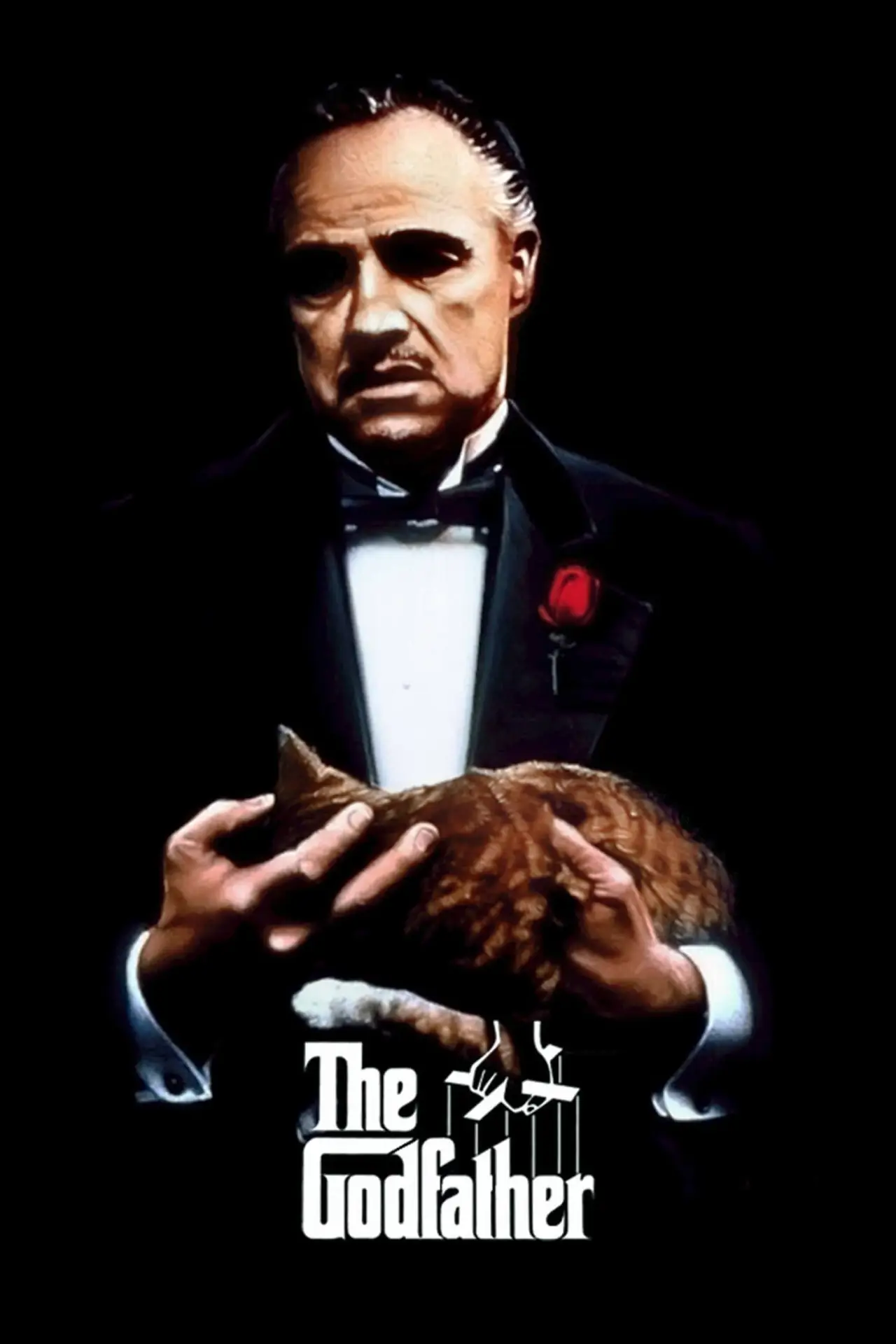
- It is believed that one of the scenes demonstrating Don Corleone's cruelty is the one where he offers to have someone beaten while gently stroking a cat on his lap. However, there was no cat in the script. The cat wandered onto the set and jumped onto Marlon Brando's lap just before filming began.
- When approving the film project, Paramount Studios stipulated that Marlon Brando not be involved in the filming. By that time, he was known for his on-set antics, as well as problems with alcohol. Several actors auditioned for the role of the Godfather, but Brando delivered the best performance. The studio was forced to agree with this fact.
- When approving the film project, Paramount Studio demanded that Brando not be involved in the filming. By that time, he was known for his antics on set as well as his problems with alcohol. Several actors auditioned for the role of the Godfather, but Brando gave the best performance. The studio was forced to accept this fact.
- Before filming began, Paramount Pictures wanted to take the project away from Coppola and give it to director Elia Kazan, but Brando stated that he would also leave if Coppola were fired.
- The word 'coppola' (Italian: coppola) refers to a traditional Sicilian cap; such hats can be seen in some of the film's 'Italian' scenes. Corleone (Italian: Corleone) is the name of a mountainous Sicilian village that served as a refuge for mafiosi for many years.
- The filmmakers adopted Don Corleone's raspy voice from the famous gangster Frank Costello. As a child, Frank accidentally damaged his vocal cords during an adenoidectomy.
- Oranges are a symbol of death in the film: someone dies shortly after they appear in the frame.
- The film is based on Mario Puzo's novel "The Godfather" (1969).
- According to Al Pacino, Marlon Brando's tears in the hospital scene were real.
- Marlon Brando refused his Oscar. For the award ceremony, he sent Sacheen Littlefeather, a representative of the Apache Native American tribe, in his place, and she also declined the award. In this way, the actor wanted to protest the discrimination against the indigenous people of America.
- The prototype for Vito Corleone was the famous gangster Joseph 'Joe' Bonanno.
- Francis Ford Coppola became passionate about filming the movie after reading the book. According to him, if he had approached Paramount Studios with the idea four months later, he would not have been entrusted with the production. The studio initially viewed the project as a small gangster drama and did not expect great success. Six months later, Mario Puzo's book gained immense popularity, and the film became a highly anticipated project. The studio did not dare to change the director mid-production.
- According to Mario Puzo, the character of Johnny Fontane was not based on an incident from the life of Frank Sinatra, who, according to rumors, received a role in Fred Zinnemann's film "From Here to Eternity" (1953) due to pressure on the film's producer from the Mafia. However, this subsequently became a stereotype, repeatedly refuted by Frank Sinatra's biographers.
- The producers did everything in their power to force Francis Ford Coppola to fire Pacino from the film. While reviewing the rushes, they constantly asked the director the same question: "When is he finally going to start ACTING?" It was only after seeing the scene in which Michael Corleone kills the police commissioner that they realized Coppola's brilliant directorial foresight.
- James Caan and Al Pacino are only 10 years younger than Morgana King, who played their mother, while John Cazale is 5 years younger.
- The film ranks first on the American Film Institute's (AFI) list of the 10 greatest gangster films.
- In 2006, a computer game with the same name was released based on the film.
- Before filming began, Paramount Pictures wanted to take the project away from Coppola and give it to director Elia Kazan, but Brando said he would also leave if Coppola were fired.
- The director's position for the film was initially offered to Sergio Leone, but he declined. Leone later regretted his decision and in 1983 decided to film an equally large-scale film, "Once Upon a Time in America."
- Composer Nino Rota was nominated for an Academy Award for Best Music, but the nomination was revoked when it was discovered that he hadn't written entirely new music for the film, but had reworked excerpts from an older work (from the film “Fortunella,” 1958).
- According to Mario Puzo, the character of Johnny Fontane was not based on the fact from Frank Sinatra's biography that he allegedly landed a role in Fred Zinnemann's film 'From Here to Eternity' (1953) due to mafia pressure on the producer. However, this later became a stereotype that has been repeatedly debunked by Frank Sinatra's biographers.
- During filming, Brando wore a special mouthguard to make his jaw look like a bulldog's.
- Actor Lenny Montana, who played Luca Brasi, was so intimidated by Marlon Brando that he constantly flubbed his lines. Coppola liked this natural nervousness and included a scene with the messed-up lines in the film.
- Actor Lenny Montana, who played Luca Brasi, was so intimidated by Marlon Brando that he constantly flubbed his lines. Coppola liked this natural nervousness and kept a scene in the film where the lines were actually mixed up.
- Oranges serve as a symbol of death in the film: shortly after they appear on screen, someone dies.
- Filming took place over four months in the middle of 1971.
- Mario Puzo was completely broke when he signed the contract with Random House to publish 'The Godfather'.
- Puzo's book became a bestseller, selling 10 million copies.
- Johnny Fontane was modeled after Frank Sinatra.
- In January 2008, McFarlane released a 16-centimeter figure of Don Corleone.
- Paramount Studios acquired the rights to film the novel even before it was published. The studio only had a 20-page outline of the novel at the time.
- During filming, Brando wore a special mouthguard to make his jaw look like that of a bulldog.
- Mario Puzo was completely broke when he signed a contract with "Random House" to publish "The Godfather".
- Francis Ford Coppola became enthusiastic about making the film after reading the book. He says that if he had come to Paramount Studios with this idea four months later, he would not have been entrusted with filming it. The film company initially regarded the project as a small gangster drama and did not expect great success. Six months later, Mario Puzo's book gained popularity, and the film became an anticipated project. The film company did not dare to change directors mid-production.
- Warren Beatty, Alain Delon, Burt Reynolds, Robert Redford, Dustin Hoffman, Jack Nicholson, Robert De Niro, Laurence Olivier, and others were considered for various roles in the film. But Coppola rejected all these candidates.
- In the book, Michael and Kay Corleone had two sons, while in the film they had a son and a daughter.
- According to some reports, Frank Sinatra also campaigned for the role of Vito Corleone.
- One of the scenes intended to showcase Don Corleone's cruelty is the one where he suggests having a man beaten while gently stroking a cat on his lap. However, the truth is that there was no cat in the script. The cat had been wandering around the set and jumped onto Marlon Brando's lap just before filming began.
- The producers did everything they could to make Francis Ford Coppola fire Pacino from the film. While reviewing the footage, they constantly asked the director the same question: "When will he finally START ACTING?" Only after seeing the scene where Michael Corleone kills the police commissioner did they understand Coppola's brilliant directorial foresight.
- Marlon Brando refused his Academy Award. He sent Sacheen Littlefeather, a representative of the Apache nation, to the ceremony in his place, and she also declined the award. The actor intended this as a protest against the discrimination faced by Native Americans.
- According to some reports, Frank Sinatra also vied for the role of Vito Corleone.
- The author himself once admitted that he gained all his knowledge about the Mafia from other books.
- Composer Nino Rota was nominated for an Oscar for Best Original Score, but the nomination was revoked when it was discovered that he had not written an entirely new score for the film, but had instead reworked excerpts from an old one (from the 1958 film 'Fortunella').
- Mario Puzo was completely broke when he signed the contract with Random House to publish "The Godfather".
- A total of 18 corpses are shown in the film, including a horse.
- The word “coppola” (Italian: coppola) refers to a traditional Sicilian hat, which can be seen in some of the film’s “Italian” scenes. And Corleone (Italian: Corleone) is the name of a mountain village in Sicily that has served as a haven for mobsters for many years.
- Various roles in the film were considered for Warren Beatty, Alain Delon, Burt Reynolds, Robert Redford, Dustin Hoffman, Jack Nicholson, Robert De Niro, Laurence Olivier, and others. However, Coppola rejected all these candidates.
- The scene where Sonny beats Carlo took 4 days to film and required 700 extras.
- James Caan and Al Pacino are only 10 years younger than actress Morgana King, who played their mother, while John Cazale is only 5 years younger.
Similar movies
8.9/10
8.2/10
8.1/10
8.1/10
8/10
8/10
8/10
7.9/10
7.9/10
7.7/10


 Auditions in India
 Casting calls in USA
 Castingi w Polsce
 Кастинги в Україні
