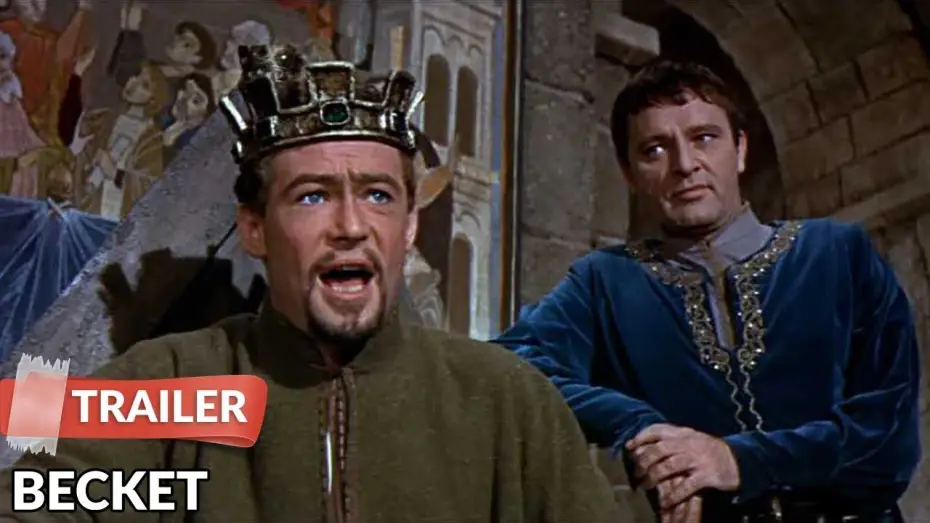
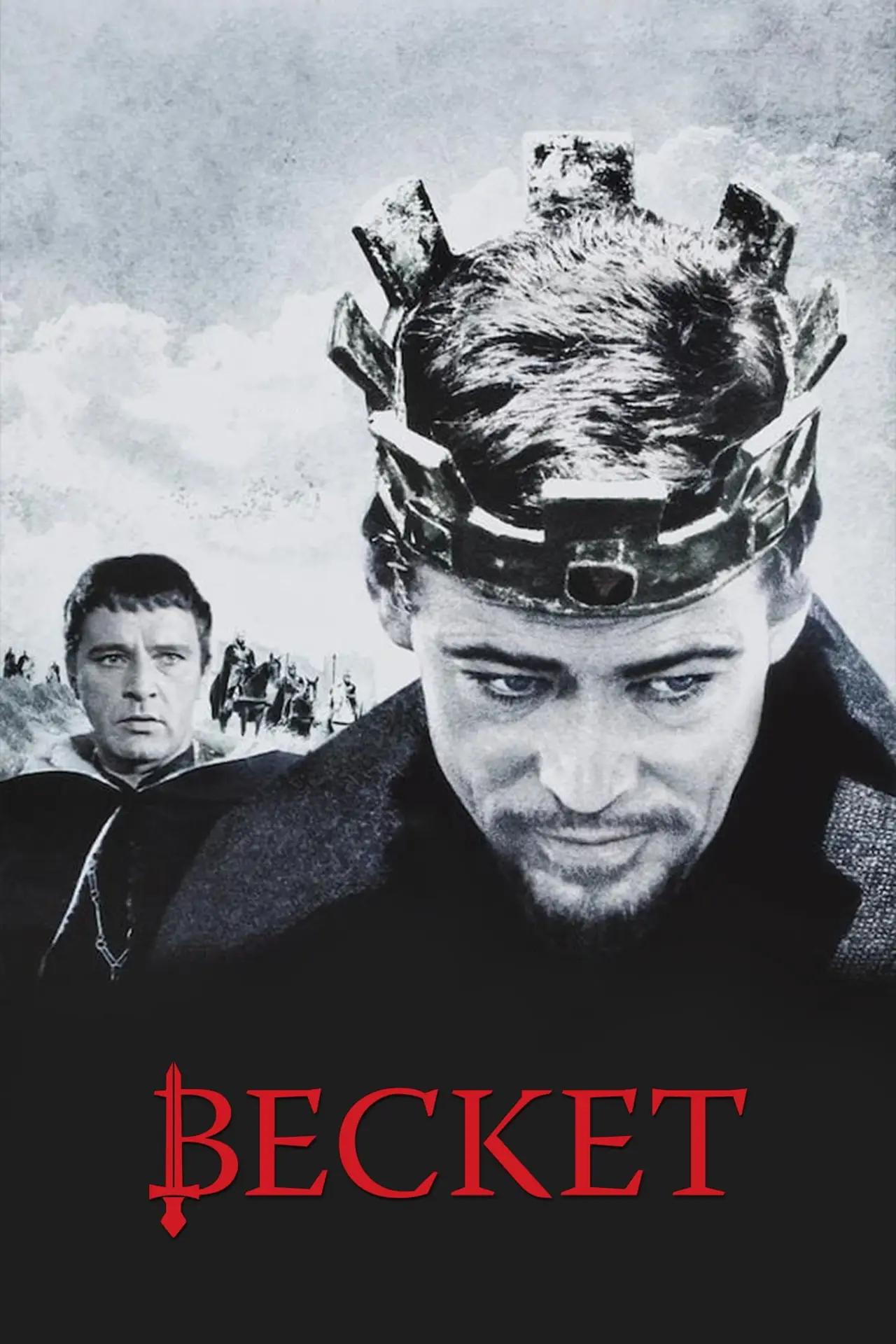
Becket
An age of rampant lusts, abandon, runaway passions. An age brought bristling to life by two of the most exciting stars of our time!



Country
Production
Budget
$3 000 000
Box office
$9 164 370
Director
Actors
Richard Burton, Peter O'Toole, John Gielgud, Gino Cervi, Paolo Stoppa, Donald Wolfit, David Weston, Martita Hunt, Pamela Brown, Percy Herbert
All actors and roles (10)
All actors and roles (10)
Scenario
Producer
Hal B. Wallis, Joseph H. Hazen
Camera operator
Composer
Laurence Rosenthal
Artist
Audition
Editing
Short description
Thomas Becket, Henry II's longtime advisor, finds his friendship with the debauched king corroding when he is unwillingly appointed as Archbishop of Canterbury in an attempt to gain absolute loyalty from the Church.
What's left behind the scenes
- A 1964 adaptation of Jean Anouilh's (1910-1987) play. Contrary to what the film claims, the play provides a historically more accurate explanation of the conflict between Thomas Becket and the monarch.
- The closeness between King Henry II and Thomas Becket is portrayed as purely platonic. The film was made in 1963, when homosexuality was still illegal in the United Kingdom, and any hint of such a relationship between the characters would have immediately attracted the attention of the censors. Nevertheless, the film contains hints that Henry II loved Becket.
- A 1964 film adaptation of Jean Anouilh's (1910–1987) play. Contrary to what is claimed in the movie, the play provides a more historically accurate explanation of Thomas Becket's conflict with the monarch.
- Richard Burton (1925–1984) initially refused to star in the film, believing that playing a saint would instantly make him a laughingstock in the newspapers. Burton stated that he would have been better suited for the role of Henry II (1133–1189) Plantagenet, which was played by Peter O'Toole (1932–2013).
- The murder of Thomas Becket was far more brutal and bloody than depicted in the film.
- John Gielgud (1904-2000) was nominated for an Oscar, despite appearing on screen in only two brief scenes.
- The artist of the film, John Bryan (1911-1969), was responsible for the construction of the Canterbury Cathedral set, which at the time were the largest interior sets of any building in the history of European cinema.
- The sets for Canterbury Cathedral were designed by the film's production designer John Bryan (1911-1969), and at the time, they were the largest interior sets for any structure in the history of European cinema.
- Richard Burton (1925-1984) initially refused to star in this film, believing he would instantly become a laughingstock in all the newspapers if he played the role of a saint. Burton stated that he would have been more suited to the role of Henry II (1133-1189) Plantagenet, which was played by Peter O'Toole (1932-2013).
- John Gielgud (1904–2000) was nominated for an Oscar, despite appearing on screen in only two brief scenes.
Similar movies
8.7/10
8.6/10
8.3/10
8.3/10
8.3/10
8.2/10
8.1/10

8.1/10
8/10
7.9/10


 Auditions in India
 Casting calls in USA
 Castingi w Polsce
 Кастинги в Україні
