Harvey
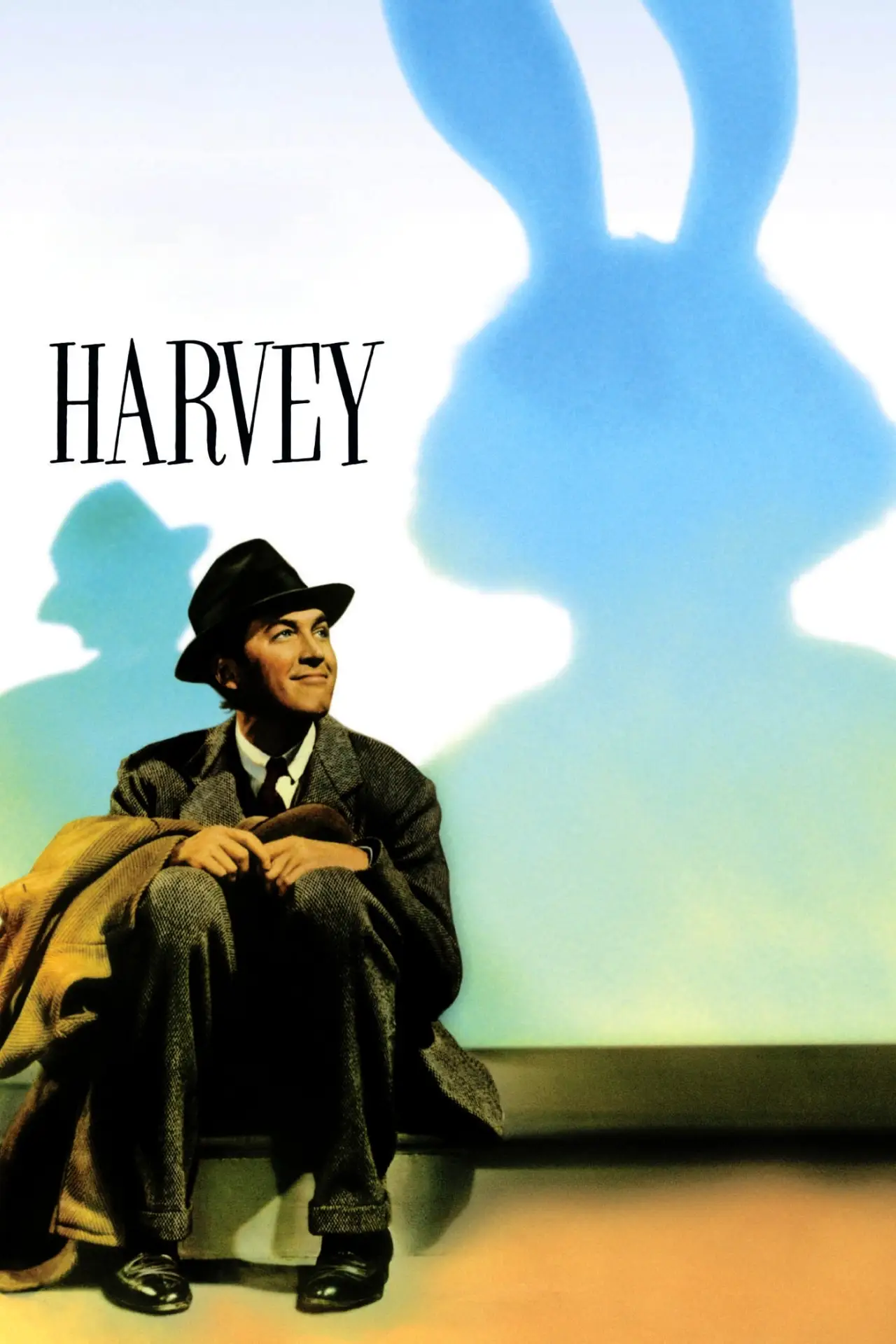
The Wonderful Pulitzer Prize Play … becomes one of the Great Motion Pictures of our Time!



Country
Production
Budget
$0
Box office
$0
Director
Actors
James Stewart, Josephine Hull, Peggy Dow, Charles Drake, Cecil Kellaway, Victoria Horne, Jesse White, William H. Lynn, Wallace Ford, Nana Bryant
All actors and roles (10)
All actors and roles (10)
Scenario
Producer
Camera operator
William H. Daniels
Composer
Artist
Audition
Editing
Short description
The story of Elwood P. Dowd who makes friends with a spirit taking the form of a human-sized rabbit named Harvey that only he sees (and a few privileged others on occasion also.) After his sister tries to commit him to a mental institution, a comedy of errors ensues. Elwood and Harvey become the catalysts for a family mending its wounds and for romance blossoming in unexpected places.
What's left behind the scenes
- The character played by James Stewart (1908-1997) can be called an alcoholic, but he only drinks once throughout the entire film. This was because the film production's ethical code at the time did not allow showing a person getting drunk.
- James Stewart's (1908-1997) character could be described as an alcoholic, yet on screen, he drinks only once during the entire film. This is because the motion picture production code of that era did not allow depicting a person getting drunk.
- Director Henry Koster followed a suggestion from James Stewart, who played Elwood P. Dowd, and filmed many scenes with a wider shot so that Harvey would be in the frame.
- The actors and technical crew often set an extra chair for Harvey at the table during lunch and ordered dishes for him. This was done as a joke.
- Screenwriter Mary Chase initially intended for the audience to actually see Harvey at the end of the film. She didn't want viewers to think that the main character was simply mentally unstable. The studio considered exactly how to show Harvey to the audience, but in the end, they decided against it.
- When Henry Koster married Peggy Moran in 1941, he promised that from then on, he would include her in every one of his films. He kept his word, but instead of filming Moran herself, he filmed her figurine—more often than not, her plaster head on a mantelpiece or a piano. In this film, Moran's plaster head is shown on a table during a two-minute scene in which Josephine Hull's character speaks with the character played by William H. Linn.
Similar movies
7.8/10
7.6/10
7.6/10
7/10
6.9/10
6.6/10


 Auditions in India
 Casting calls in USA
 Castingi w Polsce
 Кастинги в Україні
