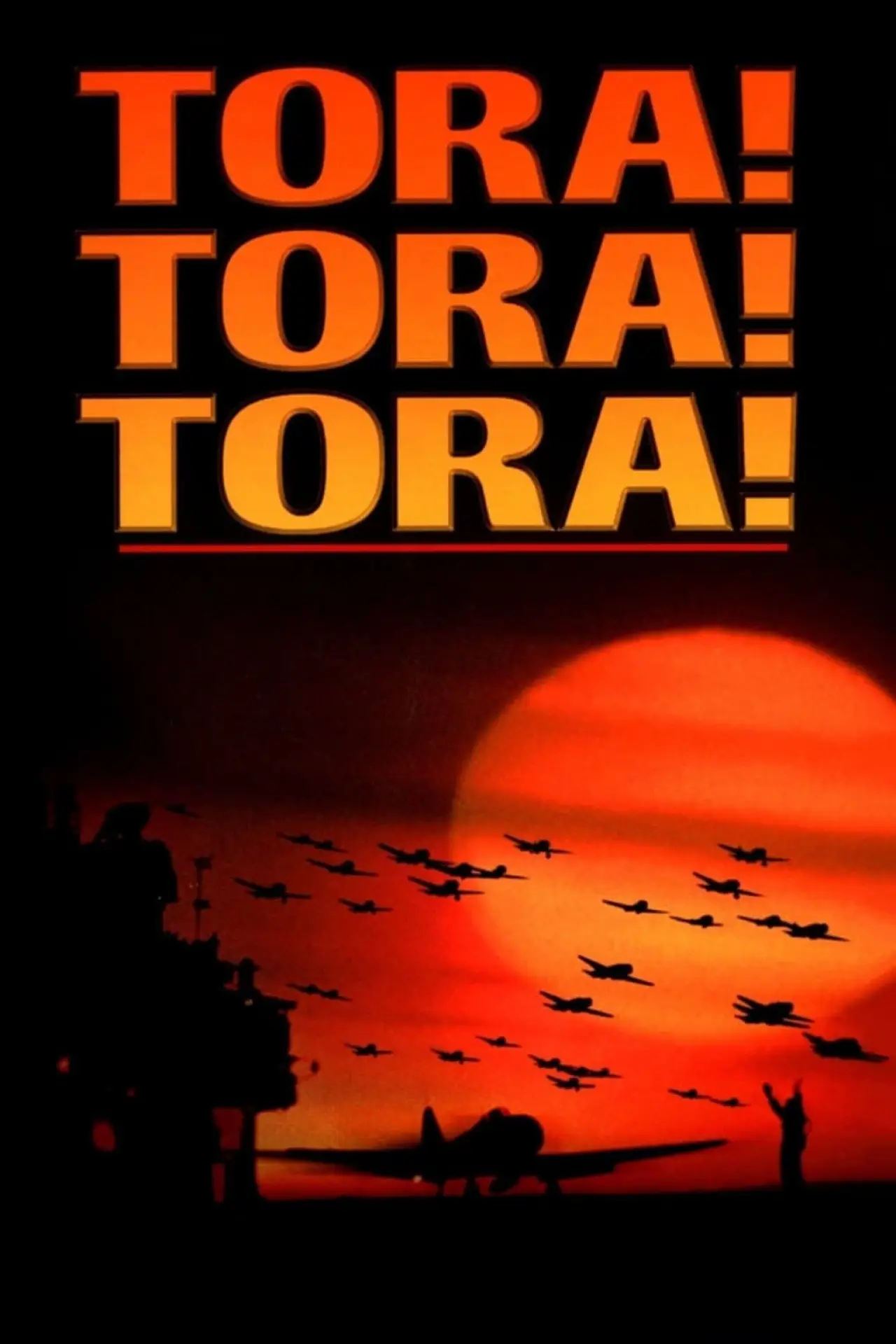
Tora! Tora! Tora!
The incredible attack on Pearl Harbor.




Country
Production
Budget
$25 000 000
Box office
$29 548 291
Director
Actors
Scenario
Producer
Elmo Williams, Richard Fleischer, Darryl F. Zanuck
Camera operator
Charles F. Wheeler
Composer
Artist
Jack Senter
Audition
Editing
Short description
In the summer of 1941, the United States and Japan seem on the brink of war after constant embargos and failed diplomacy come to no end. "Tora! Tora! Tora!", named after the code words used by the lead Japanese pilot to indicate they had surprised the Americans, covers the days leading up to the attack on Pearl Harbor, which plunged America into the Second World War.
What's left behind the scenes
- The filming was advised by war veterans from both sides, including Minoru Genda, the actual author of the Japanese attack plan, whose name does not appear in the credits.
- The film was shot on two sets – separately in the USA (directed by Richard Fleischer) and in Japan.
- A U.S. anti-submarine aircraft carrier Yorktown (CV-10) stood in for the Japanese aircraft carrier. American T-6 Texan trainer aircraft, fitted with false fairings, were used as Japanese combat aircraft.
- One of the alternative titles for the computer game "Fire Shark" is "Tora! Tora! Tora!".
- The Curtiss P-40 fighters taking off in the film were real, while dozens of others, destroyed on the ground, were fiberglass mock-ups.
- Akira Kurosawa initially directed the Japanese part of the film, but after two years of unproductive work, he was replaced by Kinji Fukasaku. Only one minute of Kurosawa's footage made it into the final cut.
- The Boeing B-17 Flying Fortress crash landing was genuine footage of a real plane and a real, un-staged accident.
- Initially, Akira Kurosawa directed the Japanese portion of the film, but after two years of unproductive work, he was replaced by Kinji Fukasaku (only one minute of Kurosawa's footage made it into the final film).
- The film's title is a code phrase that was transmitted at the start of the attack and indicated that the complete surprise of the attack, which the Japanese had hoped for, had been achieved. Translated from Japanese, the phrase means "Tiger! Tiger! Tiger!"; however, it can also be interpreted as a code phrase derived from "totsugeki (突撃) – raigeki (雷撃)" ("torpedo attack").
- Initially, the Japanese portion of the film was directed by Akira Kurosawa, but after two years of unproductive work, he was replaced by Kinji Fukasaku. Only one minute of Kurosawa's footage was used in the final film.
- War veterans from both sides consulted on the filming, including Minoru Genda, the direct author of the Japanese attack plan, whose name does not appear in the credits.
- The film was shot at two locations—separately in the USA (directed by Richard Fleischer) and in Japan.
Similar movies
8.3/10
8.2/10
8.2/10

8.2/10
8.1/10
8/10
8/10
7.9/10
7.9/10
7.9/10


 Auditions in India
 Casting calls in USA
 Castingi w Polsce
 Кастинги в Україні
