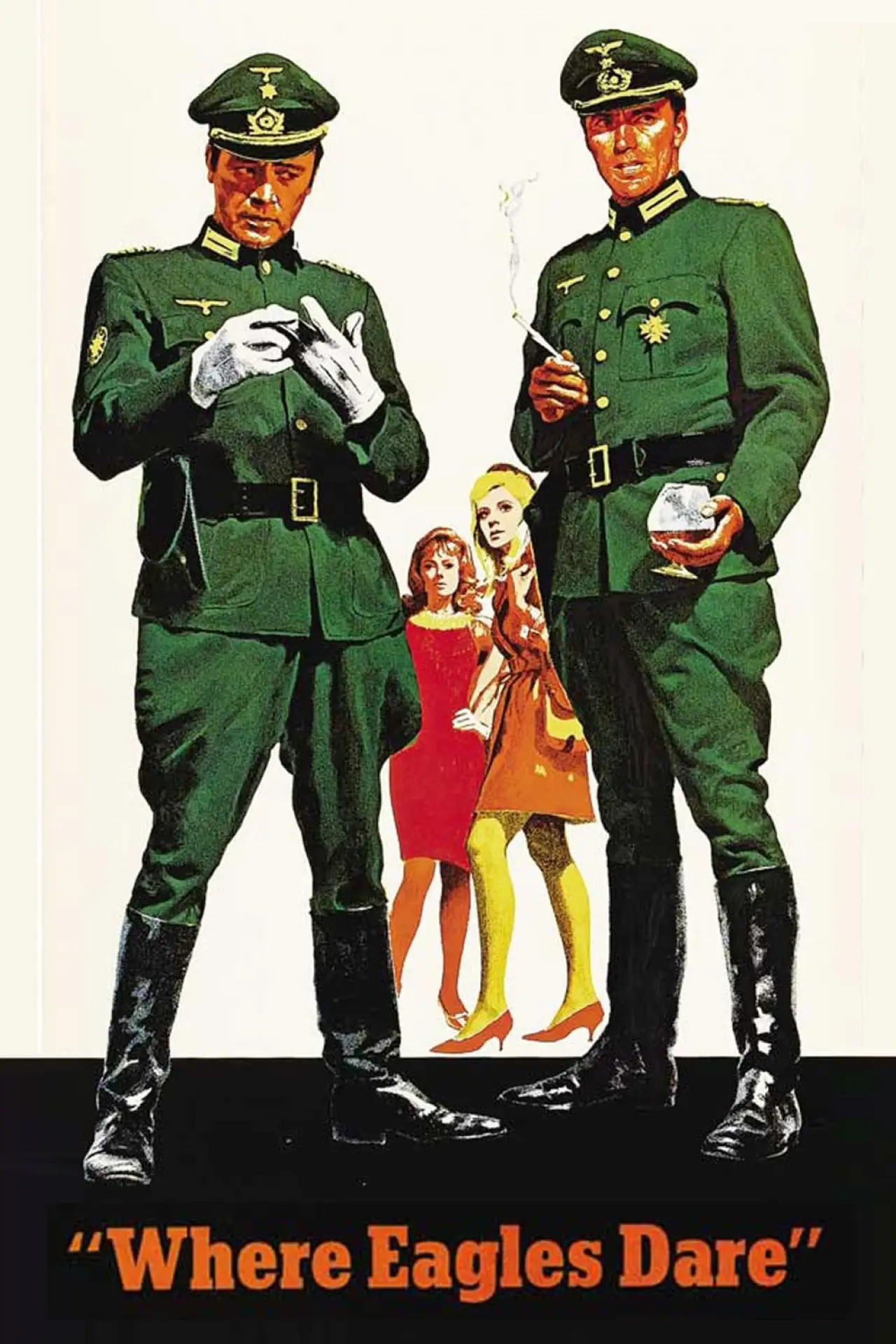
Where Eagles Dare
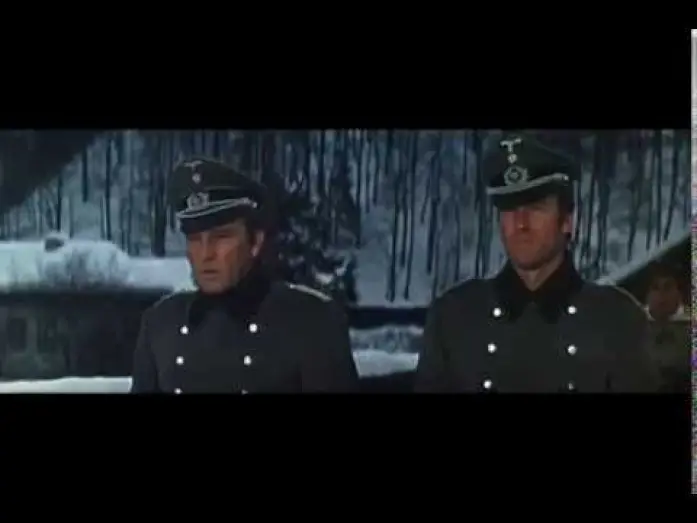
One weekend Major Smith, Lieutenant Schaffer, and a beautiful blonde named Mary decided to win World War II.



Country
Production
Budget
$7 700 000
Box office
$7 100 435
Director
Actors
Scenario
Producer
Elliott Kastner, Jerry Gershwin
Camera operator
Arthur Ibbetson
Composer
Ron Goodwin
Artist
Audition
Editing
John Jympson, Ted Lloyd
Whole Team (86)
Whole Team (86)
Short description
World War II is raging, and an American general has been captured and is being held hostage in the Schloss Adler, a Bavarian castle that's nearly impossible to breach. It's up to a group of skilled Allied soldiers to liberate the general before it's too late.
What's left behind the scenes
- The primary filming location for the film was Hohenwerfen Castle, located not in Bavaria, but in Austria, near the town of Werfen, 40 km from Salzburg, at an altitude of 155 m above the Salzach River valley.
- The film largely came about thanks to Richard Burton's stepson, who always wanted to see his stepfather in some kind of adventure film. Burton turned to producer Elliott Kastner (1930-2010) with this request, who in turn turned to screenwriter Alistair MacLean (1922-1987). At that time, films had either already been made based on all of MacLean's novels, or films were being made, and Kastner persuaded MacLean to write something new. He provided Kastner with a script for the future film within just 6 weeks.
- Darren Nesbitt insisted on portraying his character as accurately as possible (he played von Hapen), so he demanded that a former Gestapo officer be invited directly to the set to better understand how to play his character and correctly display the decorations on his uniform.
- The film came to fruition largely thanks to Richard Burton's stepson, who had always wanted to see his stepfather in an adventure movie. Burton brought this up with producer Elliott Kastner (1930-2010), who in turn approached screenwriter Alistair MacLean (1922-1987). At that time, films had either already been made or were in production for all of MacLean's novels, so Kastner persuaded MacLean to write something new. MacLean provided Kastner with the script for the future film just six weeks later.
- In the scenes where the characters played by Richard Burton (1925-1984) and Clint Eastwood climb the sheer walls of a fortress, Burton moves almost effortlessly, whereas Eastwood clearly struggles with the ascent. The reason is that Burton (who smoked like a chimney, abused strong spirits, and was generally out of shape) was hoisted up by a crane, which was later edited out of the frame, while Eastwood, who took care of his health, actually climbed the wall himself. By that time, Burton had already been diagnosed with bursitis, likely complicated by improper treatment, arthritis, and dermatitis.
- For Ingrid Pitt (1937-2010), who played Heidi, a concentration camp survivor, filming was emotionally taxing because many of the ensemble actors around her were wearing Wehrmacht uniforms.
- During filming in Austria, a break had to be taken due to weather conditions. The shoot took place in the winter and early spring of 1968, so the crew and actors had to contend with snowstorms, freezing temperatures, and the risk of avalanches. Additionally, production was delayed for several days because Richard Burton, who never missed an opportunity to have a drink, once vanished along with his close friends Peter O'Toole (1932-2013) and Richard Harris (1930-2002).
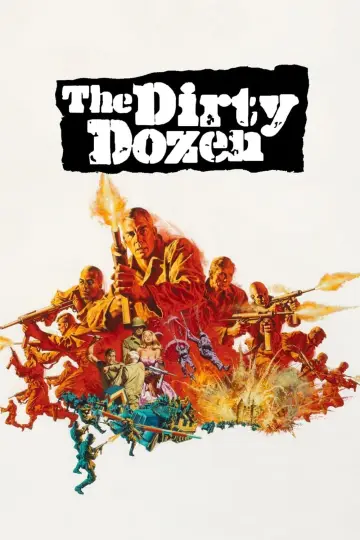
- The role of Lieutenant Shefford, played by Clint Eastwood, was initially offered to Lee Marvin (1924-2022), but he turned it down, telling the producers that they should have approached him with such an offer four years earlier. Marvin had already worked under Robert Aldrich (1918-1983) in the war action film 'The Dirty Dozen' (1967), from which he had the most unpleasant memories. While that role brought him success, he vowed never to act in similar films again.
- Filming in Austria had to be interrupted due to weather conditions. The filming took place in winter and early spring of 1968, so the film crew and actors had to contend with both blizzards and sub-zero temperatures, as well as the risk of avalanches. In addition, filming was delayed for several days because Richard Burton, never missing an opportunity to have a drink, once disappeared with close friends Peter O’Toole (1932-2013) and Richard Harris (1930-2002).
- During the filming of the scene depicting his character's death, Darren Nesbitt nearly went blind when the fireworks attached to his chest fired upwards instead of away from his body. They filmed bullets hitting von Hapen in the head and chest, but after editing, only the shots of bullets hitting the head remained in the film.
- The film is set in 1944, six months before the opening of the Second Front. However, a German general arrives at the castle by helicopter. Yet, Germany's first and only helicopter unit (the 40th Transport Squadron) was formed in early 1945.
- It was morally difficult for Ingrid Pitt (1937-2010), who played Heidi, a Holocaust survivor, to film, because many members of the acting ensemble around her wore the uniforms of Wehrmacht soldiers.
- Derren Nesbitt insisted on portraying his character as accurately as possible (he played von Hapen); therefore, he demanded that a former Gestapo officer be brought directly to the set to help him better understand how to play the character and correctly arrange the insignia on the uniform.
- In scenes where the characters of Richard Burton (1925-1984) and Clint Eastwood climb the fortress’s sheer walls, Burton moves with practically no effort, while Eastwood struggles with the ascent, which is noticeable to the viewer. The fact is that Burton (who smoked like a locomotive, abused strong alcoholic beverages, and was generally out of shape) was lifted by a crane, which was removed from the frame during editing, while Eastwood, who took care of his own health, actually climbed the wall himself. And Burton had already been diagnosed with bursitis, likely complicated by improper treatment, arthritis, and dermatitis.
- While filming the scene of his character's death, Derren Nesbitt nearly went blind when the squibs attached to his chest fired upward instead of away from his body. They filmed bullets hitting von Hapen in both the head and chest, but after editing, only the shots of the bullets hitting the head remained in the film.
- The role of Lieutenant Sheffer, played by Clint Eastwood, was initially offered to Lee Marvin (1924-2022), but he declined, telling the producers that he should have been approached with such an offer four years earlier. Marvin had already starred in Robert Aldrich’s (1918-1983) war action film 'The Dirty Dozen' (1967), from which he had the most unpleasant memories. This role brought him success, but he vowed never to film in similar movies again.
Similar movies
8.2/10
7.9/10

7.7/10
7.7/10
7.6/10
7.6/10
7.4/10

7.4/10
7.3/10

7.3/10


 Auditions in India
 Casting calls in USA
 Castingi w Polsce
 Кастинги в Україні
