Basic camera exercises you can practice at home
Behind the Scenes: Education: Basic camera exercises you can practice at homeThe skill of working with a camera is developed through the practice of recording, and it is the only part of the profession that can be fully trained at home alone. All you need is a phone, a tripod (or a stack of books), and half an hour a day.
How Camera Acting Differs from the Stage
- Scale. The stage requires a projection that reaches the back row; the camera captures a whisper and the slightest movement of an eyebrow.
- Thought over Expression. In a close-up, it is obvious whether a person is actually thinking or simply pretending to think.
- Lack of Linearity. Scenes are filmed in fragments and often out of chronological order.
- Repeatability. Theater allows for variations from one performance to another, but film requires consistency from one take to the next.
- Technical Constraints. Marks, focus, lighting, and staying within the frame.
Actors with theatrical training almost always go through a period of recalibration. This period is shortened by exactly how much you record yourself.
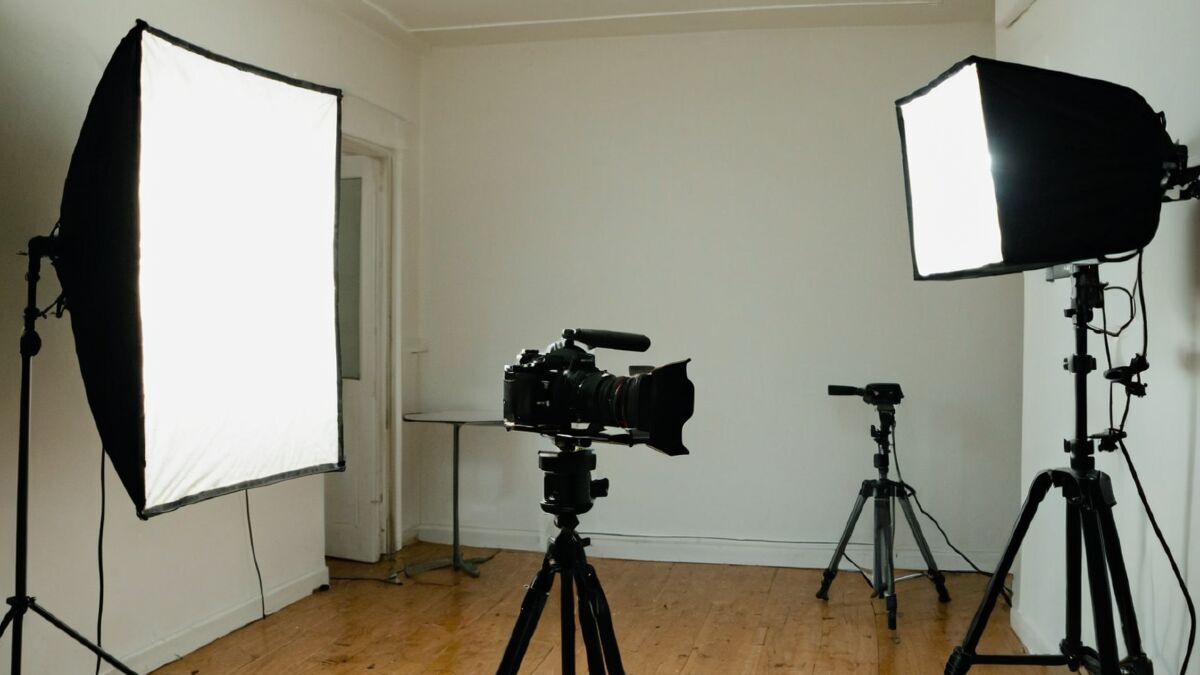
Setting Up Your Home Studio
- Light. During the day, face a window. In the evening, place a single lamp in front of you, slightly above eye level.
- Camera. Position your phone at eye level, using a tripod or a steady support.
- Framing. Use a medium close-up (chest-up) and keep the phone horizontal.
- Background. A plain, solid-colored wall.
- Sound. A quiet room with the phone positioned about 1.5 meters away.
Setting up a permanent filming spot removes the primary barrier: the need to configure everything every time you practice.
Exercises for Presence
The Minute of Silence. Start recording and simply sit in the frame for one minute, thinking about something specific. Do not "act." Review the footage. The goal is to see what happens to your face when you are "doing nothing." This is the baseline state from which everything else grows.
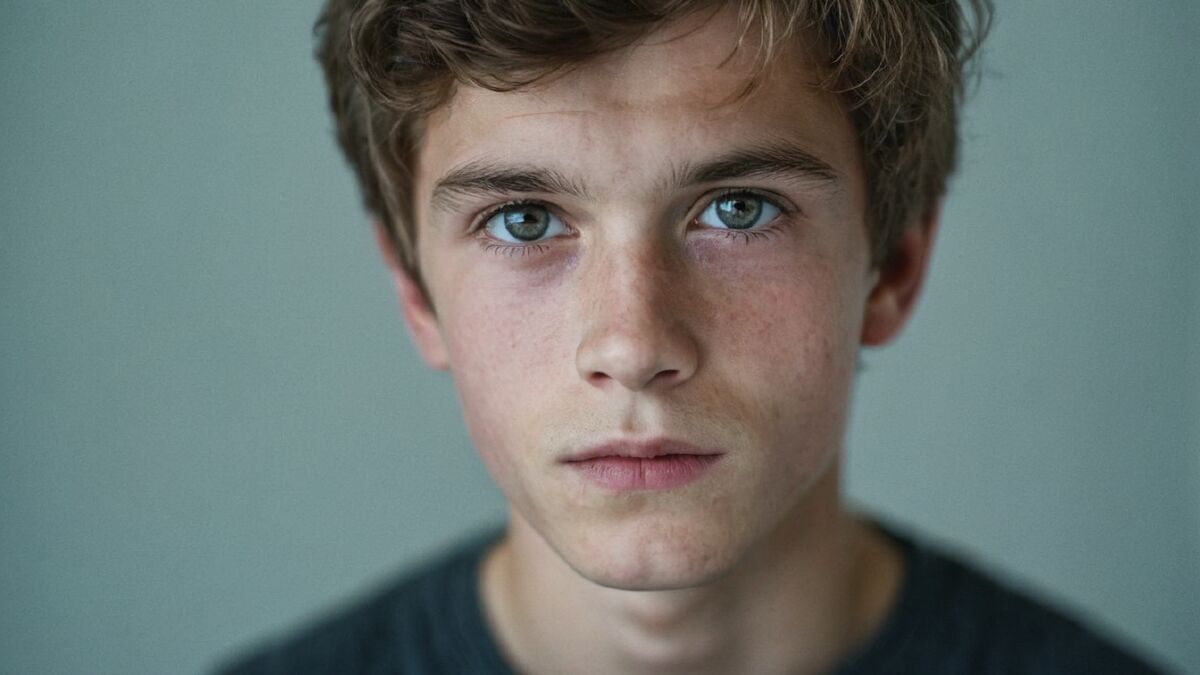
Shift of Thought. While in the frame, mentally move from one memory to another every fifteen seconds (use a timer). On the recording, it should be visible that something has changed, even though you weren't consciously acting.
Listening. Play a recording of someone else speaking and listen to it in the frame, reacting to it. Reaction is half the work on set, and it should be trained separately.
Exercises for Scale
Three Volume Levels. Deliver the same piece of text as if you were on stage, as if in a casual conversation, and almost in a whisper. Review the footage: where was it convincing, and where did it feel too theatrical?
Reducing Amplitude. Perform a scene with full energy, then repeat it by reducing everything by half, and then by half again. Often, the third version turns out to be the most effective.
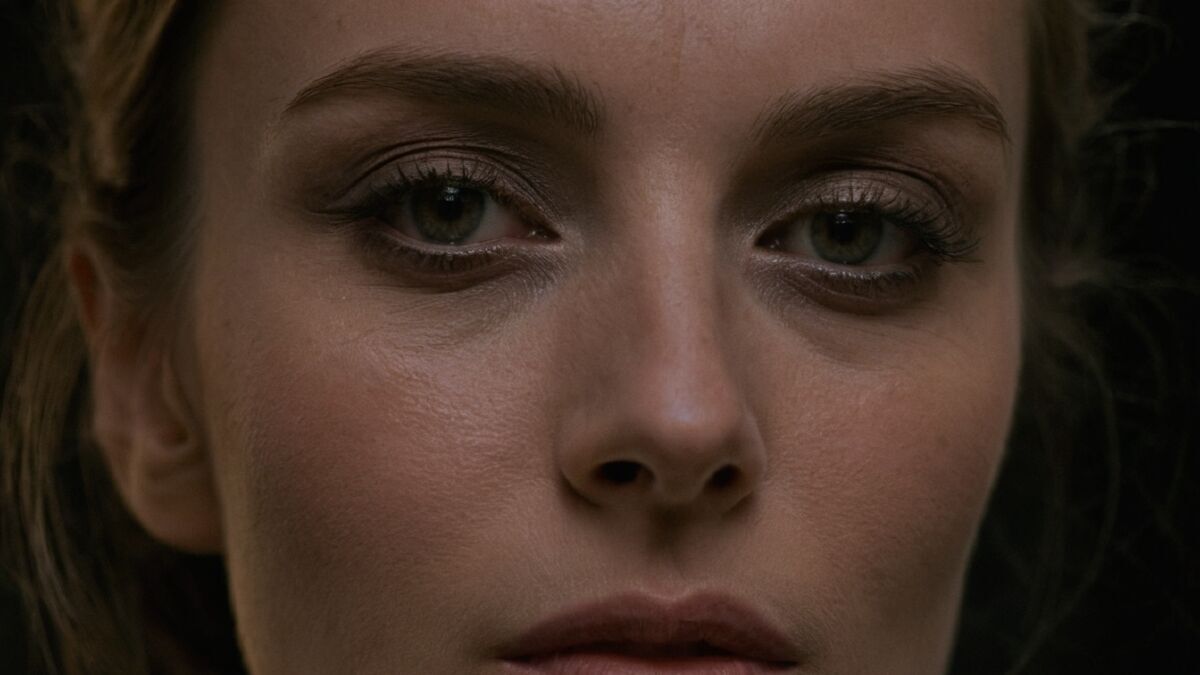
Eyes Only. Perform an emotional transition without moving anything except your eyes. This is where the life of a close-up exists.
Technical Exercises
Repeatability. Perform a short segment three times in a row, trying to repeat your movements identically. Compare the recordings: where was a hand in a different place, or where did the tempo shift? This is a direct skill for the editing process.
The Mark. Mark a spot on the floor. Start the scene in a different location and move to the mark naturally, without looking down at your feet.
In and Out. Practice clean starts and finishes: one second of stillness before and after the action. Editors need these seconds.
Looking Past the Lens. Place a mark next to the camera and perform the scene addressing that mark. Getting used to this takes a few sessions.
Working with Text on Camera
- Take a short scene from any script or play.
- Analyze it: the event, the objective (expressed as a verb), and the obstacle.
- Memorize it.
- Record three versions: neutral, harsher, and softer.
- Review and choose which one works best.
- Record one more version incorporating what you observed.
This cycle is essentially a self-tape, and it is the best exercise: you are training yourself and accumulating material at the same time.
How to Analyze Your Recordings
Reviewing is half the benefit, and it must be done correctly:
- Watch without sound. Is it clear what is happening? Is the objective readable through the face and body?
- Listen without the image. Is it articulate? Is the intonation natural? Are the endings of words being cut off?
- Watch in full. Does what you intended to play match what is actually visible?
- Look for tension. Check the shoulders, neck, jaw, and hands.
- Note one thing to correct in the next take. Just one, not ten.
Do not judge your physical appearance. That is a separate matter and only distracts from the analysis of the performance.
Practice Schedule
- Twenty to thirty minutes, four to five times a week.
- One presence exercise, one technical exercise, and one scene.
- Once a month, review recordings from a month ago—this is the only way to truly see progress.
- Keep successful takes: some of them may be suitable for a showreel.
Summary
- The camera requires reduced amplitude and precision instead of projection.
- Set up a permanent home filming spot to remove technical barriers.
- Train presence, scale, repeatability, and marks separately.
- The cycle of "analysis — three versions — review — another take" replaces a formal lesson.
- Analyze recordings without sound, then without image, then in full.
- Correct only one point at a time.
Please note that specific rates, contract forms, and tax rules for professional work differ by market. Your completed recordings will be useful for your showreel and for applying to castings.
Share


Author: Tom Ashwell, training and craft editor
Publication date: August 27 2026
Views: 12
Comments
Other materials in this section
Discover how improvisation enhances your performance during auditions and on set, the core principles of the craft, and practical exercises to overcome the fear of the blank slate.
 Auditions in India
 Casting calls in USA
 Castingi w Polsce
 Кастинги в Україні
