How to read a casting call and know if you are right for the role
Behind the Scenes: ACMODASI: How to read a casting call and know if you are right for the roleBeginners often send out applications like a shotgun blast: fifty projects in one evening, zero invitations. Experienced actors apply to five and get two callbacks. The difference isn't luck or a legendary filmography—it's the ability to read a role description. Half of the requirements in an announcement are rigid, while the other half are negotiable. Whether you can tell them apart determines if you are wasting your time or getting hired.

The Anatomy of a Casting Call
A standard role description typically consists of six blocks, usually appearing in this order:
- Project — The type (feature film, series, commercial, music video), working title, and sometimes the production company and director.
- Role — The character name and size: lead, supporting, featured/episode, background/extra.
- Type — Gender, age range, physical appearance, and sometimes a brief personality description.
- Requirements — Specific skills, languages, or willingness to perform certain actions.
- Dates and Location — Shooting period, city/region, and number of shoot days.
- Terms — Payment/fee or lack thereof, and what the production provides.
If one of these blocks is missing, that is a piece of information in itself, which we will analyze below.
Hard Requirements: Non-Negotiable
There are parameters where decisions are made mechanically. No cover letter will change these facts.
Age Range. This refers to the character's age, not your actual age. "Male 40–50" means you must look forty on camera. If you are 32 and look your age, this is not your role, even if everything else matches perfectly. There is usually a grace period of about three years in either direction, and this is determined by the casting director based on your photo, not by your own feeling.
Gender and Physical Appearance. Height, build, hair and eye color, if specified. Hair can be dyed; height cannot be changed.
Shoot Dates. The most underrated point. If you are busy for even one day of the specified period, it is better not to apply. Replacing an actor mid-schedule is a production's biggest fear; someone who causes a missed shoot day rarely makes it back into the database for future projects.
Location. If the shoot is in a city far from where you live, assume you are paying for travel and accommodation yourself unless the terms explicitly state otherwise. For featured or background roles, this is almost always the case.
Mandatory Skills. Driver's license, horseback riding, swimming, playing an instrument, or athletic certifications. The rule is simple: if you cannot perform the skill on set, on the first take, with the camera rolling, you do not have the skill.
Flexible Requirements: Worth Applying
Acting Experience. "Experience preferred" or even "experience required" for featured roles is often a filter to weed out completely random applicants rather than a rigid condition. If you have student films, shorts, theater experience, or even a well-recorded self-tape, apply.
Acting Education. For commercials, background work, and many featured roles, formal degrees aren't seriously questioned. For supporting and lead roles, they are.
Language Proficiency. Clarify the level: "English" could mean a few lines on camera or a fluid, improvised dialogue. This is a fundamental difference and a fair question to ask.
Character Traits. "Sharp, closed-off, with an inner core" is an invitation to show your interpretation, not a check of your real-life temperament. You can play characters who are the opposite of who you are.
Phrases That Signal a "No"
Certain phrases indicate that a decision has likely already been made and the open call is a formality:
- "Looking for a public figure," "recognizable face," or "audience of N+ followers" — these are marketing criteria, not acting ones, and cannot be acquired by the time of the audition.
- "Considering agency-represented actors only" — direct submissions will likely be ignored.
- "Project in the funding stage" — the shoot may never happen, and your dates might be blocked for nothing.
- "Approval required by producer and network/channel" — the audition process will be long and multi-stage; plan for it to take months.
What Missing Information Means
No mention of payment. Sometimes they honestly write "unpaid" — these are usually student or debut works, and it makes sense to apply for the sake of your showreel. However, if the terms block is missing entirely but the project is commercial, ask before the audition: "Could you please clarify if there is a fee and what the daily rate is?" This is a professional question, and professionals will answer it. Note that rates, contract forms, and tax rules differ by market.
No dates. This means the schedule is not yet finalized. You can apply, but do not count on a specific month.
No production company or director's name. In large projects, this is often due to confidentiality (NDAs). In small projects, it can be a sign that the project doesn't actually exist yet.
No role description, just "actors wanted." These ads usually lead not to a shoot, but to paid courses or a "future" database. Be wary if you are later asked to pay for a photoshoot or training.
How to Decide in Two Minutes
- Check age, gender, and physical appearance — if it's a mismatch, close the tab.
- Check the dates against your calendar entirely, not "I might be able to clear it."
- Check the location and who pays for travel.
- Identify mandatory skills and honestly ask yourself if you can do them on camera.
- Check what materials are requested and if you have them ready right now.
- If the answer to all five points is "yes," apply immediately—do not wait until the evening.

What to Attach if the Match is Incomplete
The "I fit the type but lack one skill" situation happens constantly. Honesty with a solution works best here: "I don't ride horses, but I did show jumping as a child and am ready to take a few lessons before the shoot." This sometimes works because production often budgets time for preparation. A lied-about skill will be exposed on set and will blacklist you from that casting director forever.
If your age differs by two or three years but everything else matches, attach a fresh, unedited photo and do not comment on your age at all. Let the person viewing the photo decide.
Common Mistakes
- Applying to everything. Casting directors can see your application history and remember those who apply for roles they obviously don't fit.
- Skimming the text. The requirement to "attach a self-tape based on the attached script" is the most commonly missed, and such applications are filtered out automatically.
- Applying a week late. For featured and background roles, casting often closes within 24 hours.
- Arguing about requirements. "I'm 35, but I look 28" is not an argument; a photograph is.
- Ignoring the format. If they asked for a horizontal video under one minute, a three-minute vertical video will not be opened.
In Short
Age, dates, location, and mandatory skills are non-negotiable. Experience, education, character, and language levels are negotiable. A missing terms block means the question should be asked before the audition, not after. Most importantly: five precise applications on the day of publication work better than fifty random ones a week later.
Fresh projects and open calls can be found in the castings section.
Share


Author: Claire Bennett, platform editor
Publication date: August 07 2026
Views: 45
Comments
Other materials in this section

A guide to the essential photo set, the correct image order, and how to avoid common mistakes that can hurt your casting chances.

A self-study program covering breathing, articulation, diction, and intonation. Learn what to do daily, how to track your progress, and when it is time to seek professional coaching.
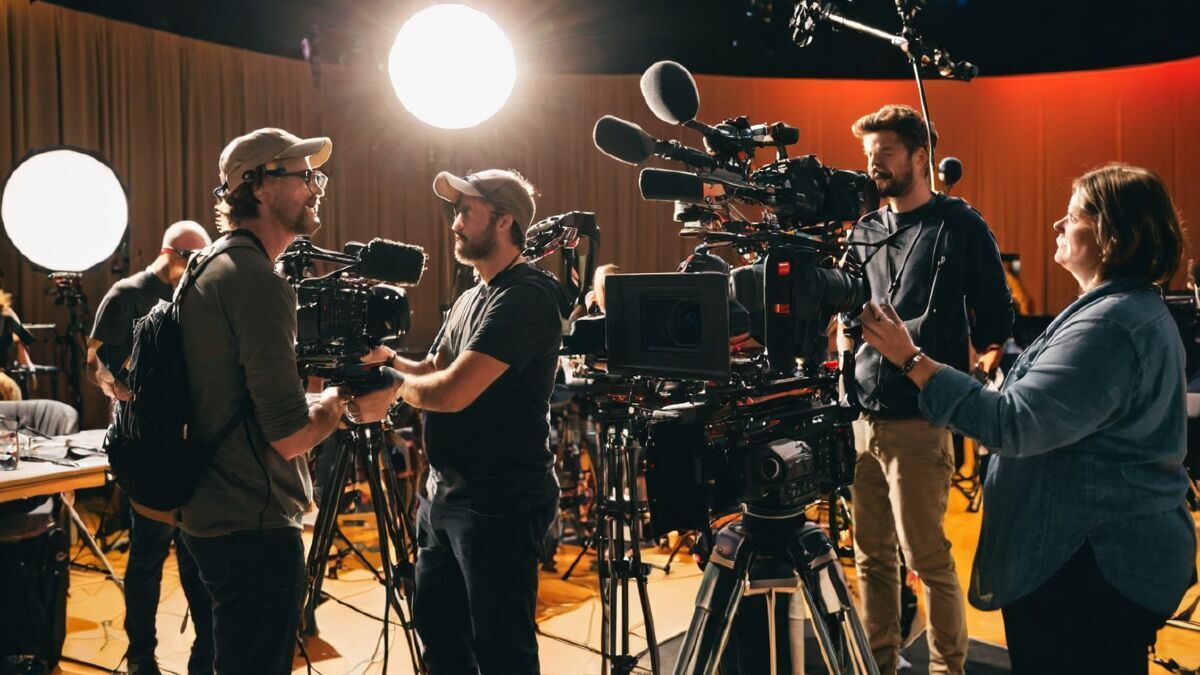
A detailed breakdown of the film crew: who to ask about your schedule, who handles your wardrobe, who commands the set during a take, and who you should never interrupt.

Explore the actor's creative process from first script reading to final performance. A comprehensive guide to character construction, covering text analysis, physical embodiment, emotional preparation, subtext work, and the art of staying present on stage.

When an actor steps into a recording booth, they leave behind nearly every tool of their trade. No costume, no set, no fellow performers to play against. What remains is voice — and the extraordinary challenge of making it carry everything.
 Auditions in India
 Casting calls in USA
 Castingi w Polsce
 Кастинги в Україні
